This is the content of the pop-over!

Safety Net Physical Education CST (976) Practice Tests & Test Prep by Exam Edge


NYSTCE Safety Net Physical  Education CST   product image
(4.7)
Based on 28 Reviews

  • Real Exam Simulation: Timed questions and matching content build comfort for your Safety Net Physical Education CST test day.
  • Instant, 24/7 Access: Web-based NYSTCE Safety Net Physical Education CST practice exams with no software needed.
  • Clear Explanations: Step-by-step answers and explanations for your NYSTCE exam to strengthen understanding.
  • Boosted Confidence: Reduces anxiety and improves test-taking skills to ace your NYSTCE Safety Net Physical Education CST (976).

Featured on

NYSTCE Safety Net Physical Education CST Online Practice Test Bundles

BEST VALUE
20 practice tests

$174.00

$799.00

SAVE $625

Only $8.70 per test!

  • 100% Pass Guarantee
  • 20 online practice tests
  • 90 questions + 1 essay per test
  • Bonus: 100 Flash Cards + Study Guide
  • Instant access
  • Detailed Explanations
  • Practice tests never expire
  • Timed, untimed, or study guide mode
MOST POPULAR
10 practice tests

$99.50

$399.50

SAVE $300

Only $9.95 per test!

  • 10 online practice tests
  • 90 questions + 1 essay per test
  • Bonus: 100 Flash Cards + Study Guide
  • Instant access
  • Detailed Explanations
  • Practice tests never expire
  • Timed, untimed, or study guide mode
5 practice tests

$69.75

$199.75

SAVE $130

Only $13.95 per test!

  • 5 online practice tests
  • 90 questions + 1 essay per test
  • Bonus: 100 Flash Cards
  • Instant access
  • Detailed Explanations
  • Practice tests never expire
  • Timed, untimed, or study guide mode
1 practice test

$39.95

  • 1 online practice test
  • 90 questions + 1 essay per test
  • Instant access
  • Detailed Explanations
  • Practice tests never expire
  • Timed, untimed, or study guide mode
Quick Select
Tap to choose a bundle

** All Prices are in US Dollars (USD) **


Safety Net Physical Education CST (976) Resources

Jump to the section you need most.

Understanding the exact breakdown of the NYSTCE Safety Net Physical Education CST test will help you know what to expect and how to most effectively prepare. The NYSTCE Safety Net Physical Education CST has 90 multiple-choice questions . The exam will be broken down into the sections below:

NYSTCE Safety Net Physical Education CST Exam Blueprint
Domain Name % Number of
Questions
Physical Fitness and Health 29% 26
Lifelong Movement Activities and Sports 25% 23
Personal Growth and Development 12% 11
The Physical Education Program 24% 22
Physical Fitness and Health: Constructed -Response Assignment 10% 9

NYSTCE Safety Net Physical Education CST Study Tips by Domain

  • Apply FITT and training principles (overload, progression, specificity, reversibility) to build safe plans; red flag: increasing intensity/volume >10% per week raises overuse-injury risk.
  • Use target heart rate and RPE appropriately (e.g., moderate intensity ~3–6 on 0–10 scale); common trap: relying on pulse alone when heat, dehydration, caffeine, or anxiety can elevate HR.
  • Address muscular strength/endurance and flexibility with correct technique and progression; contraindication: ballistic stretching or forced ROM when a student reports sharp pain or has a recent musculoskeletal injury.
  • Recognize and respond to environmental risks (heat, cold, air quality) with prevention and emergency action; priority rule: any signs of heat illness (confusion, cessation of sweating, collapse) require immediate cooling and activation of EMS.
  • Integrate nutrition, hydration, sleep, and substance-use education into health outcomes; red flag: rapid weight loss, fasting, or excessive exercise may indicate disordered eating and warrants referral per school policy.
  • Interpret basic fitness assessment data (cardiorespiratory, body composition, muscular fitness, flexibility) to set goals and monitor progress; common trap: grading on absolute scores rather than improvement, effort, and criterion-referenced standards.
  • Teach and assess mature patterns for fundamental motor skills (e.g., run, jump, throw, catch) before sport-specific tactics; red flag—skipping skill progressions leads to unsafe compensations and persistent errors.
  • Apply movement concepts (space, time, force, relationships) to improve performance across activities; common trap—using vague feedback (“try harder”) instead of a specific cue like “widen base, absorb on landing”.
  • Use developmentally appropriate progressions in individual, dual, and team sports (e.g., 1v1 to small-sided to full game) to maximize practice reps; priority rule—modify rules/equipment (lower nets, larger balls) before removing students from play.
  • Emphasize safe participation and risk management in lifetime/outdoor activities (e.g., swimming, cycling, hiking); contraindication—no diving in shallow/unknown water and require PPE (helmet) for wheeled activities.
  • Teach tactical awareness with simple principles (create space, defend space, transition) using game-based instruction; red flag—long lines and full-court games reduce engagement and increase collision risk.
  • Promote inclusive participation through adaptations (task, equipment, environment, rules) aligned to student needs; common trap—making adaptations that change the learning target instead of providing access to the same skill/tactic.
  • Plan instruction that supports motor skill development across stages (fundamental → specialized) and use task progressions; red flag: teaching regulation-size games before students demonstrate prerequisite locomotor/manipulative skills.
  • Use inclusive, strength-based feedback to build self-efficacy and motivation; common trap: praising only outcomes (wins/fastest) instead of process cues and improvement.
  • Establish clear social-emotional norms for cooperation, respect, and responsible behavior in activity settings; priority rule: explicitly teach and reinforce routines for sharing space/equipment to prevent conflict and off-task behavior.
  • Differentiate for diverse learners (including students with disabilities, ELLs, and varying readiness) using modifications to equipment, rules, and space; red flag: making only one modification (e.g., lighter ball) without adjusting task demands or peer supports.
  • Promote goal setting and self-management (SMART goals, self-monitoring logs, reflection) tied to personal progress; common trap: goals that are not measurable or that compare students to peers rather than to their own baseline.
  • Foster positive body image and safe participation culture by discouraging teasing and privacy violations; red flag: public weigh-ins/fitness scores posted or announced, which can undermine personal growth and trust.
  • Align units to NYS learning standards and SHAPE-style outcomes by backward design (objectives → assessments → instruction); red flag: activities chosen first with no measurable psychomotor/cognitive/affective targets.
  • Use valid, skill-specific assessments (e.g., rubrics, checklists, peer/self assessment) and document progress; common trap: grading mostly on participation, attendance, or athletic ability rather than stated criteria.
  • Plan inclusive instruction with UDL and appropriate adaptations/modifications for students with disabilities and ELLs; priority rule: safety and access come first, and exclusions must be justified and documented.
  • Manage learning time and behavior with clear routines (entry/exit, equipment distribution, signals, grouping) to maximize MVPA; red flag: long lines, lengthy lectures, or unstructured play causing low engagement and supervision gaps.
  • Implement risk management (facility/equipment checks, supervision ratios, warm-up/cool-down, emergency action plan, concussion protocols); contraindication: allowing participation with suspected concussion or unsafe equipment “to keep class moving.”
  • Communicate program goals and progress to families and stakeholders and advocate for equitable scheduling/resources; common trap: inconsistent policies (make-ups, dress, exemptions) that create grading inequities and compliance issues.
  • Start by restating the prompt as a clear goal and name the specific fitness components you’re targeting (e.g., cardiorespiratory endurance, muscular endurance, flexibility); red flag: writing a general “health lesson” without measurable outcomes.
  • Propose a brief, structured plan with FITT (frequency, intensity, time, type) and at least one valid intensity method (talk test, RPE scale); common trap: prescribing intensity as “hard” without a way to monitor or modify it.
  • Include safety screening and contraindications (medical clearance flags, asthma/diabetes considerations, heat illness prevention, hydration) and specify supervision/equipment checks; red flag: omitting warm-up/cool-down or ignoring environmental risk (heat, cold, air quality).
  • Build in differentiation and accommodations (task, equipment, rules, space) aligned to student needs and IEP/504 supports; common trap: offering a generic “modify as needed” with no concrete adaptation.
  • Specify how you will assess learning with at least one objective measure (skill checklist, fitness log, heart-rate/RPE record, rubric) and how you will use results to adjust instruction; red flag: relying only on participation or effort as the assessment.
  • Connect to health literacy by including at least one behavior skill (goal-setting, self-monitoring, interpreting labels/fitness data) and a realistic progression over time; common trap: proposing rapid gains or unsafe volume increases (e.g., big jumps week-to-week).


Built to Fit Into Your Busy Life

Everything you need to prepare with confidence—without wasting a minute.

Three Study Modes

Timed, No Time Limit, or Explanation mode.

Actionable Analytics

Heatmaps and scaled scores highlight weak areas.

High-Yield Rationales

Concise explanations emphasize key concepts.

Realistic Interface

Matches the feel of the actual exam environment.

Accessible by Design

Clean layout reduces cognitive load.

Anytime, Anywhere

Web-based access 24/7 on any device.
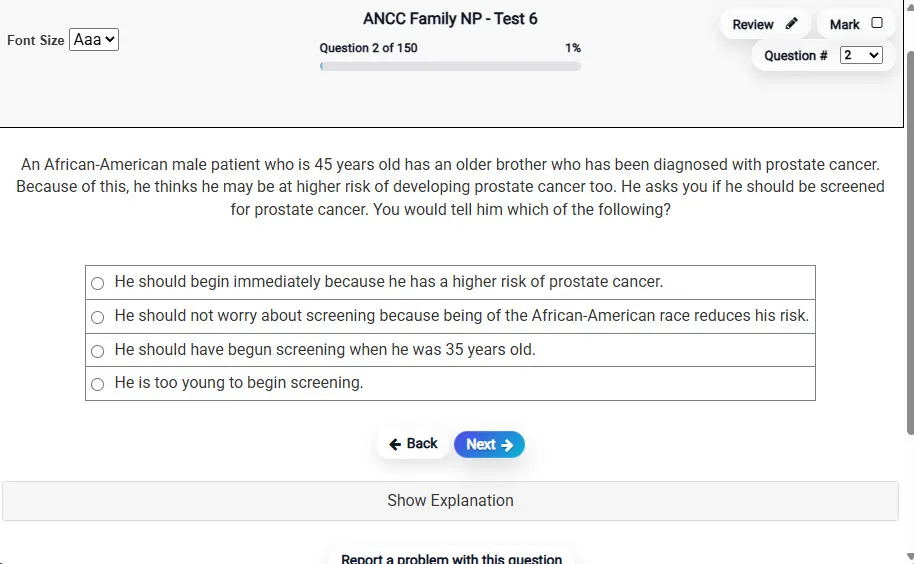
Answering a Question screen – Multiple-choice item view with navigation controls and progress tracker.
Answering a Question Multiple-choice item view with navigation controls and progress tracker.

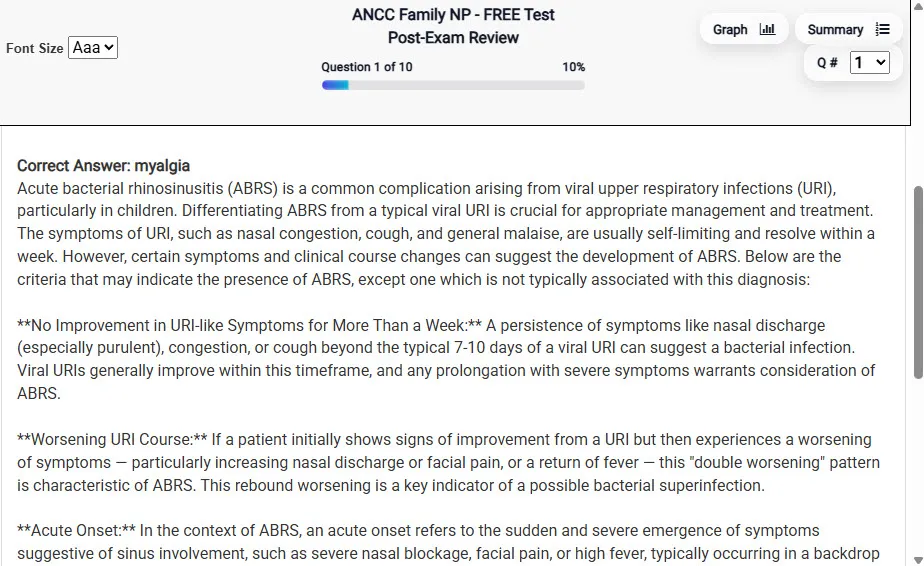
                           Detailed Explanation screen – 
                         Review mode showing chosen answer and rationale and references.
Detailed Explanation Review mode showing chosen answer and rationale and references.

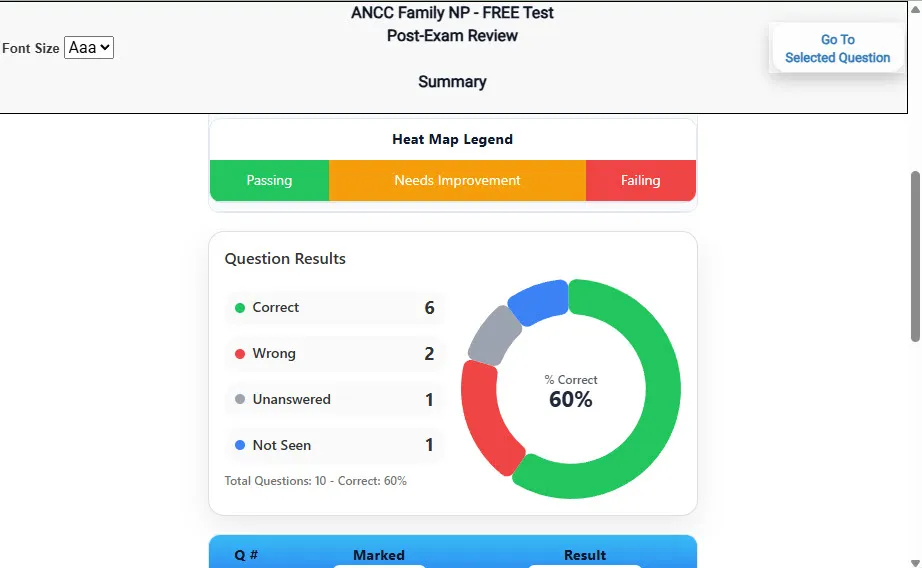
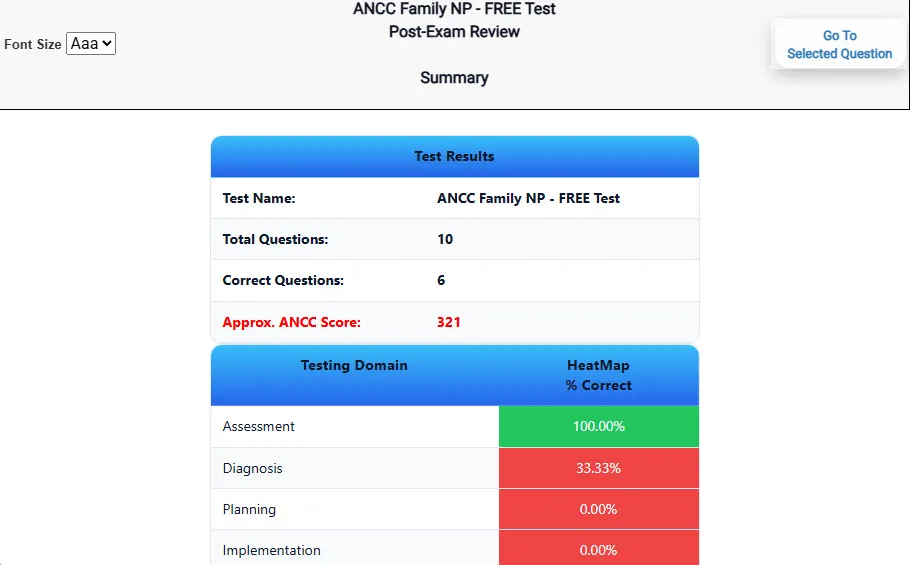
                           Review Summary 1 screen – 
                         Summary with counts for correct/wrong/unanswered and not seen items.
Review Summary 1 Summary with counts for correct/wrong/unanswered and not seen items.

                           Review Summary 2 screen – 
                         Advanced summary with category/domain breakdown and performance insights.
Review Summary 2 Advanced summary with category/domain breakdown and performance insights.

What Each Screen Shows

Answer Question Screen

  • Clean multiple-choice interface with progress bar.
  • Mark for review feature.
  • Matches real test pacing.

Detailed Explanation

  • Correct answer plus rationale.
  • Key concepts and guidelines highlighted.
  • Move between questions to fill knowledge gaps.

Review Summary 1

  • Overall results with total questions and scaled score.
  • Domain heatmap shows strengths and weaknesses.
  • Quick visual feedback on study priorities.

Review Summary 2

  • Chart of correct, wrong, unanswered, not seen.
  • Color-coded results for easy review.
  • Links back to missed items.

Top 10 Reasons to Use Exam Edge for your NYSTCE Safety Net Physical Education CST Exam Prep

  1. Focused on the NYSTCE Safety Net Physical Education CST Exam

    Our practice tests are built specifically for the Safety Net Physical Education CST exam — every question mirrors the real topics, format, and difficulty so you're studying exactly what matters.

  2. Real Exam Simulation

    We match the per-question time limits and pressure of the actual NYSTCE exam, so test day feels familiar and stress-free.

  3. 20 Full Practice Tests & 1,820 Unique Questions

    You'll have more than enough material to master every Safety Net Physical Education CST concept — no repeats, no fluff.

  4. Lower Cost Than a Retake

    Ordering 5 practice exams costs less than retaking the NYSTCE Safety Net Physical Education CST exam after a failure. One low fee could save you both time and money.

  5. Flexible Testing

    Need to step away mid-exam? Pick up right where you left off — with your remaining time intact.

  6. Instant Scoring & Feedback

    See your raw score and an estimated NYSTCE Safety Net Physical Education CST score immediately after finishing each practice test.

  7. Detailed Explanations for Every Question

    Review correct and incorrect answers with clear, step-by-step explanations so you truly understand each topic.

  8. Trusted & Accredited

    We're fully accredited by the Better Business Bureau and uphold the highest standards of trust and transparency.

  9. Web-Based & Always Available

    No software to install. Access your Safety Net Physical Education CST practice exams 24/7 from any computer or mobile device.

  10. Expert Support When You Need It

    Need extra help? Our specialized tutors are highly qualified and ready to support your NYSTCE exam prep.


Pass the NYSTCE Safety Net Physical Education CST Exam with Realistic Practice Tests from Exam Edge

Preparing for your upcoming NYSTCE Safety Net Physical Education CST (976) Certification Exam can feel overwhelming — but the right practice makes all the difference. Exam Edge gives you the tools, structure, and confidence to pass on your first try. Our online practice exams are built to match the real Safety Net Physical Education CST exam in content, format, and difficulty.

  • 📝 20 NYSTCE Safety Net Physical Education CST Practice Tests: Access 20 full-length exams with 91 questions each, covering every major NYSTCE Safety Net Physical Education CST topic in depth.
  • Instant Online Access: Start practicing right away — no software, no waiting.
  • 🧠 Step-by-Step Explanations: Understand the reasoning behind every correct answer so you can master Safety Net Physical Education CST exam concepts.
  • 🔄 Retake Each Exam Up to 4 Times: Build knowledge through repetition and track your improvement over time.
  • 🌐 Web-Based & Available 24/7: Study anywhere, anytime, on any device.
  • 🧘 Boost Your Test-Day Confidence: Familiarity with the NYSTCE format reduces anxiety and helps you perform under pressure.

These NYSTCE Safety Net Physical Education CST practice exams are designed to simulate the real testing experience by matching question types, timing, and difficulty level. This approach helps you get comfortable not just with the exam content, but also with the testing environment, so you walk into your exam day focused and confident.


Exam Edge NYSTCE Reviews


Not a user friendly experience

Amelia , Rochester, New York

Didn't really reflect the questions that were on the test for the most part. Also, they totally got the format of the constructed response question wrong, which never changes. Overall OK if you have nothing else, but definitely not worth the price they charge in my opinion.

Randy , Queens, New York

It was a good test run. Now I know what to expect and what I need to study.

Timothy , Eden, New York

The experience was very practical and I did well.

Trina , Silver Spring , MD

Very easy to navigate.

Collene , Silver Spring , MD

Exam Edge was terrific. Even better than I hoped. Just completing and reviewing the tests are a great learning experience. I can't wait to take the certification test. Tom S.

Thomas , Port Washington, NY


NYSTCE Safety Net Physical Education CST Aliases Test Name

Here is a list of alternative names used for this exam.

  • NYSTCE Safety Net Physical Education CST
  • NYSTCE Safety Net Physical Education CST test
  • NYSTCE Safety Net Physical Education CST Certification Test
  • Safety Net Physical Education CST test
  • NYSTCE
  • NYSTCE 976
  • 976 test
  • NYSTCE Safety Net Physical Education CST (976)
  • Safety Net Physical Education CST certification