This is the content of the pop-over!

NYSTCE CST Health Education (073) Practice Tests & Test Prep by Exam Edge


NYSTCE CST Health Education  product image
(4.5)
Based on 17 Reviews

  • Real Exam Simulation: Timed questions and matching content build comfort for your NYSTCE CST Health Education test day.
  • Instant, 24/7 Access: Web-based NYSTCE CST Health Education practice exams with no software needed.
  • Clear Explanations: Step-by-step answers and explanations for your NYSTCE exam to strengthen understanding.
  • Boosted Confidence: Reduces anxiety and improves test-taking skills to ace your NYSTCE CST Health Education (073).

Featured on

NYSTCE CST Health Education Online Practice Test Bundles

BEST VALUE
20 practice tests

$174.00

$799.00

SAVE $625

Only $8.70 per test!

  • 100% Pass Guarantee
  • 20 online practice tests
  • 100 questions per test
  • Bonus: 100 Flash Cards + Study Guide
  • Instant access
  • Detailed Explanations
  • Practice tests never expire
  • Timed, untimed, or study guide mode
MOST POPULAR
10 practice tests

$99.50

$399.50

SAVE $300

Only $9.95 per test!

  • 10 online practice tests
  • 100 questions per test
  • Bonus: 100 Flash Cards + Study Guide
  • Instant access
  • Detailed Explanations
  • Practice tests never expire
  • Timed, untimed, or study guide mode
5 practice tests

$69.75

$199.75

SAVE $130

Only $13.95 per test!

  • 5 online practice tests
  • 100 questions per test
  • Bonus: 100 Flash Cards
  • Instant access
  • Detailed Explanations
  • Practice tests never expire
  • Timed, untimed, or study guide mode
1 practice test

$39.95

  • 1 online practice test
  • 100 questions per test
  • Instant access
  • Detailed Explanations
  • Practice tests never expire
  • Timed, untimed, or study guide mode
Quick Select
Tap to choose a bundle

** All Prices are in US Dollars (USD) **


NYSTCE CST Health Education (073) Resources

Jump to the section you need most.

Understanding the exact breakdown of the NYSTCE CST Health Education test will help you know what to expect and how to most effectively prepare. The NYSTCE CST Health Education has 90 multiple-choice questions and 1 essay questions. The exam will be broken down into the sections below:

NYSTCE CST Health Education Exam Blueprint
Domain Name % Number of
Questions
Health Promotion 16% 14
Risk Reduction 16% 14
Personal and Social Health Skills 16% 14
Health Literacy Skills 16% 14
Health Education Program Planning 16% 14
Pedagogical Content Knowledge (Constructed-Response) - Not Included 20% 18

NYSTCE CST Health Education Study Tips by Domain

  • Use primary, secondary, and tertiary prevention appropriately (e.g., immunization vs. screening vs. rehabilitation)—common trap: labeling all interventions as “prevention” without specifying the level.
  • Design health-promotion strategies using behavior-change frameworks (e.g., perceived risk/benefits, self-efficacy, readiness to change)—priority rule: match the intervention to the student’s stage/readiness rather than relying on fear appeals.
  • Address major adolescent health topics (nutrition, physical activity, sleep, mental health, sexual health, substance use) with accurate, age-appropriate messaging—red flag: using shaming language that can worsen disordered eating or stigma.
  • Integrate protective factors and resilience (school connectedness, supportive adults, coping skills, positive peer norms)—common trap: focusing only on risk factors without teaching actionable protective behaviors.
  • Promote safe environments and supportive policies (e.g., sun safety, concussion awareness, violence prevention, asthma/allergen management)—threshold cue: include clear referral/escalation steps when symptoms suggest immediate risk (e.g., self-harm, overdose, head injury).
  • Evaluate health-promotion efforts with measurable objectives (SMART goals), valid data sources, and feedback loops—red flag: claiming success based only on participation numbers instead of behavior/knowledge/skill outcomes.
  • Prioritize evidence-based prevention (e.g., harm reduction, abstinence, vaccination, PrEP/PEP) matched to the student population; red flag: using fear-based or shame-based messaging, which NYSTCE-style items often treat as ineffective.
  • Teach decision-making and refusal skills with specific steps (identify risk, assess consequences, choose, practice, reflect); common trap: focusing only on facts (knowledge) without skill practice and feedback.
  • Address substance-use risk by identifying protective factors (school connectedness, coping skills, supportive adults) and risk factors (peer pressure, ACEs); priority rule: target modifiable factors rather than blaming “poor choices.”
  • Apply violence and injury prevention strategies using the Haddon Matrix (pre-event, event, post-event; human/vehicle/environment); red flag: proposing only individual-behavior solutions and ignoring environmental/policy controls (e.g., seat belts, safe storage).
  • Reduce sexual health risk with consent education, healthy relationship skills, and STI/pregnancy prevention resources; contraindication: implying confidentiality is absolute—recognize mandated reporting and school protocols.
  • Use credible screening and referral pathways (SBIRT basics, crisis and suicide warning signs, trusted hotlines/community services) and document/report per policy; common trap: attempting to counsel beyond role instead of referring promptly when there’s imminent risk.
  • Differentiate personal identity, self-concept, and self-esteem and connect them to behavior choices; red flag: framing self-esteem as praise-only rather than skills-based competence and support.
  • Teach communication skills (active listening, “I” statements, assertive refusal, negotiation) with clear, age-appropriate scenarios; common trap: confusing assertiveness with aggression or passive compliance.
  • Apply decision-making models (identify problem, options, consequences, values, choose, evaluate) to realistic school and community situations; priority rule: include short- and long-term consequences for self and others.
  • Address healthy relationships, boundaries, and consent with attention to respect and power dynamics; red flag: treating consent as implied or one-time rather than explicit, ongoing, and revocable.
  • Recognize stress, coping, and mental health supports (protective factors, resilience, help-seeking, crisis resources) and when referral is needed; threshold cue: any threat of self-harm, harm to others, or abuse disclosure requires immediate school protocol action.
  • Promote responsible social behavior in groups (peer pressure, bystander action, conflict resolution) using norms and skills practice; common trap: using fear or shame messaging that can backfire and reduce help-seeking.
  • Teach students to evaluate health information sources by checking author credentials, evidence, and date; red flag: advice based on testimonials, “miracle” claims, or missing citations.
  • Build skills to interpret common health data (e.g., nutrition labels, BMI charts, medication instructions) and translate it into decisions; common trap: confusing “% Daily Value” with grams or servings.
  • Practice accessing reliable services and information (school nurse, local clinics, NYS resources) and knowing what questions to ask; priority rule: verify where to go for urgent vs. routine care before an emergency occurs.
  • Strengthen communication and advocacy by role-playing how to ask providers for clarification and request accommodations; red flag: students leaving a health interaction unable to restate instructions in their own words.
  • Address media and digital health literacy by analyzing ads, influencers, and social media posts for bias and sponsorship; common trap: mistaking “natural” or “clinically proven” language for actual evidence.
  • Integrate cultural and linguistic considerations when interpreting health messages and materials; priority rule: use plain language and confirm understanding (e.g., teach-back) rather than assuming comprehension.
  • Start with a needs assessment that uses multiple data sources (e.g., YRBS/local surveillance, attendance/discipline, nurse logs, student/family input) before selecting content—red flag: adopting a packaged curriculum without documented local need.
  • Write measurable objectives that specify behavior, conditions, and criteria (e.g., “By end of unit, 80% of students will demonstrate correct condom application steps on a model”)—common trap: vague goals like “understand health risks” that can’t be assessed.
  • Align scope and sequence to NY learning standards and developmental appropriateness, including spiraling skills across grades—priority rule: avoid repeating the same awareness-only lessons each year without increasing skill complexity.
  • Select evidence-based curricula and instructional strategies with fidelity while allowing planned adaptations for culture, language, and accessibility—red flag: changing core components (dose/sequence) without monitoring impact.
  • Build an evaluation plan with both formative checks (skill rubrics, exit tickets) and summative measures (pre/post, performance tasks), and define how results will drive revision—common trap: evaluating only satisfaction surveys with no skill or behavior indicators.
  • Ensure legal/ethical compliance in program design (confidentiality, mandated reporting, inclusive practices, family communication/permissions where required)—contraindication: promising students absolute confidentiality when mandated reporting obligations apply.


Built to Fit Into Your Busy Life

Everything you need to prepare with confidence—without wasting a minute.

Three Study Modes

Timed, No Time Limit, or Explanation mode.

Actionable Analytics

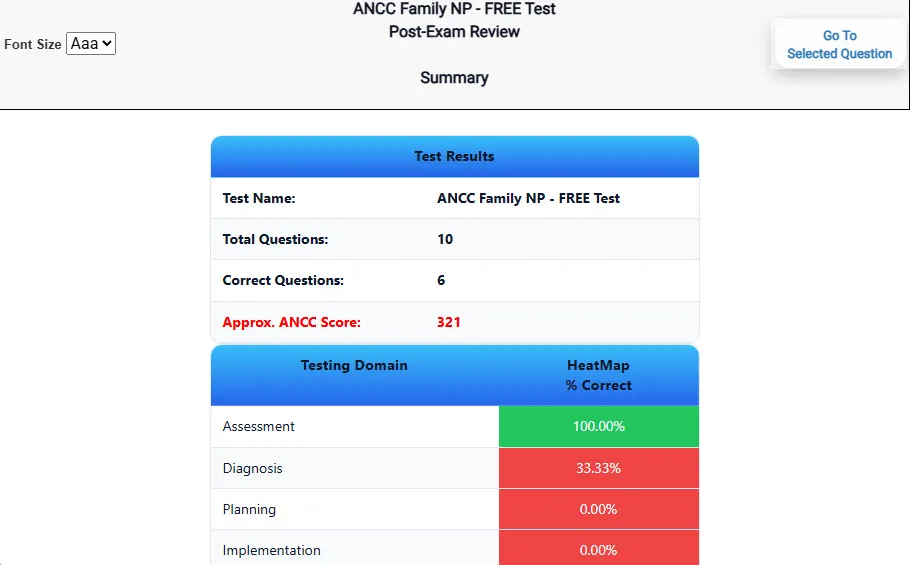
Heatmaps and scaled scores highlight weak areas.

High-Yield Rationales

Concise explanations emphasize key concepts.

Realistic Interface

Matches the feel of the actual exam environment.

Accessible by Design

Clean layout reduces cognitive load.

Anytime, Anywhere

Web-based access 24/7 on any device.
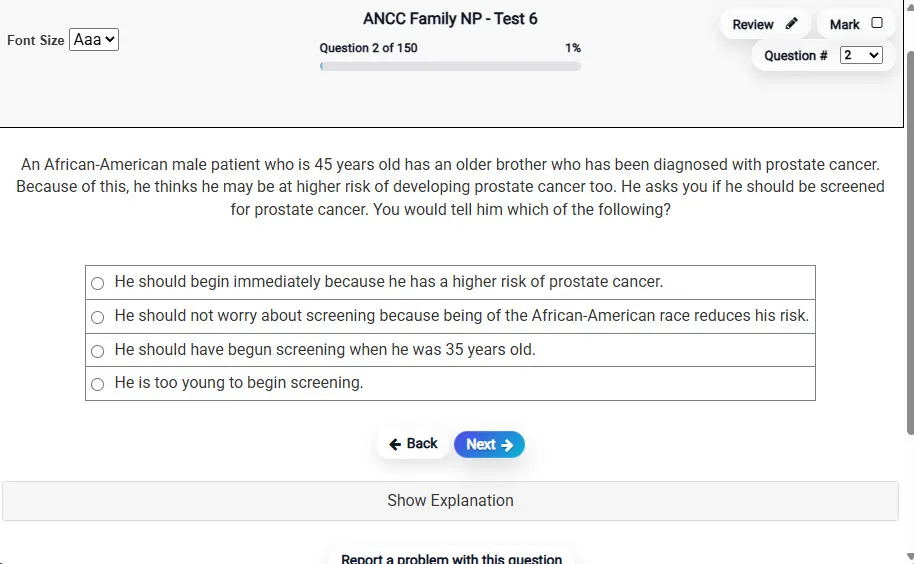
Answering a Question screen – Multiple-choice item view with navigation controls and progress tracker.
Answering a Question Multiple-choice item view with navigation controls and progress tracker.

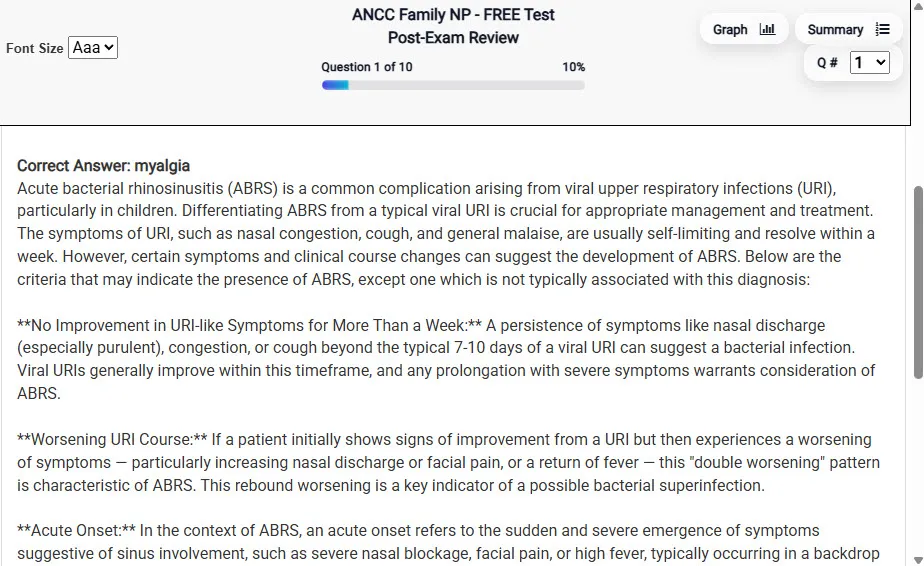
                           Detailed Explanation screen – 
                         Review mode showing chosen answer and rationale and references.
Detailed Explanation Review mode showing chosen answer and rationale and references.

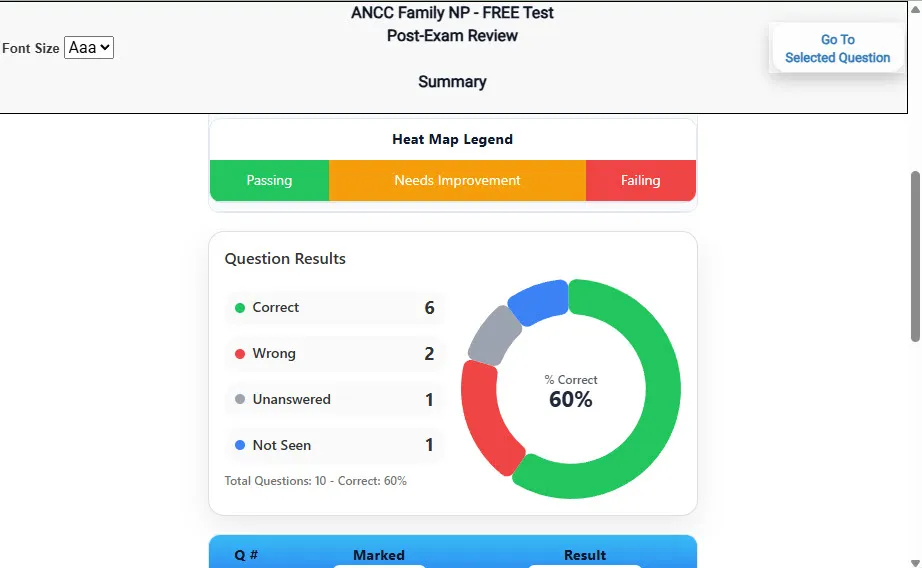
                           Review Summary 1 screen – 
                         Summary with counts for correct/wrong/unanswered and not seen items.
Review Summary 1 Summary with counts for correct/wrong/unanswered and not seen items.

                           Review Summary 2 screen – 
                         Advanced summary with category/domain breakdown and performance insights.
Review Summary 2 Advanced summary with category/domain breakdown and performance insights.

What Each Screen Shows

Answer Question Screen

  • Clean multiple-choice interface with progress bar.
  • Mark for review feature.
  • Matches real test pacing.

Detailed Explanation

  • Correct answer plus rationale.
  • Key concepts and guidelines highlighted.
  • Move between questions to fill knowledge gaps.

Review Summary 1

  • Overall results with total questions and scaled score.
  • Domain heatmap shows strengths and weaknesses.
  • Quick visual feedback on study priorities.

Review Summary 2

  • Chart of correct, wrong, unanswered, not seen.
  • Color-coded results for easy review.
  • Links back to missed items.

Top 10 Reasons to Use Exam Edge for your NYSTCE CST Health Education Exam Prep

  1. Focused on the NYSTCE CST Health Education Exam

    Our practice tests are built specifically for the NYSTCE CST Health Education exam — every question mirrors the real topics, format, and difficulty so you're studying exactly what matters.

  2. Real Exam Simulation

    We match the per-question time limits and pressure of the actual NYSTCE exam, so test day feels familiar and stress-free.

  3. 20 Full Practice Tests & 2,000 Unique Questions

    You'll have more than enough material to master every NYSTCE CST Health Education concept — no repeats, no fluff.

  4. Lower Cost Than a Retake

    Ordering 5 practice exams costs less than retaking the NYSTCE CST Health Education exam after a failure. One low fee could save you both time and money.

  5. Flexible Testing

    Need to step away mid-exam? Pick up right where you left off — with your remaining time intact.

  6. Instant Scoring & Feedback

    See your raw score and an estimated NYSTCE CST Health Education score immediately after finishing each practice test.

  7. Detailed Explanations for Every Question

    Review correct and incorrect answers with clear, step-by-step explanations so you truly understand each topic.

  8. Trusted & Accredited

    We're fully accredited by the Better Business Bureau and uphold the highest standards of trust and transparency.

  9. Web-Based & Always Available

    No software to install. Access your NYSTCE CST Health Education practice exams 24/7 from any computer or mobile device.

  10. Expert Support When You Need It

    Need extra help? Our specialized tutors are highly qualified and ready to support your NYSTCE exam prep.


Pass the NYSTCE CST Health Education Exam with Realistic Practice Tests from Exam Edge

Preparing for your upcoming NYSTCE CST Health Education (073) Certification Exam can feel overwhelming — but the right practice makes all the difference. Exam Edge gives you the tools, structure, and confidence to pass on your first try. Our online practice exams are built to match the real NYSTCE CST Health Education exam in content, format, and difficulty.

  • 📝 20 NYSTCE CST Health Education Practice Tests: Access 20 full-length exams with 100 questions each, covering every major NYSTCE CST Health Education topic in depth.
  • Instant Online Access: Start practicing right away — no software, no waiting.
  • 🧠 Step-by-Step Explanations: Understand the reasoning behind every correct answer so you can master NYSTCE CST Health Education exam concepts.
  • 🔄 Retake Each Exam Up to 4 Times: Build knowledge through repetition and track your improvement over time.
  • 🌐 Web-Based & Available 24/7: Study anywhere, anytime, on any device.
  • 🧘 Boost Your Test-Day Confidence: Familiarity with the NYSTCE format reduces anxiety and helps you perform under pressure.

These NYSTCE CST Health Education practice exams are designed to simulate the real testing experience by matching question types, timing, and difficulty level. This approach helps you get comfortable not just with the exam content, but also with the testing environment, so you walk into your exam day focused and confident.


Exam Edge NYSTCE Reviews


Not a user friendly experience

Amelia , Rochester, New York

Didn't really reflect the questions that were on the test for the most part. Also, they totally got the format of the constructed response question wrong, which never changes. Overall OK if you have nothing else, but definitely not worth the price they charge in my opinion.

Randy , Queens, New York

It was a good test run. Now I know what to expect and what I need to study.

Timothy , Eden, New York

The experience was very practical and I did well.

Trina , Silver Spring , MD

Very easy to navigate.

Collene , Silver Spring , MD

Exam Edge was terrific. Even better than I hoped. Just completing and reviewing the tests are a great learning experience. I can't wait to take the certification test. Tom S.

Thomas , Port Washington, NY


NYSTCE CST Health Education Aliases Test Name

Here is a list of alternative names used for this exam.

  • NYSTCE CST Health Education
  • NYSTCE CST Health Education test
  • NYSTCE CST Health Education Certification Test
  • NYSTCE CST Health Education test
  • NYSTCE
  • NYSTCE 073
  • 073 test
  • NYSTCE CST Health Education (073)
  • CST Health Education certification