This is the content of the pop-over!

NYSTCE CST Gifted Education (064) Practice Tests & Test Prep by Exam Edge


NYSTCE CST Gifted Education  product image
(4.8)
Based on 34 Reviews

  • Real Exam Simulation: Timed questions and matching content build comfort for your NYSTCE CST Gifted Education test day.
  • Instant, 24/7 Access: Web-based NYSTCE CST Gifted Education practice exams with no software needed.
  • Clear Explanations: Step-by-step answers and explanations for your NYSTCE exam to strengthen understanding.
  • Boosted Confidence: Reduces anxiety and improves test-taking skills to ace your NYSTCE CST Gifted Education (064).

Featured on

NYSTCE CST Gifted Education Online Practice Test Bundles

BEST VALUE
15 practice tests

$149.25

$599.25

SAVE $450

Only $9.95 per test!

  • 100% Pass Guarantee
  • 15 online practice tests
  • 90 questions per test
  • Bonus: 100 Flash Cards + Study Guide
  • Instant access
  • Detailed Explanations
  • Practice tests never expire
  • Timed, untimed, or study guide mode
MOST POPULAR
10 practice tests

$99.50

$399.50

SAVE $300

Only $9.95 per test!

  • 10 online practice tests
  • 90 questions per test
  • Bonus: 100 Flash Cards + Study Guide
  • Instant access
  • Detailed Explanations
  • Practice tests never expire
  • Timed, untimed, or study guide mode
5 practice tests

$69.75

$199.75

SAVE $130

Only $13.95 per test!

  • 5 online practice tests
  • 90 questions per test
  • Bonus: 100 Flash Cards
  • Instant access
  • Detailed Explanations
  • Practice tests never expire
  • Timed, untimed, or study guide mode
1 practice test

$39.95

  • 1 online practice test
  • 90 questions per test
  • Instant access
  • Detailed Explanations
  • Practice tests never expire
  • Timed, untimed, or study guide mode
Quick Select
Tap to choose a bundle

** All Prices are in US Dollars (USD) **


NYSTCE CST Gifted Education (064) Resources

Jump to the section you need most.

Understanding the exact breakdown of the NYSTCE CST Gifted Education test will help you know what to expect and how to most effectively prepare. The NYSTCE CST Gifted Education has 90 multiple-choice questions and 1 essay questions. The exam will be broken down into the sections below:

NYSTCE CST Gifted Education Exam Blueprint
Domain Name
Understanding Students with Gifts and Talents  
Assessment and Evaluation of Students with Gifts and Talents  
Promoting Student Development and Learning  
Working in the Professional Environment  
Promoting Student Development and Learning  

NYSTCE CST Gifted Education Study Tips by Domain

  • Recognize that giftedness can be domain-specific and asynchronous (e.g., advanced reasoning with age-typical fine motor or social skills); red flag: equating “high grades” with giftedness or missing students whose performance is uneven.
  • Identify characteristics of gifted learners such as rapid learning, intense curiosity, divergent thinking, and heightened sensitivity; common trap: mislabeling intensity or boredom as willful noncompliance instead of an instructional mismatch.
  • Account for twice-exceptionality (gifted plus disability/learning difference) where strengths can mask needs or needs can mask strengths; priority rule: consider both enrichment and accommodations rather than choosing one.
  • Understand how culture, language, and socioeconomic factors influence identification and classroom behaviors; red flag: relying on a single normed measure or teacher referral alone when bias may suppress nominations.
  • Know typical social-emotional patterns in gifted learners (perfectionism, imposter feelings, peer-fit concerns); contraindication: using only “more work” as a response when stress/anxiety signals a need for support.
  • Differentiate underachievement causes (lack of challenge, executive-function gaps, motivation, social factors) from low ability; common trap: attributing chronic underperformance to laziness without reviewing evidence of advanced potential.
  • Use multiple identification measures (e.g., achievement, ability, performance tasks, portfolios, teacher/parent input) across time; red flag: a single test score used as the sole gatekeeper for gifted eligibility.
  • Interpret assessment results with attention to validity, reliability, and norm group fit; common trap: comparing a student to inappropriate norms (e.g., local vs. national) and over-claiming “giftedness” from weak evidence.
  • Check for cultural, linguistic, disability, and socioeconomic bias in tools and referral pathways; priority rule: if English proficiency or disability impacts performance, include nonverbal measures and alternative demonstrations of talent.
  • Align evaluation to instructional decisions (acceleration, enrichment, grouping, compacting) and document the rationale; red flag: assessment data collected but not used to change the student’s learning plan.
  • Monitor growth with pre/post measures and progress-monitoring tied to advanced outcomes; common trap: using grade-level benchmarks only, which can mask stagnation in high-performing students.
  • Maintain ethical and legal practices for data use, confidentiality, and communication with families; contraindication: sharing score reports or eligibility decisions without clear explanations of limitations and next steps.
  • Plan differentiated learning using preassessment to set readiness-based entry points; red flag: giving all students the same enrichment task without adjusting depth, complexity, or pace.
  • Use curriculum compacting when mastery is documented (e.g., high pretest performance and consistent class evidence) and replace eliminated work with advanced alternatives; common trap: “more work” instead of more challenging work.
  • Design instruction to foster higher-order thinking (analysis, synthesis, evaluation) with clear performance criteria; priority rule: align tasks to rigor targets rather than relying on “creative” activities with vague expectations.
  • Support gifted students’ social-emotional needs (perfectionism, underachievement, peer fit) through explicit coping and goal-setting strategies; red flag: interpreting avoidance or shutdown as laziness rather than maladaptive stress response.
  • Implement flexible grouping (cluster, cross-grade, interest-based) based on data and specific objectives; common trap: static ability groups that become tracking and limit access to advanced peers or content.
  • Provide culturally responsive, bias-aware instruction and multiple avenues to demonstrate learning; contraindication: equating giftedness with compliance, English proficiency, or prior access to enrichment.
  • Know New York requirements for referral, identification, and service documentation (e.g., local district procedures, parent notification, and recordkeeping)—red flag: providing gifted services without written placement/service plan documentation per local policy.
  • Apply confidentiality rules (FERPA) and follow district protocols when sharing student data—common trap: discussing a student’s test scores or eligibility in public spaces or via unsecured email.
  • Use collaborative problem-solving with families and multidisciplinary teams to align goals, supports, and acceleration decisions—priority rule: document consensus and next steps after meetings to prevent implementation gaps.
  • Demonstrate equity and cultural responsiveness in professional practice (bias-aware identification, inclusive communication, access to advanced opportunities)—red flag: relying solely on a single standardized score as a gatekeeper.
  • Follow ethical practice and professional boundaries (avoiding conflicts of interest, fair grading, appropriate advocacy)—common trap: recommending private testing/tutoring services where you have a personal or financial connection.
  • Use ongoing professional learning and data-informed program evaluation to improve gifted services (progress monitoring, curriculum audits, outcome measures)—threshold cue: if multiple students underperform after acceleration, re-evaluate fit and supports rather than attributing it to motivation.
  • Design differentiated instruction using pre-assessment to set starting points; red flag: relying on “more work” or faster pacing instead of greater depth, complexity, and abstraction.
  • Use flexible grouping (cluster, interest-based, cross-grade) with clear entry/exit criteria; common trap: permanent “high group” tracking that limits access and growth for others.
  • Plan for acceleration options (curriculum compacting, subject acceleration, early access) supported by evidence of readiness; priority rule: match acceleration to demonstrated mastery, not parent request alone.
  • Build independent learning skills (goal setting, time management, self-advocacy) with explicit checkpoints; red flag: assuming gifted students automatically have executive-function skills and need no structure.
  • Support social-emotional development (perfectionism, anxiety, underachievement, peer relations) through classroom norms and targeted strategies; common trap: interpreting avoidance or refusal as defiance rather than fear of failure.
  • Integrate culturally responsive practices and multiple ways to demonstrate learning; red flag: equating “gifted” solely with verbal fluency or compliance, which can mask talent in multilingual and twice-exceptional students.


Built to Fit Into Your Busy Life

Everything you need to prepare with confidence—without wasting a minute.

Three Study Modes

Timed, No Time Limit, or Explanation mode.

Actionable Analytics

Heatmaps and scaled scores highlight weak areas.

High-Yield Rationales

Concise explanations emphasize key concepts.

Realistic Interface

Matches the feel of the actual exam environment.

Accessible by Design

Clean layout reduces cognitive load.

Anytime, Anywhere

Web-based access 24/7 on any device.
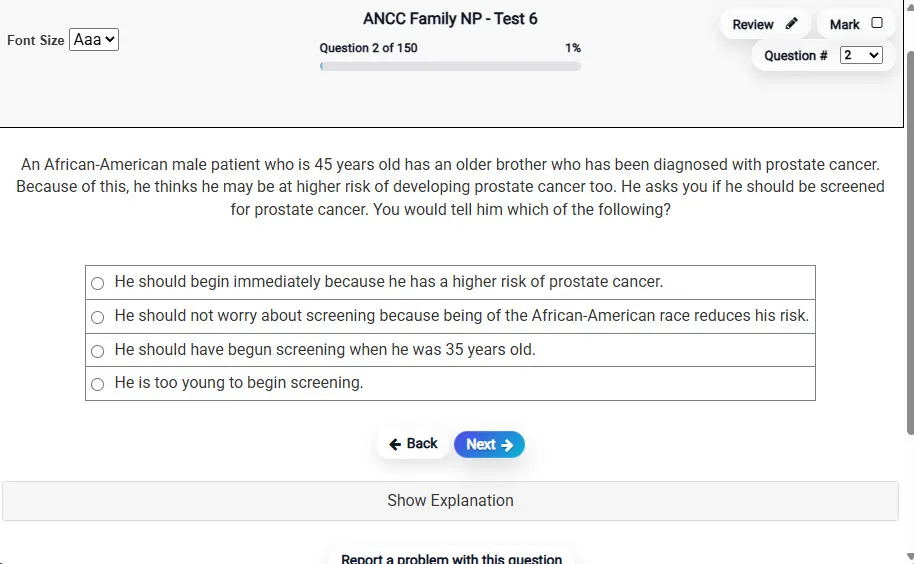
Answering a Question screen – Multiple-choice item view with navigation controls and progress tracker.
Answering a Question Multiple-choice item view with navigation controls and progress tracker.

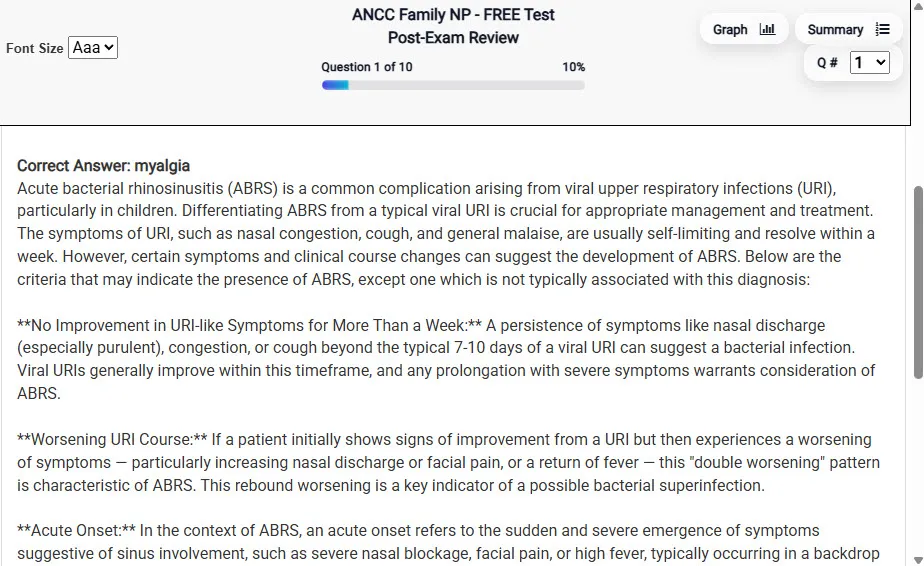
                           Detailed Explanation screen – 
                         Review mode showing chosen answer and rationale and references.
Detailed Explanation Review mode showing chosen answer and rationale and references.

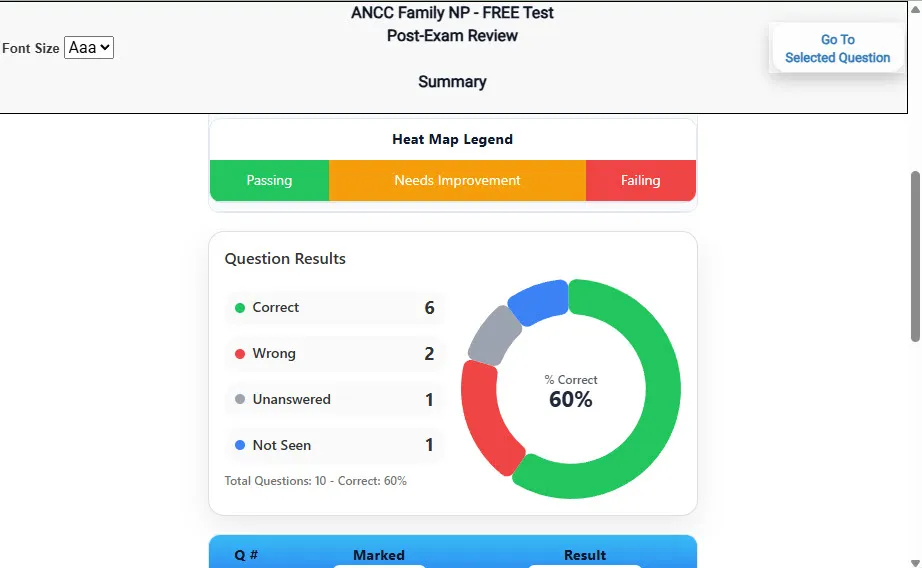
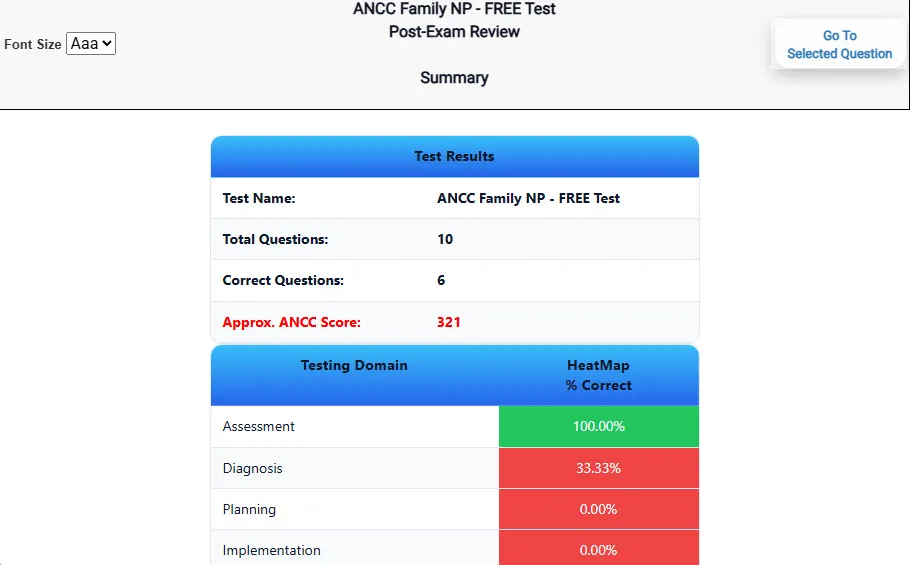
                           Review Summary 1 screen – 
                         Summary with counts for correct/wrong/unanswered and not seen items.
Review Summary 1 Summary with counts for correct/wrong/unanswered and not seen items.

                           Review Summary 2 screen – 
                         Advanced summary with category/domain breakdown and performance insights.
Review Summary 2 Advanced summary with category/domain breakdown and performance insights.

What Each Screen Shows

Answer Question Screen

  • Clean multiple-choice interface with progress bar.
  • Mark for review feature.
  • Matches real test pacing.

Detailed Explanation

  • Correct answer plus rationale.
  • Key concepts and guidelines highlighted.
  • Move between questions to fill knowledge gaps.

Review Summary 1

  • Overall results with total questions and scaled score.
  • Domain heatmap shows strengths and weaknesses.
  • Quick visual feedback on study priorities.

Review Summary 2

  • Chart of correct, wrong, unanswered, not seen.
  • Color-coded results for easy review.
  • Links back to missed items.

Top 10 Reasons to Use Exam Edge for your NYSTCE CST Gifted Education Exam Prep

  1. Focused on the NYSTCE CST Gifted Education Exam

    Our practice tests are built specifically for the NYSTCE CST Gifted Education exam — every question mirrors the real topics, format, and difficulty so you're studying exactly what matters.

  2. Real Exam Simulation

    We match the per-question time limits and pressure of the actual NYSTCE exam, so test day feels familiar and stress-free.

  3. 15 Full Practice Tests & 1,350 Unique Questions

    You'll have more than enough material to master every NYSTCE CST Gifted Education concept — no repeats, no fluff.

  4. Lower Cost Than a Retake

    Ordering 5 practice exams costs less than retaking the NYSTCE CST Gifted Education exam after a failure. One low fee could save you both time and money.

  5. Flexible Testing

    Need to step away mid-exam? Pick up right where you left off — with your remaining time intact.

  6. Instant Scoring & Feedback

    See your raw score and an estimated NYSTCE CST Gifted Education score immediately after finishing each practice test.

  7. Detailed Explanations for Every Question

    Review correct and incorrect answers with clear, step-by-step explanations so you truly understand each topic.

  8. Trusted & Accredited

    We're fully accredited by the Better Business Bureau and uphold the highest standards of trust and transparency.

  9. Web-Based & Always Available

    No software to install. Access your NYSTCE CST Gifted Education practice exams 24/7 from any computer or mobile device.

  10. Expert Support When You Need It

    Need extra help? Our specialized tutors are highly qualified and ready to support your NYSTCE exam prep.


Pass the NYSTCE CST Gifted Education Exam with Realistic Practice Tests from Exam Edge

Preparing for your upcoming NYSTCE CST Gifted Education (064) Certification Exam can feel overwhelming — but the right practice makes all the difference. Exam Edge gives you the tools, structure, and confidence to pass on your first try. Our online practice exams are built to match the real NYSTCE CST Gifted Education exam in content, format, and difficulty.

  • 📝 15 NYSTCE CST Gifted Education Practice Tests: Access 15 full-length exams with 90 questions each, covering every major NYSTCE CST Gifted Education topic in depth.
  • Instant Online Access: Start practicing right away — no software, no waiting.
  • 🧠 Step-by-Step Explanations: Understand the reasoning behind every correct answer so you can master NYSTCE CST Gifted Education exam concepts.
  • 🔄 Retake Each Exam Up to 4 Times: Build knowledge through repetition and track your improvement over time.
  • 🌐 Web-Based & Available 24/7: Study anywhere, anytime, on any device.
  • 🧘 Boost Your Test-Day Confidence: Familiarity with the NYSTCE format reduces anxiety and helps you perform under pressure.

These NYSTCE CST Gifted Education practice exams are designed to simulate the real testing experience by matching question types, timing, and difficulty level. This approach helps you get comfortable not just with the exam content, but also with the testing environment, so you walk into your exam day focused and confident.


Exam Edge NYSTCE Reviews


Not a user friendly experience

Amelia , Rochester, New York

Didn't really reflect the questions that were on the test for the most part. Also, they totally got the format of the constructed response question wrong, which never changes. Overall OK if you have nothing else, but definitely not worth the price they charge in my opinion.

Randy , Queens, New York

It was a good test run. Now I know what to expect and what I need to study.

Timothy , Eden, New York

The experience was very practical and I did well.

Trina , Silver Spring , MD

Very easy to navigate.

Collene , Silver Spring , MD

Exam Edge was terrific. Even better than I hoped. Just completing and reviewing the tests are a great learning experience. I can't wait to take the certification test. Tom S.

Thomas , Port Washington, NY


NYSTCE CST Gifted Education Aliases Test Name

Here is a list of alternative names used for this exam.

  • NYSTCE CST Gifted Education
  • NYSTCE CST Gifted Education test
  • NYSTCE CST Gifted Education Certification Test
  • NYSTCE CST Gifted Education test
  • NYSTCE
  • NYSTCE 064
  • 064 test
  • NYSTCE CST Gifted Education (064)
  • CST Gifted Education certification