This is the content of the pop-over!

NYSTCE CST Family and Consumer Sciences (072) Practice Tests & Test Prep by Exam Edge


NYSTCE CST Family and Consumer Sciences  product image
(4.5)
Based on 17 Reviews

  • Real Exam Simulation: Timed questions and matching content build comfort for your NYSTCE CST Family and Consumer Sciences test day.
  • Instant, 24/7 Access: Web-based NYSTCE CST Family and Consumer Sciences practice exams with no software needed.
  • Clear Explanations: Step-by-step answers and explanations for your NYSTCE exam to strengthen understanding.
  • Boosted Confidence: Reduces anxiety and improves test-taking skills to ace your NYSTCE CST Family and Consumer Sciences (072).

Featured on

NYSTCE CST Family and Consumer Sciences Online Practice Test Bundles

BEST VALUE
20 practice tests

$174.00

$799.00

SAVE $625

Only $8.70 per test!

  • 100% Pass Guarantee
  • 20 online practice tests
  • 90 questions per test
  • Bonus: 100 Flash Cards + Study Guide
  • Instant access
  • Detailed Explanations
  • Practice tests never expire
  • Timed, untimed, or study guide mode
MOST POPULAR
10 practice tests

$99.50

$399.50

SAVE $300

Only $9.95 per test!

  • 10 online practice tests
  • 90 questions per test
  • Bonus: 100 Flash Cards + Study Guide
  • Instant access
  • Detailed Explanations
  • Practice tests never expire
  • Timed, untimed, or study guide mode
5 practice tests

$69.75

$199.75

SAVE $130

Only $13.95 per test!

  • 5 online practice tests
  • 90 questions per test
  • Bonus: 100 Flash Cards
  • Instant access
  • Detailed Explanations
  • Practice tests never expire
  • Timed, untimed, or study guide mode
1 practice test

$39.95

  • 1 online practice test
  • 90 questions per test
  • Instant access
  • Detailed Explanations
  • Practice tests never expire
  • Timed, untimed, or study guide mode
Quick Select
Tap to choose a bundle

** All Prices are in US Dollars (USD) **


NYSTCE CST Family and Consumer Sciences (072) Resources

Jump to the section you need most.

Understanding the exact breakdown of the NYSTCE CST Family and Consumer Sciences test will help you know what to expect and how to most effectively prepare. The NYSTCE CST Family and Consumer Sciences has 90 multiple-choice questions and 1 essay questions. The exam will be broken down into the sections below:

NYSTCE CST Family and Consumer Sciences Exam Blueprint
Domain Name
Individual and Family Health and Wellness  
Human Development and Parenting  
Interpersonal and Family Relationships  
Nutrition - Food Science Food Production  
Consumer Skills and Resource Management  
Workplace Skills and Careers  

NYSTCE CST Family and Consumer Sciences Study Tips by Domain

  • Distinguish wellness dimensions (physical, mental/emotional, social, environmental) and choose interventions that match the root cause; red flag: recommending a single “one-size-fits-all” solution for multifactor issues like stress-related sleep problems.
  • Apply basic hygiene and communicable disease prevention (handwashing, respiratory etiquette, staying home when ill) using “break the chain of infection” logic; common trap: assuming antibiotics help viral illnesses.
  • Recognize mental health warning signs (persistent sadness, withdrawal, self-harm talk) and follow a safety-first referral approach; priority rule: imminent risk requires immediate adult/appropriate authority involvement, not confidentiality promises.
  • Use accurate health information literacy skills (evaluate source credibility, bias, and evidence level) before making recommendations; red flag: relying on testimonials, influencer content, or “miracle” claims without peer-reviewed support.
  • Address substance use and misuse (alcohol, nicotine/vaping, cannabis, prescription drugs) with a harm-prevention lens and refusal/decision skills; common trap: underestimating impairment and overdose risk when mixing substances (e.g., alcohol plus sedatives).
  • Promote safe personal and family practices (sleep, physical activity, injury prevention, basic first aid) with age-appropriate planning; threshold cue: teach “check, call, care”—assess scene safety, call for help when needed, then provide appropriate care.
  • Apply major developmental theories (e.g., Piaget, Erikson, Vygotsky) to age-appropriate expectations; red flag: using adult reasoning standards to judge preschool behavior.
  • Differentiate typical development from potential delay using milestone ranges (gross motor, fine motor, language, social-emotional); common trap: treating a single missed milestone as a diagnosis rather than a cue for observation/referral.
  • Compare parenting styles (authoritative, authoritarian, permissive, uninvolved) and likely child outcomes; priority rule: consistent, warm structure is generally most protective in classroom and home contexts.
  • Use positive guidance and discipline strategies (clear rules, natural/logical consequences, reinforcement); contraindication: corporal punishment or humiliation as it escalates behavior and harms attachment/trust.
  • Identify abuse/neglect indicators and appropriate reporting steps consistent with school-based expectations; red flag: unexplained injuries, patterned bruises, extreme fearfulness, or disclosure—do not investigate, document objectively and report.
  • Promote safe, healthy caregiving practices (safe sleep, car-seat use, supervision, poisoning/choking prevention); threshold cue: any unsafe sleep setup (soft bedding, prone position for infants) requires immediate correction and caregiver education.
  • Use active listening (attending, paraphrasing, clarifying) to reduce escalation; red flag: responding with advice or judgment before reflecting what was heard.
  • Apply assertive communication with “I” statements and specific behavior descriptions; common trap: “you always/never” language that triggers defensiveness and shuts down problem solving.
  • Recognize healthy vs. unhealthy relationship patterns (respect, boundaries, consent, power balance); priority rule: any coercion, intimidation, or isolation tactics indicate an unsafe dynamic.
  • Use conflict-resolution steps (define issue, generate options, evaluate, agree, follow-up); red flag: trying to “win” the argument rather than address needs and shared goals.
  • Identify family systems influences (roles, rules, boundaries, communication patterns) on behavior; common trap: blaming one person without considering feedback loops and enabling dynamics.
  • Know mandated reporter responsibilities and appropriate referral pathways in NY school contexts; contraindication: promising confidentiality when abuse, neglect, or self-harm risk is disclosed.
  • Apply Dietary Guidelines and MyPlate to plan meals across the life span; red flag: confusing portion size with serving size when evaluating intake.
  • Interpret Nutrition Facts labels (including %DV, added sugars, and sodium) to compare products; common trap: assuming “natural,” “multigrain,” or “light” claims automatically mean healthier.
  • Use food science principles (heat transfer, gelatinization, emulsions, and protein denaturation) to predict product outcomes; priority rule: change one variable at a time when troubleshooting a failed recipe.
  • Prevent foodborne illness using time/temperature control and cross-contamination prevention; threshold cue: keep TCS foods out of the danger zone (40–140°F) and reheat leftovers to 165°F.
  • Modify recipes for dietary needs (allergies, diabetes, hypertension, vegetarian patterns) while maintaining function; contraindication: do not substitute ingredients in baked goods without accounting for structure (e.g., gluten, eggs, leavening).
  • Plan, produce, and evaluate foods using standardized recipes, yield/costing, and sensory evaluation; common trap: failing to scale ingredients correctly when changing yield, leading to quality and cost errors.
  • Build and interpret a spending plan using net income, fixed vs. variable expenses, and savings goals; red flag: confusing gross pay with take-home pay leads to unrealistic budgets.
  • Compare credit options (APR, fees, grace periods, minimum payments) and calculate total cost over time; common trap: focusing on monthly payment only while ignoring interest and term length.
  • Apply consumer protection basics (warranties, contracts, returns, identity theft prevention) and document purchases with receipts and serial numbers; priority rule: never sign a contract you haven’t read for penalties and cancellation terms.
  • Evaluate housing choices (rent vs. buy, leases, utilities, maintenance) and compute affordability; threshold cue: keep total housing costs within a manageable portion of income to avoid “cost-burden” scenarios.
  • Use comparison shopping strategies (unit pricing, quality indicators, total cost of ownership) to make informed purchases; red flag: bulk buying is not a bargain if spoilage, storage, or usage rate isn’t considered.
  • Plan for financial risk management with insurance types (health, auto, renter’s/homeowner’s) and emergency funds; contraindication cue: selecting the lowest premium without checking deductibles and coverage limits can create unaffordable out-of-pocket costs.
  • Connect career planning to verifiable labor-market info (e.g., NYS pathways, credentials, entry requirements) and require students to match interests/aptitudes to a realistic training plan—red flag: “dream job” goals with no steps, costs, or timelines.
  • Teach workplace laws and protections (child labor limits, harassment, discrimination, wage-and-hour basics, mandated reporting expectations in youth-serving roles) and emphasize documentation—common trap: assuming “at-will” means any termination or workplace rule is automatically legal.
  • Reinforce employability skills through authentic artifacts (targeted résumés, cover letters, references, portfolios) aligned to a specific posting—priority rule: customize to the job description, not a one-size-fits-all résumé.
  • Include interview and professional communication norms (email etiquette, phone/virtual interview setup, appropriate self-disclosure) and require a follow-up message—red flag: informal tone, slang, or oversharing personal issues in workplace communication.
  • Address workplace safety and risk management (hazards, PPE, ergonomics, food/child-care safety procedures where applicable) and stress “stop and report” for unsafe conditions—common trap: trying to “fix it yourself” instead of following reporting protocols.
  • Cover workplace finance and benefits basics (pay stubs, taxes, direct deposit, overtime, basic benefits) and have students verify net vs. gross pay—threshold cue: if take-home pay seems off, check withholding, deductions, and hours before blaming “low wages.”


Built to Fit Into Your Busy Life

Everything you need to prepare with confidence—without wasting a minute.

Three Study Modes

Timed, No Time Limit, or Explanation mode.

Actionable Analytics

Heatmaps and scaled scores highlight weak areas.

High-Yield Rationales

Concise explanations emphasize key concepts.

Realistic Interface

Matches the feel of the actual exam environment.

Accessible by Design

Clean layout reduces cognitive load.

Anytime, Anywhere

Web-based access 24/7 on any device.
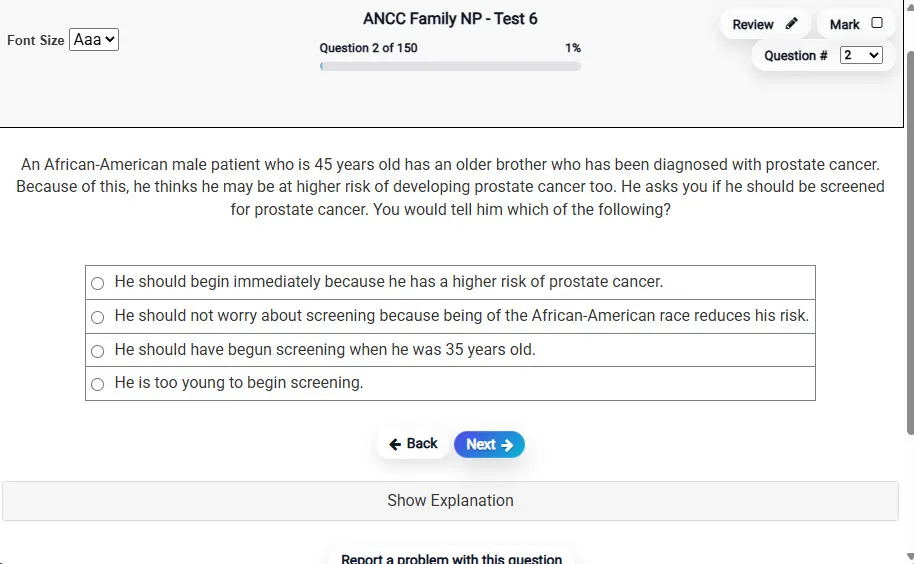
Answering a Question screen – Multiple-choice item view with navigation controls and progress tracker.
Answering a Question Multiple-choice item view with navigation controls and progress tracker.

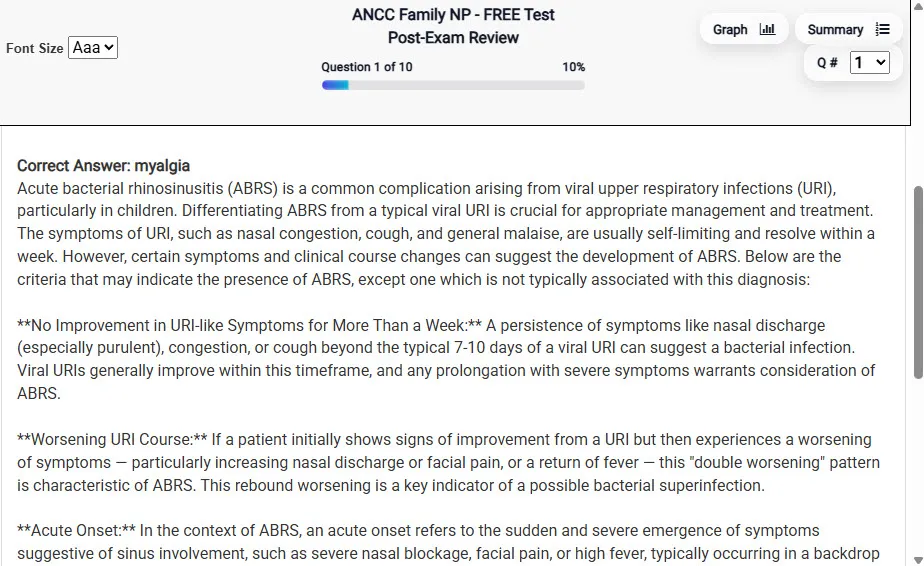
                           Detailed Explanation screen – 
                         Review mode showing chosen answer and rationale and references.
Detailed Explanation Review mode showing chosen answer and rationale and references.

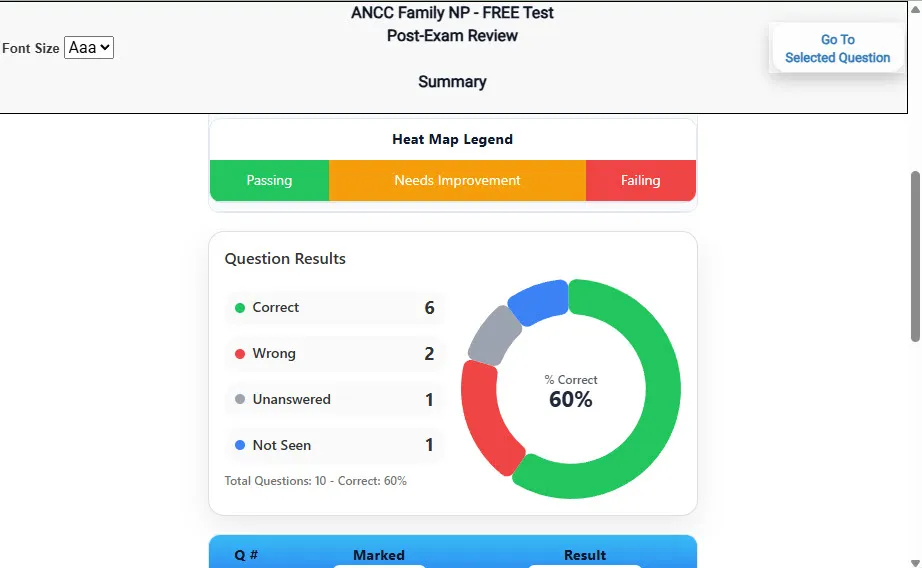
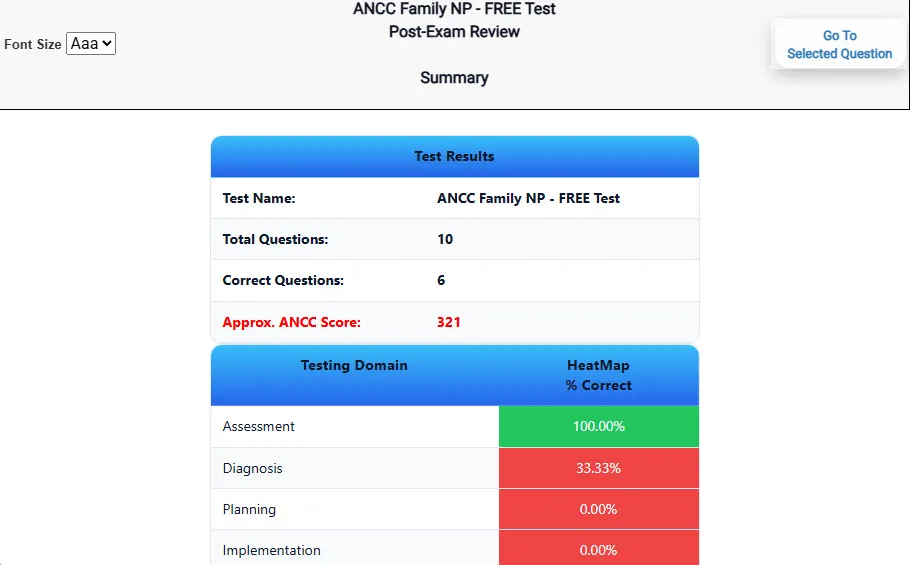
                           Review Summary 1 screen – 
                         Summary with counts for correct/wrong/unanswered and not seen items.
Review Summary 1 Summary with counts for correct/wrong/unanswered and not seen items.

                           Review Summary 2 screen – 
                         Advanced summary with category/domain breakdown and performance insights.
Review Summary 2 Advanced summary with category/domain breakdown and performance insights.

What Each Screen Shows

Answer Question Screen

  • Clean multiple-choice interface with progress bar.
  • Mark for review feature.
  • Matches real test pacing.

Detailed Explanation

  • Correct answer plus rationale.
  • Key concepts and guidelines highlighted.
  • Move between questions to fill knowledge gaps.

Review Summary 1

  • Overall results with total questions and scaled score.
  • Domain heatmap shows strengths and weaknesses.
  • Quick visual feedback on study priorities.

Review Summary 2

  • Chart of correct, wrong, unanswered, not seen.
  • Color-coded results for easy review.
  • Links back to missed items.

Top 10 Reasons to Use Exam Edge for your NYSTCE CST Family and Consumer Sciences Exam Prep

  1. Focused on the NYSTCE CST Family and Consumer Sciences Exam

    Our practice tests are built specifically for the NYSTCE CST Family and Consumer Sciences exam — every question mirrors the real topics, format, and difficulty so you're studying exactly what matters.

  2. Real Exam Simulation

    We match the per-question time limits and pressure of the actual NYSTCE exam, so test day feels familiar and stress-free.

  3. 20 Full Practice Tests & 1,800 Unique Questions

    You'll have more than enough material to master every NYSTCE CST Family and Consumer Sciences concept — no repeats, no fluff.

  4. Lower Cost Than a Retake

    Ordering 5 practice exams costs less than retaking the NYSTCE CST Family and Consumer Sciences exam after a failure. One low fee could save you both time and money.

  5. Flexible Testing

    Need to step away mid-exam? Pick up right where you left off — with your remaining time intact.

  6. Instant Scoring & Feedback

    See your raw score and an estimated NYSTCE CST Family and Consumer Sciences score immediately after finishing each practice test.

  7. Detailed Explanations for Every Question

    Review correct and incorrect answers with clear, step-by-step explanations so you truly understand each topic.

  8. Trusted & Accredited

    We're fully accredited by the Better Business Bureau and uphold the highest standards of trust and transparency.

  9. Web-Based & Always Available

    No software to install. Access your NYSTCE CST Family and Consumer Sciences practice exams 24/7 from any computer or mobile device.

  10. Expert Support When You Need It

    Need extra help? Our specialized tutors are highly qualified and ready to support your NYSTCE exam prep.


Pass the NYSTCE CST Family and Consumer Sciences Exam with Realistic Practice Tests from Exam Edge

Preparing for your upcoming NYSTCE CST Family and Consumer Sciences (072) Certification Exam can feel overwhelming — but the right practice makes all the difference. Exam Edge gives you the tools, structure, and confidence to pass on your first try. Our online practice exams are built to match the real NYSTCE CST Family and Consumer Sciences exam in content, format, and difficulty.

  • 📝 20 NYSTCE CST Family and Consumer Sciences Practice Tests: Access 20 full-length exams with 90 questions each, covering every major NYSTCE CST Family and Consumer Sciences topic in depth.
  • Instant Online Access: Start practicing right away — no software, no waiting.
  • 🧠 Step-by-Step Explanations: Understand the reasoning behind every correct answer so you can master NYSTCE CST Family and Consumer Sciences exam concepts.
  • 🔄 Retake Each Exam Up to 4 Times: Build knowledge through repetition and track your improvement over time.
  • 🌐 Web-Based & Available 24/7: Study anywhere, anytime, on any device.
  • 🧘 Boost Your Test-Day Confidence: Familiarity with the NYSTCE format reduces anxiety and helps you perform under pressure.

These NYSTCE CST Family and Consumer Sciences practice exams are designed to simulate the real testing experience by matching question types, timing, and difficulty level. This approach helps you get comfortable not just with the exam content, but also with the testing environment, so you walk into your exam day focused and confident.


Exam Edge NYSTCE Reviews


Not a user friendly experience

Amelia , Rochester, New York

Didn't really reflect the questions that were on the test for the most part. Also, they totally got the format of the constructed response question wrong, which never changes. Overall OK if you have nothing else, but definitely not worth the price they charge in my opinion.

Randy , Queens, New York

It was a good test run. Now I know what to expect and what I need to study.

Timothy , Eden, New York

The experience was very practical and I did well.

Trina , Silver Spring , MD

Very easy to navigate.

Collene , Silver Spring , MD

Exam Edge was terrific. Even better than I hoped. Just completing and reviewing the tests are a great learning experience. I can't wait to take the certification test. Tom S.

Thomas , Port Washington, NY


NYSTCE CST Family and Consumer Sciences Aliases Test Name

Here is a list of alternative names used for this exam.

  • NYSTCE CST Family and Consumer Sciences
  • NYSTCE CST Family and Consumer Sciences test
  • NYSTCE CST Family and Consumer Sciences Certification Test
  • NYSTCE
  • NYSTCE 072
  • 072 test
  • NYSTCE CST Family and Consumer Sciences (072)
  • CST Family and Consumer Sciences certification