This is the content of the pop-over!

Lightning Deal Alert – 12% Off Ends at Midnight!

Strike while the savings are hot! Use promo code FlashSale at checkout for 12% off any Exam Edge test or bundle. Hurry—the clock is ticking!

CSET Spanish (145, 146, 147) Practice Tests & Test Prep by Exam Edge


CSET Spanish  product image
(4.9)
Based on 29 Reviews

  • Real Exam Simulation: Timed questions and matching content build comfort for your CSET Spanish test day.
  • Instant, 24/7 Access: Web-based CSET Spanish practice exams with no software needed.
  • Clear Explanations: Step-by-step answers and explanations for your CSET exam to strengthen understanding.
  • Boosted Confidence: Reduces anxiety and improves test-taking skills to ace your CSET Spanish (145, 146, 147).

Featured on

CSET Spanish Online Practice Test Bundles

BEST VALUE
10 practice tests

$99.50

$399.50

SAVE $300

Only $9.95 per test!

  • 100% Pass Guarantee
  • 10 online practice tests
  • 100 questions per test
  • Bonus: 100 Flash Cards + Study Guide
  • Instant access
  • Detailed Explanations
  • Practice tests never expire
  • Timed, untimed, or study guide mode
5 practice tests

$69.75

$199.75

SAVE $130

Only $13.95 per test!

  • 5 online practice tests
  • 100 questions per test
  • Bonus: 100 Flash Cards + Study Guide
  • Instant access
  • Detailed Explanations
  • Practice tests never expire
  • Timed, untimed, or study guide mode
1 practice test

$39.95

  • 1 online practice test
  • 100 questions per test
  • Instant access
  • Detailed Explanations
  • Practice tests never expire
  • Timed, untimed, or study guide mode
Quick Select
Tap to choose a bundle

** All Prices are in US Dollars (USD) **


CSET Spanish (145, 146, 147) Resources

Jump to the section you need most.

Understanding the exact breakdown of the CSET Spanish test will help you know what to expect and how to most effectively prepare. The CSET Spanish has multiple-choice questions . The exam will be broken down into the sections below:

CSET Spanish Exam Blueprint
Domain Name
General Linguistics  
Linguistics of the Target Language  
Literary and Cultural Texts and Traditions  
Cultural Analysis and Comparisons  
Language and Communication: Listening Comprehension  
Language and Communication: Reading Comprehension  

CSET Spanish Study Tips by Domain

  • Distinguish core subfields (phonetics vs. phonology, morphology vs. syntax, semantics vs. pragmatics) and be ready to justify which level explains an error; red flag: describing a phonological pattern with purely articulatory (phonetic) terms.
  • Analyze phonological structure (phonemes, allophones, minimal pairs, syllable structure, stress) and state the evidence used; common trap: treating spelling differences as proof of different phonemes.
  • Identify morpheme types (free/bound, derivational/inflectional) and predict how they change meaning or grammatical features; cue: derivational morphology can change word class, inflection typically cannot.
  • Parse sentence structure using constituents, phrase types, and grammatical relations, and explain ambiguity with two distinct structures; red flag: confusing parts of speech with syntactic functions (e.g., “subject” vs. “noun”).
  • Apply semantics and pragmatics (sense vs. reference, entailment, presupposition, implicature, deixis) to interpret meaning in context; priority rule: if meaning changes with speaker/time/place, check deixis first.
  • Use language acquisition and variation concepts (interlanguage, transfer, registers/dialects, descriptivism) to evaluate learner data without value judgments; CTC-aligned cue: avoid “incorrect” when a form is dialectal or contextually appropriate.
  • Master Spanish phonology and phonotactics (e.g., syllable structure, stress rules, /b d g/ spirantization) and use IPA accurately; red flag: confusing accent marks with stress placement rules.
  • Handle morphology and word formation (derivation, compounding, diminutives/augmentatives, clitic attachment) with precise examples; common trap: treating “-mente” adverbs as changing the adjective’s agreement.
  • Apply core syntax (word order, subject omission, clitic pronouns, negation, questions, relative clauses) and justify acceptability; priority rule: differentiate direct vs. indirect object pronouns and “leísmo” as dialectal, not universal.
  • Use verbal system distinctions correctly (ser/estar, preterite/imperfect, subjunctive triggers, sequence of tenses, aspect/periphrasis); red flag: overusing subjunctive after expressions of certainty (“es cierto que” + indicative).
  • Demonstrate semantics and pragmatics (deixis, politeness/register, evidential stance, discourse markers) in context; common trap: equating “por” vs. “para” to a single English gloss instead of function (cause/means vs. purpose/deadline).
  • Recognize dialectal and sociolinguistic variation (seseo/ceceo, yeísmo, aspiration of /s/, voseo, lexical variation) without labeling forms as “incorrect”; priority cue: state region/register and the Standard Spanish alternative when asked for “norma culta”.
  • Be able to identify genre, movement, and period markers (e.g., mester de clerecía vs. Romántico vs. Boom)—red flag: giving plot summary instead of naming formal features that justify the classification.
  • Analyze how form creates meaning (meter, rhyme, imagery, narrative voice, dramatic structure)—common trap: calling a narrator “the author” or ignoring unreliable narration.
  • Connect major canonical works/authors to core themes (honor, identity, mestizaje, dictatorship, exile, colonialism)—priority rule: support claims with a specific textual detail (motif, symbol, quoted phrase, scene type).
  • Place texts within historical-cultural contexts across Spain, Latin America, and U.S. Latino/a traditions—red flag: treating “Hispanic culture” as monolithic instead of noting region, time, and sociopolitical conditions.
  • Interpret rhetorical and literary devices in Spanish (metáfora, anáfora, hipérbole, ironía, símil, metonimia)—common trap: mislabeling literal language as figurative or missing irony cues (tone shift, contradiction).
  • Compare texts and traditions (e.g., picaresque vs. costumbrismo; modernismo vs. vanguardias; realism vs. magical realism)—threshold cue: make at least one similarity and one difference tied to technique, not just topic.
  • Compare cultural practices and products across Spanish-speaking communities and the U.S., citing a concrete example (e.g., forms of address, holiday observances); red flag: treating “Hispanic culture” as one uniform set of norms.
  • Analyze how geography, migration, and historical events (e.g., colonization, independence movements, diaspora) shape identity and cultural expression; common trap: offering a timeline without linking it to a present-day cultural consequence.
  • Interpret cultural perspectives embedded in everyday interactions (personal space, turn-taking, politeness strategies) and explain likely cross-cultural misreadings; cue: don’t assume directness/indirectness carries the same value judgment in both cultures.
  • Evaluate institutions (education, religion, government, media) and their roles in maintaining or challenging cultural norms; priority rule: support claims with one specific institution-to-practice connection, not broad stereotypes.
  • Discuss social categories (race/ethnicity, class, gender, language variety) and how they affect opportunity and representation; red flag: confusing nationality with ethnicity or using pan-ethnic labels as if they erase local distinctions.
  • Use culturally appropriate comparisons in a scenario (travel, classroom, workplace) and propose an adaptive response; common trap: recommending assimilation as the only solution instead of mutual accommodation and clarification.
  • Identify the speaker’s main idea and purpose (to persuade, inform, request, narrate) before details; red flag: answers that latch onto a memorable anecdote but miss the overall intent.
  • Track who is speaking and to whom (register, pronouns, titles) to infer relationship and setting; common trap: choosing an option that fits the topic but mismatches formality (tú/usted) or role.
  • Use discourse markers (pues, sin embargo, o sea, en cambio, por lo tanto) to follow shifts and conclusions; priority rule: the clause after a contrast marker often contains the test-worthy point.
  • Differentiate facts, opinions, and hypotheticals by verb mood and tense (indicative vs. subjunctive, conditional); red flag: treating a wish/possibility (ojalá, puede que) as a confirmed event.
  • Attend to key details like time, numbers, and negation (no, nunca, apenas, ya); common trap: missing double negatives or “apenas” and reversing the meaning.
  • Infer meaning of unfamiliar words from context, cognates, and tone without over-translating; contraindication: false cognates (asistir, embarazada, constipado) that derail the correct interpretation.
  • Skim first for purpose, audience, and register (formal/informal) before details—a common trap is over-focusing on one unfamiliar word and missing the main idea.
  • Use context clues to infer meaning (contrast, cause/effect, examples) and avoid false cognates (e.g., “actualmente” = currently)—red flag if your translation sounds too English-literal.
  • Track referents across sentences (pronouns, demonstratives, relative clauses)—priority rule: explicitly identify what “lo/la/que” refers to before answering inference questions.
  • Distinguish stated vs. implied information—common trap: selecting an answer that is true in general but not supported by the passage’s evidence.
  • Recognize text structures (argument, narration, exposition, instructions) and signaling words (sin embargo, por lo tanto, además)—red flag if you ignore connectors that reverse or qualify a claim.
  • For questions on tone or attitude, cite lexical cues (modal verbs, evaluative adjectives, irony markers)—contraindication: choosing “neutral” when the author uses clearly value-laden language.


Built to Fit Into Your Busy Life

Everything you need to prepare with confidence—without wasting a minute.

Three Study Modes

Timed, No Time Limit, or Explanation mode.

Actionable Analytics

Heatmaps and scaled scores highlight weak areas.

High-Yield Rationales

Concise explanations emphasize key concepts.

Realistic Interface

Matches the feel of the actual exam environment.

Accessible by Design

Clean layout reduces cognitive load.

Anytime, Anywhere

Web-based access 24/7 on any device.
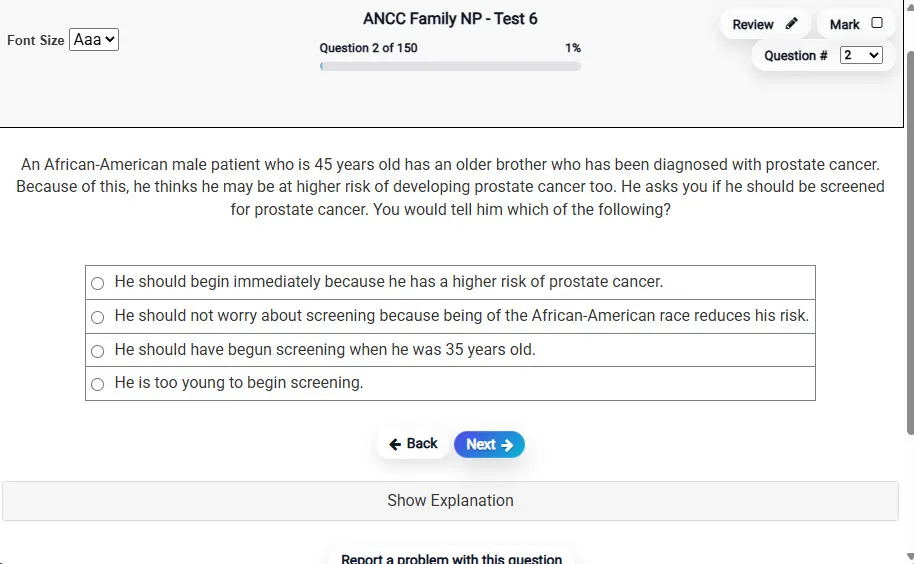
Answering a Question screen – Multiple-choice item view with navigation controls and progress tracker.
Answering a Question Multiple-choice item view with navigation controls and progress tracker.

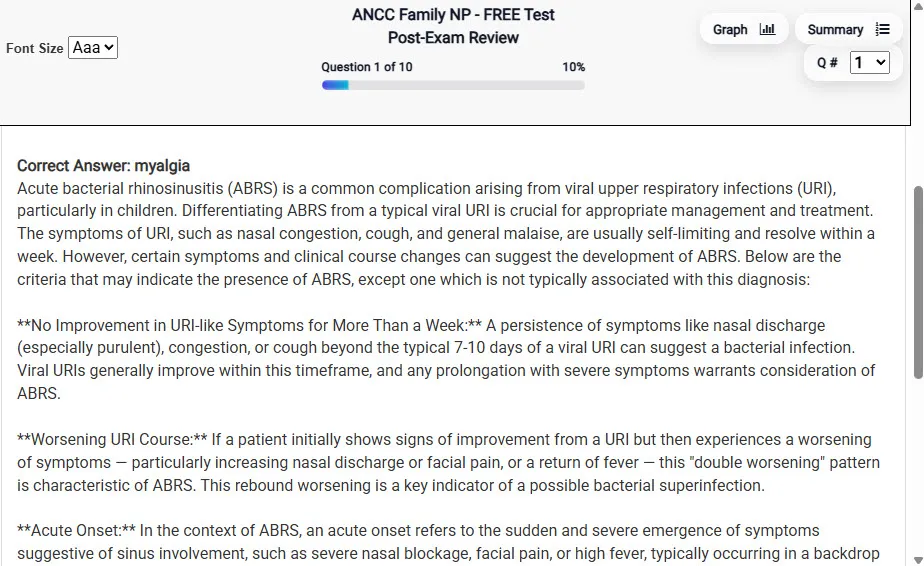
                           Detailed Explanation screen – 
                         Review mode showing chosen answer and rationale and references.
Detailed Explanation Review mode showing chosen answer and rationale and references.

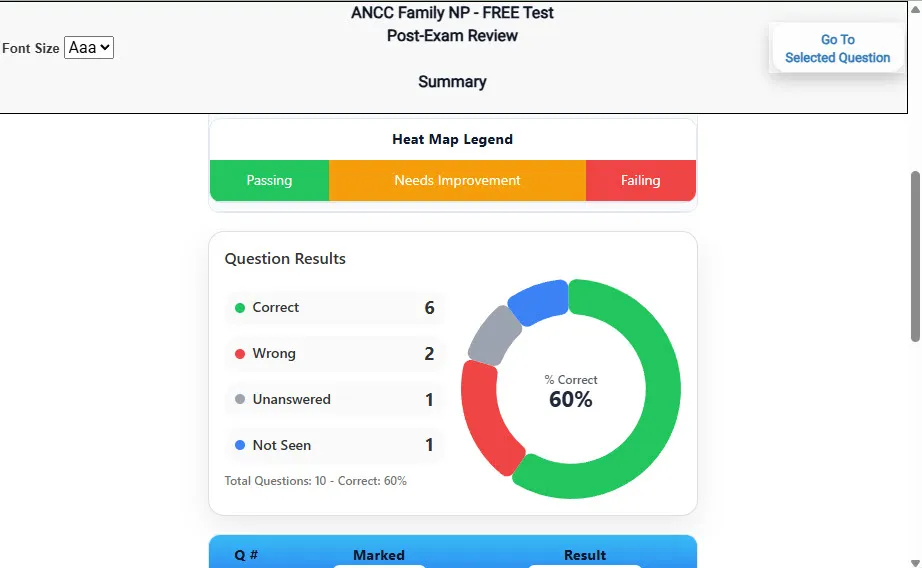
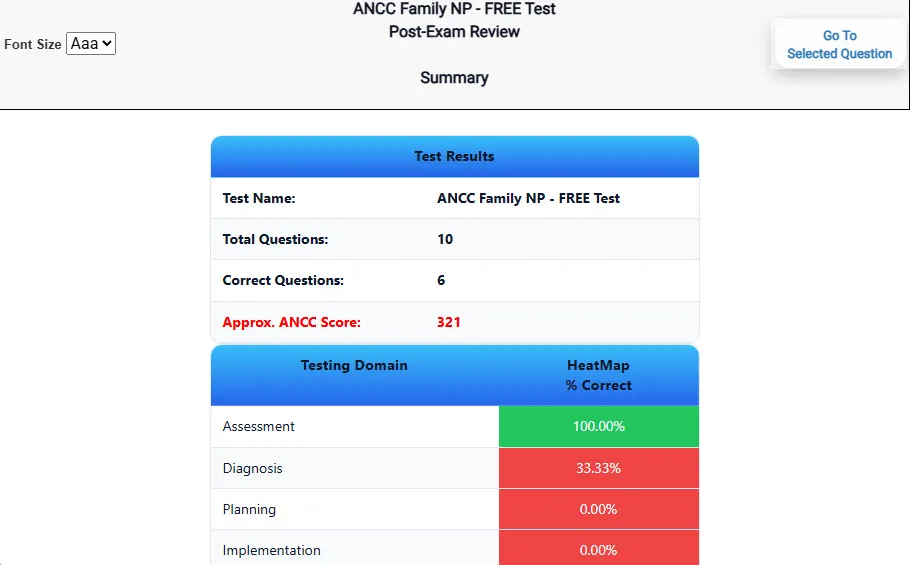
                           Review Summary 1 screen – 
                         Summary with counts for correct/wrong/unanswered and not seen items.
Review Summary 1 Summary with counts for correct/wrong/unanswered and not seen items.

                           Review Summary 2 screen – 
                         Advanced summary with category/domain breakdown and performance insights.
Review Summary 2 Advanced summary with category/domain breakdown and performance insights.

What Each Screen Shows

Answer Question Screen

  • Clean multiple-choice interface with progress bar.
  • Mark for review feature.
  • Matches real test pacing.

Detailed Explanation

  • Correct answer plus rationale.
  • Key concepts and guidelines highlighted.
  • Move between questions to fill knowledge gaps.

Review Summary 1

  • Overall results with total questions and scaled score.
  • Domain heatmap shows strengths and weaknesses.
  • Quick visual feedback on study priorities.

Review Summary 2

  • Chart of correct, wrong, unanswered, not seen.
  • Color-coded results for easy review.
  • Links back to missed items.

Top 10 Reasons to Use Exam Edge for your CSET Spanish Exam Prep

  1. Focused on the CSET Spanish Exam

    Our practice tests are built specifically for the CSET Spanish exam — every question mirrors the real topics, format, and difficulty so you're studying exactly what matters.

  2. Real Exam Simulation

    We match the per-question time limits and pressure of the actual CSET exam, so test day feels familiar and stress-free.

  3. 10 Full Practice Tests & 1,000 Unique Questions

    You'll have more than enough material to master every CSET Spanish concept — no repeats, no fluff.

  4. Lower Cost Than a Retake

    Ordering 5 practice exams costs less than retaking the CSET Spanish exam after a failure. One low fee could save you both time and money.

  5. Flexible Testing

    Need to step away mid-exam? Pick up right where you left off — with your remaining time intact.

  6. Instant Scoring & Feedback

    See your raw score and an estimated CSET Spanish score immediately after finishing each practice test.

  7. Detailed Explanations for Every Question

    Review correct and incorrect answers with clear, step-by-step explanations so you truly understand each topic.

  8. Trusted & Accredited

    We're fully accredited by the Better Business Bureau and uphold the highest standards of trust and transparency.

  9. Web-Based & Always Available

    No software to install. Access your CSET Spanish practice exams 24/7 from any computer or mobile device.

  10. Expert Support When You Need It

    Need extra help? Our specialized tutors are highly qualified and ready to support your CSET exam prep.


Pass the CSET Spanish Exam with Realistic Practice Tests from Exam Edge

Preparing for your upcoming CSET Spanish (145, 146, 147) Certification Exam can feel overwhelming — but the right practice makes all the difference. Exam Edge gives you the tools, structure, and confidence to pass on your first try. Our online practice exams are built to match the real CSET Spanish exam in content, format, and difficulty.

  • 📝 10 CSET Spanish Practice Tests: Access 10 full-length exams with 100 questions each, covering every major CSET Spanish topic in depth.
  • Instant Online Access: Start practicing right away — no software, no waiting.
  • 🧠 Step-by-Step Explanations: Understand the reasoning behind every correct answer so you can master CSET Spanish exam concepts.
  • 🔄 Retake Each Exam Up to 4 Times: Build knowledge through repetition and track your improvement over time.
  • 🌐 Web-Based & Available 24/7: Study anywhere, anytime, on any device.
  • 🧘 Boost Your Test-Day Confidence: Familiarity with the CSET format reduces anxiety and helps you perform under pressure.

These CSET Spanish practice exams are designed to simulate the real testing experience by matching question types, timing, and difficulty level. This approach helps you get comfortable not just with the exam content, but also with the testing environment, so you walk into your exam day focused and confident.

Exam Edge CTC Reviews


I used your site to take all three Subtests I, II, and III in one day (I didn't realize until too late that that's not required!). I studied your material so much and passed all three tests the first time! I felt that your site really did prepare me perfectly for the tests. While I was taking the te ...
Read More
Laura, Long Beach, CA.

Just wanted to let you guys know that your tests really helped me prepare for the CBEST math exam. I took it yesterday and passed with a 47! I will tell other people about your site.

Shawna M, California

I passed my cbest today! This was the second time I took the test. My first time I scored 35. This time I scored 43. Taking your practice tests helped me a great deal, because several types of questions on the real test were also on your practice tests. Thanks so much for the help!

TIm F, California

For the last year, I have been trying to pass the reading section of the CBEST. I had taken it six times and if I did not pass it this month, then I could not take my college courses in education. I went to Google and typed in practice reading tests and your website came up. I clicked on it, signed ...
Read More
Stacy S, California

Thank you so much for your reading tests. I just passed the real CBEST Reading test by 4 points! After failing it 3 other times, I thought I would have to quit. I already told everyone in my class about your site.

Sara L, Oregon

For the last year, I have been trying to pass my cset exam. I had taken it six times and was running out of hope I would ever pass. I went to Google and your website came up. I clicked on, signed up and took the free test. I knew that I would buy a couple of tests after taking that one. I ended up b ...
Read More
Stacy,


CSET Spanish Aliases Test Name

Here is a list of alternative names used for this exam.

  • CSET Spanish
  • CSET Spanish test
  • CSET Spanish Certification Test
  • CTC
  • CTC 145, 146, 147
  • 145, 146, 147 test
  • CSET Spanish (145, 146, 147)
  • CSET Spanish certification