This is the content of the pop-over!

Lightning Deal Alert – 12% Off Ends at Midnight!

Strike while the savings are hot! Use promo code FlashSale at checkout for 12% off any Exam Edge test or bundle. Hurry—the clock is ticking!

CSET Home Economics (181/182/183) Practice Tests & Test Prep by Exam Edge


CSET Home Economics  product image
(4.9)
Based on 40 Reviews

  • Real Exam Simulation: Timed questions and matching content build comfort for your CSET Home Economics test day.
  • Instant, 24/7 Access: Web-based CSET Home Economics practice exams with no software needed.
  • Clear Explanations: Step-by-step answers and explanations for your CSET exam to strengthen understanding.
  • Boosted Confidence: Reduces anxiety and improves test-taking skills to ace your CSET Home Economics (181/182/183).

Featured on

CSET Home Economics Online Practice Test Bundles

BEST VALUE
15 practice tests

$149.25

$599.25

SAVE $450

Only $9.95 per test!

  • 100% Pass Guarantee
  • 15 online practice tests
  • 120 questions per test
  • Bonus: 100 Flash Cards + Study Guide
  • Instant access
  • Detailed Explanations
  • Practice tests never expire
  • Timed, untimed, or study guide mode
MOST POPULAR
10 practice tests

$99.50

$399.50

SAVE $300

Only $9.95 per test!

  • 10 online practice tests
  • 120 questions per test
  • Bonus: 100 Flash Cards + Study Guide
  • Instant access
  • Detailed Explanations
  • Practice tests never expire
  • Timed, untimed, or study guide mode
5 practice tests

$69.75

$199.75

SAVE $130

Only $13.95 per test!

  • 5 online practice tests
  • 120 questions per test
  • Bonus: 100 Flash Cards
  • Instant access
  • Detailed Explanations
  • Practice tests never expire
  • Timed, untimed, or study guide mode
1 practice test

$39.95

  • 1 online practice test
  • 120 questions per test
  • Instant access
  • Detailed Explanations
  • Practice tests never expire
  • Timed, untimed, or study guide mode
Quick Select
Tap to choose a bundle

** All Prices are in US Dollars (USD) **


CSET Home Economics (181/182/183) Resources

Jump to the section you need most.

Understanding the exact breakdown of the CSET Home Economics test will help you know what to expect and how to most effectively prepare. The CSET Home Economics has 120 multiple-choice questions and 7 essay questions. The exam will be broken down into the sections below:

CSET Home Economics Exam Blueprint
Domain Name
Personal - Family Child Development  
Nutrition - Foods Hospitality  
Fashion and Textiles  
Housing and Interior Design  
Consumer Education  

CSET Home Economics Study Tips by Domain

  • Apply major developmental theories (Piaget, Erikson, Vygotsky, attachment) to observable behaviors; red flag: choosing an intervention that mismatches the child’s developmental stage.
  • Know typical developmental milestones (motor, language, cognitive, social-emotional) and when to refer; threshold cue: a persistent multi-domain delay warrants formal evaluation rather than “wait and see.”
  • Use authoritative parenting as the go-to evidence-based approach (warmth + consistent limits); common trap: confusing authoritative with authoritarian (high control, low responsiveness).
  • Prioritize child safety and mandated reporting in suspected abuse/neglect; red flag: inconsistent injury explanations or patterns (e.g., bruises in protected areas) require documenting and reporting per policy, not investigating on your own.
  • Support family systems and diverse family structures with culturally responsive communication; practical cue: avoid deficit framing—ask about family routines, supports, and goals before recommending changes.
  • Design age-appropriate guidance and learning experiences (positive reinforcement, clear expectations, predictable routines); contraindication: using punitive or developmentally inappropriate discipline (e.g., long time-outs for toddlers) often escalates behavior.
  • Apply food safety time/temperature control: keep TCS foods out of the 41–135°F danger zone; red flag—“tasting to check” safety is a common trap.
  • Use cross-contamination controls (separate raw and ready-to-eat, sanitize surfaces, store raw meats below produce); cue—one cutting board for everything is an automatic corrective-action scenario.
  • Interpret Nutrition Facts and ingredient lists: prioritize serving size, added sugars, sodium, and allergens; trap—claim terms like “natural” don’t guarantee nutrient quality or allergen safety.
  • Plan menus with dietary guidelines and special needs (allergies, diabetes, hypertension): verify substitutions maintain nutrient adequacy; contraindication—swapping gluten-free or dairy-free items can unintentionally reduce fiber, calcium, or vitamin D.
  • Demonstrate standardization in food production (recipes, portions, yields, and costing): cue—failure to convert units or adjust yield leads to inconsistent quality and budget overruns.
  • Connect hospitality/service basics to consumer protection: emphasize accurate labeling, safe handling, and respectful service for diverse diets; red flag—uncertainty about an allergen requires stopping service and confirming, not guessing.
  • Apply textile fiber ID and performance: natural vs. manufactured vs. blend affects absorbency, resiliency, and heat sensitivity—red flag: assuming a “blend” behaves like the dominant-looking fiber without testing.
  • Use fabric construction to predict behavior: woven vs. knit vs. nonwoven drives stretch, fraying, drape, and seam choice—common trap: using a straight stitch and narrow seam allowance on knits, leading to popped seams.
  • Connect dyeing/printing/finishing to care and safety: colorfastness, shrinkage control, water repellency, and flame resistance each have tradeoffs—priority rule: test colorfastness and shrinkage on a swatch before cutting.
  • Interpret garment labels and care symbols to prevent damage: fiber content, care instructions, and country of origin guide cleaning and pressing—red flag: high heat on thermoplastics (e.g., polyester/nylon) causing shine or melting.
  • Select appropriate notions and closures: interfacing type/weight, thread, needle size, and zipper/button choice must match fabric weight and stretch—common trap: using a universal needle on tightly woven or knit fabrics, causing skipped stitches or runs.
  • Apply fit and alteration principles from body measurements and ease: distinguish design ease vs. wearing ease to correct drag lines and balance issues—threshold cue: if strain lines radiate from a closure, add ease or change closure placement rather than just upsizing.
  • Apply design elements and principles (balance, proportion/scale, emphasis, rhythm, unity) to solve layout problems; red flag: choosing finishes first without confirming function, circulation, and focal point.
  • Plan space using adjacency, zoning, and traffic flow with clearances for doors and pathways; common trap: forgetting swing arcs and required access space around beds, appliances, and fixtures.
  • Interpret basic residential plans (floor plans, elevations, sections) and symbols to estimate materials and placement; priority rule: verify scale and dimensions before any takeoff or furniture selection.
  • Address lighting by layering ambient, task, and accent sources and matching color temperature/CRI to activity; red flag: relying on one overhead fixture, causing glare and poor task visibility.
  • Select materials/finishes based on performance (durability, cleanability, moisture/heat resistance, VOCs) and appropriate installation; contraindication: using porous flooring or wallcoverings in wet areas without proper sealing and ventilation.
  • Incorporate safety and accessibility concepts (egress paths, slip resistance, handrails, reach ranges) aligned with common codes; common trap: designing beautiful spaces that violate basic egress, clearance, or guardrail requirements.
  • Apply the consumer decision-making process (need recognition → information → evaluation → purchase → postpurchase) and use objective criteria; red flag: choosing based on brand/image alone without comparing total cost and performance.
  • Interpret product labels and claims (e.g., ingredient lists, unit pricing, warranties, “natural”/“green” marketing) to verify what is actually promised; common trap: confusing “best by” dates and marketing terms with safety or verified standards.
  • Use budgeting tools (fixed vs. variable expenses, needs vs. wants, opportunity cost) and calculate net vs. gross pay impacts; priority rule: pay essential obligations first and build an emergency fund before discretionary spending.
  • Explain credit and debt fundamentals (APR, minimum payments, amortization, credit scores) and compute the true cost of borrowing; red flag: making only minimum payments on revolving credit, which dramatically increases total interest.
  • Identify consumer rights and protections (contracts, return policies, identity theft response, dispute resolution) and document transactions; common trap: signing agreements without reading cancellation windows, fees, or arbitration clauses.
  • Evaluate risk management choices (renters/home/auto/health insurance basics, deductibles, premiums, coverage limits) using scenarios; priority rule: insure against high-severity losses first rather than overpaying for low-value add-ons.


Built to Fit Into Your Busy Life

Everything you need to prepare with confidence—without wasting a minute.

Three Study Modes

Timed, No Time Limit, or Explanation mode.

Actionable Analytics

Heatmaps and scaled scores highlight weak areas.

High-Yield Rationales

Concise explanations emphasize key concepts.

Realistic Interface

Matches the feel of the actual exam environment.

Accessible by Design

Clean layout reduces cognitive load.

Anytime, Anywhere

Web-based access 24/7 on any device.
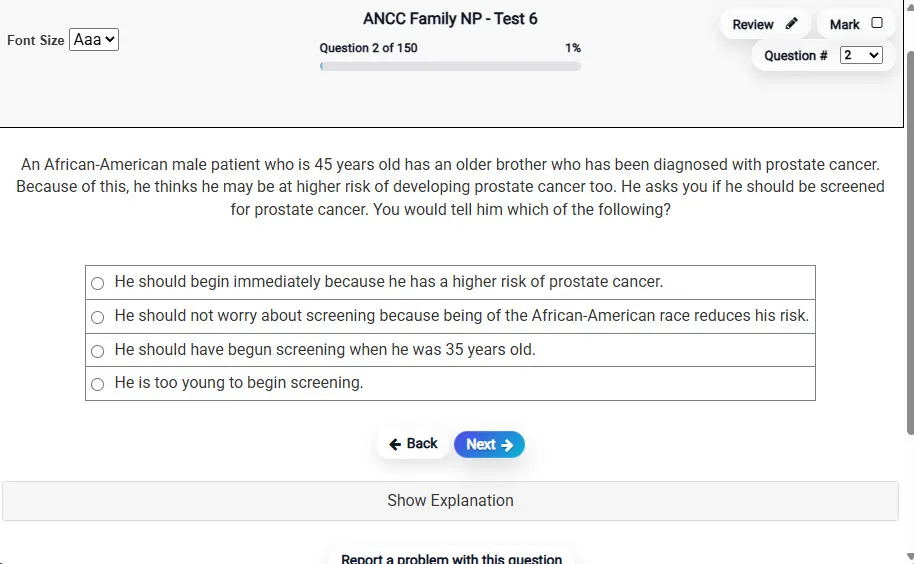
Answering a Question screen – Multiple-choice item view with navigation controls and progress tracker.
Answering a Question Multiple-choice item view with navigation controls and progress tracker.

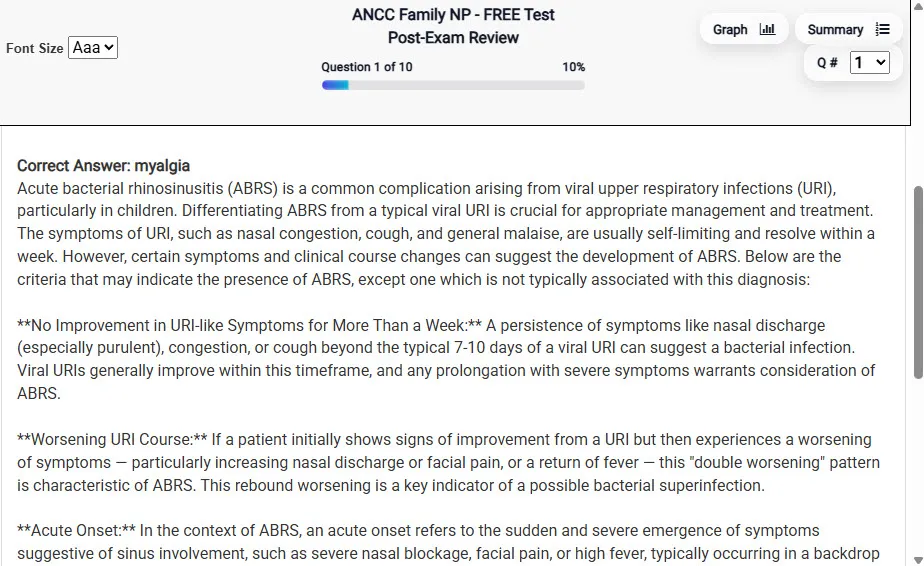
                           Detailed Explanation screen – 
                         Review mode showing chosen answer and rationale and references.
Detailed Explanation Review mode showing chosen answer and rationale and references.

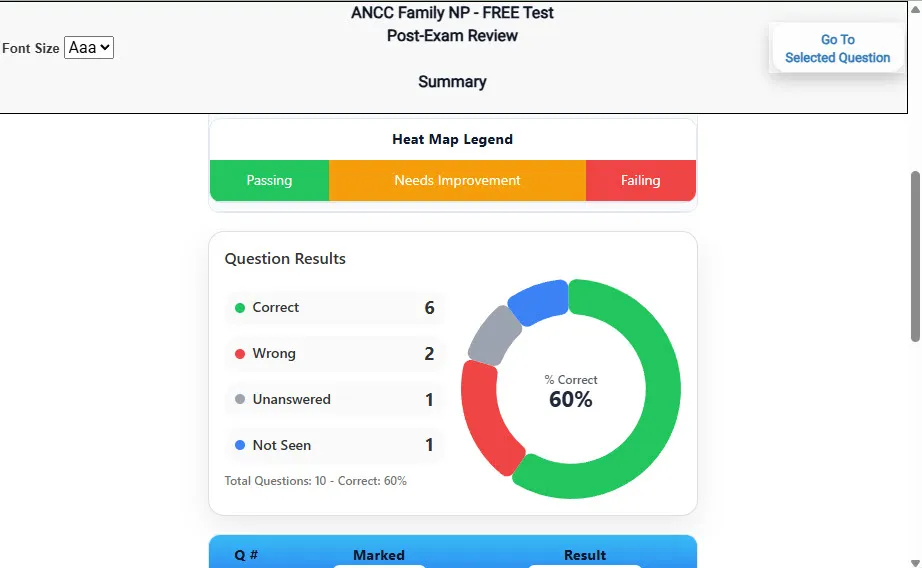
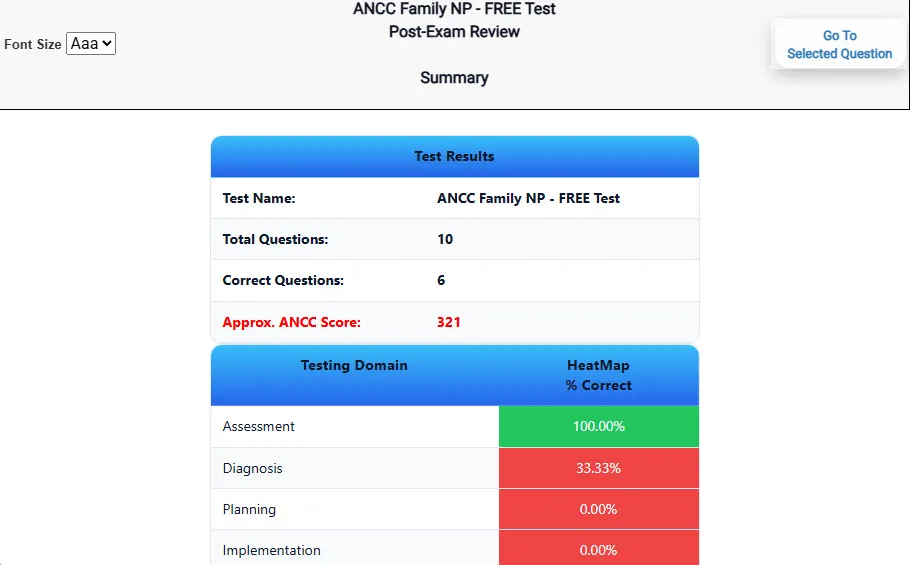
                           Review Summary 1 screen – 
                         Summary with counts for correct/wrong/unanswered and not seen items.
Review Summary 1 Summary with counts for correct/wrong/unanswered and not seen items.

                           Review Summary 2 screen – 
                         Advanced summary with category/domain breakdown and performance insights.
Review Summary 2 Advanced summary with category/domain breakdown and performance insights.

What Each Screen Shows

Answer Question Screen

  • Clean multiple-choice interface with progress bar.
  • Mark for review feature.
  • Matches real test pacing.

Detailed Explanation

  • Correct answer plus rationale.
  • Key concepts and guidelines highlighted.
  • Move between questions to fill knowledge gaps.

Review Summary 1

  • Overall results with total questions and scaled score.
  • Domain heatmap shows strengths and weaknesses.
  • Quick visual feedback on study priorities.

Review Summary 2

  • Chart of correct, wrong, unanswered, not seen.
  • Color-coded results for easy review.
  • Links back to missed items.

Top 10 Reasons to Use Exam Edge for your CSET Home Economics Exam Prep

  1. Focused on the CSET Home Economics Exam

    Our practice tests are built specifically for the CSET Home Economics exam — every question mirrors the real topics, format, and difficulty so you're studying exactly what matters.

  2. Real Exam Simulation

    We match the per-question time limits and pressure of the actual CSET exam, so test day feels familiar and stress-free.

  3. 15 Full Practice Tests & 1,800 Unique Questions

    You'll have more than enough material to master every CSET Home Economics concept — no repeats, no fluff.

  4. Lower Cost Than a Retake

    Ordering 5 practice exams costs less than retaking the CSET Home Economics exam after a failure. One low fee could save you both time and money.

  5. Flexible Testing

    Need to step away mid-exam? Pick up right where you left off — with your remaining time intact.

  6. Instant Scoring & Feedback

    See your raw score and an estimated CSET Home Economics score immediately after finishing each practice test.

  7. Detailed Explanations for Every Question

    Review correct and incorrect answers with clear, step-by-step explanations so you truly understand each topic.

  8. Trusted & Accredited

    We're fully accredited by the Better Business Bureau and uphold the highest standards of trust and transparency.

  9. Web-Based & Always Available

    No software to install. Access your CSET Home Economics practice exams 24/7 from any computer or mobile device.

  10. Expert Support When You Need It

    Need extra help? Our specialized tutors are highly qualified and ready to support your CSET exam prep.


Pass the CSET Home Economics Exam with Realistic Practice Tests from Exam Edge

Preparing for your upcoming CSET Home Economics (181/182/183) Certification Exam can feel overwhelming — but the right practice makes all the difference. Exam Edge gives you the tools, structure, and confidence to pass on your first try. Our online practice exams are built to match the real CSET Home Economics exam in content, format, and difficulty.

  • 📝 15 CSET Home Economics Practice Tests: Access 15 full-length exams with 120 questions each, covering every major CSET Home Economics topic in depth.
  • Instant Online Access: Start practicing right away — no software, no waiting.
  • 🧠 Step-by-Step Explanations: Understand the reasoning behind every correct answer so you can master CSET Home Economics exam concepts.
  • 🔄 Retake Each Exam Up to 4 Times: Build knowledge through repetition and track your improvement over time.
  • 🌐 Web-Based & Available 24/7: Study anywhere, anytime, on any device.
  • 🧘 Boost Your Test-Day Confidence: Familiarity with the CSET format reduces anxiety and helps you perform under pressure.

These CSET Home Economics practice exams are designed to simulate the real testing experience by matching question types, timing, and difficulty level. This approach helps you get comfortable not just with the exam content, but also with the testing environment, so you walk into your exam day focused and confident.


Exam Edge CTC Reviews


Just wanted to let you guys know that your tests really helped me prepare for the CBEST math exam. I took it yesterday and passed with a 47! I will tell other people about your site.

Shawna M, California

I passed my cbest today! This was the second time I took the test. My first time I scored 35. This time I scored 43. Taking your practice tests helped me a great deal, because several types of questions on the real test were also on your practice tests. Thanks so much for the help!

TIm F, California

For the last year, I have been trying to pass the reading section of the CBEST. I had taken it six times and if I did not pass it this month, then I could not take my college courses in education. I went to Google and typed in practice reading tests and your website came up. I clicked on it, signed ...
Read More
Stacy S, California

Thank you so much for your reading tests. I just passed the real CBEST Reading test by 4 points! After failing it 3 other times, I thought I would have to quit. I already told everyone in my class about your site.

Sara L, Oregon

For the last year, I have been trying to pass my cset exam. I had taken it six times and was running out of hope I would ever pass. I went to Google and your website came up. I clicked on, signed up and took the free test. I knew that I would buy a couple of tests after taking that one. I ended up b ...
Read More
Stacy,

Purchased the five pack of tests this weekend. Took CBEST math today and passed! Your tests had very similar content as the actual CBEST.

Fresno , CA


CSET Home Economics Aliases Test Name

Here is a list of alternative names used for this exam.

  • CSET Home Economics
  • CSET Home Economics test
  • CSET Home Economics Certification Test
  • CTC
  • CTC 181/182/183
  • 181/182/183 test
  • CSET Home Economics (181/182/183)
  • CSET Home Economics certification