This is the content of the pop-over!

CCI RPhS (RPhS) Practice Tests & Test Prep by Exam Edge


CCI Registered Phlebology Sonographer  product image
(4.7)
Based on 20 Reviews

  • Real Exam Simulation: Timed questions and matching content build comfort for your CCI RPhS test day.
  • Instant, 24/7 Access: Web-based CCI Registered Phlebology Sonographer practice exams with no software needed.
  • Clear Explanations: Step-by-step answers and explanations for your CCI exam to strengthen understanding.
  • Boosted Confidence: Reduces anxiety and improves test-taking skills to ace your CCI Registered Phlebology Sonographer (RPhS).

Featured on

CCI Registered Phlebology Sonographer Online Practice Test Bundles

BEST VALUE
10 practice tests

$99.50

$399.50

SAVE $300

Only $9.95 per test!

  • 100% Pass Guarantee
  • 10 online practice tests
  • 100 questions per test
  • Bonus: 100 Flash Cards + Study Guide
  • Instant access
  • Detailed Explanations
  • Practice tests never expire
  • Timed, untimed, or study guide mode
5 practice tests

$69.75

$199.75

SAVE $130

Only $13.95 per test!

  • 5 online practice tests
  • 100 questions per test
  • Bonus: 100 Flash Cards + Study Guide
  • Instant access
  • Detailed Explanations
  • Practice tests never expire
  • Timed, untimed, or study guide mode
1 practice test

$39.95

  • 1 online practice test
  • 100 questions per test
  • Instant access
  • Detailed Explanations
  • Practice tests never expire
  • Timed, untimed, or study guide mode
Quick Select
Tap to choose a bundle

** All Prices are in US Dollars (USD) **


CCI RPhS (RPhS) Resources

Jump to the section you need most.

Understanding the exact breakdown of the CCI Registered Phlebology Sonographer test will help you know what to expect and how to most effectively prepare. The CCI Registered Phlebology Sonographer has 130 multiple-choice questions . The exam will be broken down into the sections below:

CCI Registered Phlebology Sonographer Exam Blueprint
Domain Name % Number of
Questions
Maintain Information - Facility Safety 6% 8
Patient Diagnosis 22% 29
Performance of Diagnostic Testing 35% 46
Conservative Treatment / Therapy of Patients 9% 12
Minimally Invasive and Invasive Treatment of Patients 27% 35

CCI Registered Phlebology Sonographer Study Tips by Domain

  • Verify two patient identifiers and the ordered exam/side before scanning; red flag: any mismatch between requisition, symptoms, and limb marked should trigger a stop-and-clarify with the ordering provider.
  • Maintain strict infection control by disinfecting the transducer and cable per manufacturer IFU between patients; common trap: skipping low-level disinfection after contact with non-intact skin or ulcer dressings can violate policy and increase cross-contamination risk.
  • Document complete study metadata (date/time, facility, technologist ID, equipment used, patient position) and ensure images are labeled with correct laterality; priority rule: unlabeled or mis-labeled laterality is treated as a critical documentation error.
  • Screen for contraindications and safety concerns before positioning (e.g., severe pain, open wounds, recent surgery, fall risk) and use assistance/side rails as needed; threshold: if the patient cannot safely stand for reflux testing, perform modified positioning and document limitation.
  • Protect privacy and information security by minimizing exposed body areas and securing PHI in the EMR/PACS; red flag: patient data visible on an unattended workstation requires immediate screen lock and incident reporting per facility policy.
  • Perform equipment and room readiness checks (power cords intact, gel not expired, emergency call device accessible, sharps containers available if used) before the first patient; common trap: using damaged probe cables can create image artifacts and electrical safety hazards that must be removed from service.
  • Confirm symptoms and clinical class with a focused history and exam; red flag: unilateral leg swelling with pain and warmth plus dyspnea or chest pain warrants urgent DVT/PE escalation before routine venous workup.
  • Differentiate venous disease from arterial, cardiac, renal, or lymphedema causes; priority rule: palpate pulses/assess perfusion and if significant arterial insufficiency is suspected, avoid advising compression until ABI/toe pressures are verified.
  • Map pain and swelling patterns to anatomy; common trap: attributing medial ankle skin changes or ulceration to “varicose veins” without considering perforator incompetence and documenting CEAP location/etiology.
  • Screen for prior thrombosis, thrombophilia, cancer, pregnancy/postpartum status, and recent surgery/immobility; threshold cue: a recent (<3 months) DVT history should prompt a cautious plan and clear documentation of chronic vs acute findings.
  • Assess for pelvic/central venous obstruction in atypical presentations; red flag: unilateral left leg swelling with minimal superficial reflux or prominent suprapubic/abdominal wall collaterals suggests iliac compression/obstruction and needs further evaluation.
  • Identify bleeding and skin risks that change management; contraindication cue: recurrent variceal bleeding, active ulcer infection, or severe dermatitis should be documented and treated/controlled before elective venous interventions are pursued.
  • Confirm patient identity, side/site, and exam indication before scanning; a red flag is any mismatch between the order and the symptomatic limb, which must be resolved prior to image acquisition.
  • Optimize grayscale and color settings (gain, PRF/scale, wall filter) before interpreting flow; a common trap is calling absent color “occlusion” when the PRF is set too high or the angle is poor.
  • Use proper venous compression technique at regular intervals along the deep system; a priority rule is that non-compressibility is the primary criterion for acute DVT, not altered Doppler phasicity alone.
  • Assess reflux with correct patient positioning and standardized maneuvers (Valsalva for CFV, distal augmentation for femoral/popliteal); a threshold cue is reflux ≥0.5 s for superficial/perforator and ≥1.0 s for deep veins.
  • Measure venous diameters and map junctions/tributaries with consistent landmarks; a common trap is mislabeling anterior accessory saphenous vein as GSV, so document the “Egyptian eye” fascial compartment when present.
  • Document representative images and Doppler waveforms (including augment and reflux captures) and note limitations; a red flag is inadequate visualization due to edema/pain—record it and recommend follow-up or alternative testing rather than over-calling disease.
  • Fit and educate on graduated compression therapy with the correct class/size and wear schedule; red flag: avoid high-pressure compression or use only with caution when significant arterial insufficiency is suspected (e.g., low ABI, rest pain, nonhealing ischemic ulcers).
  • Reinforce skin care and ulcer prevention (daily moisturization, protect fragile areas, appropriate dressings, and infection monitoring); trap: maceration from overly occlusive dressings or wet wraps can worsen venous dermatitis and delay healing.
  • Coach therapeutic ambulation and calf-muscle pump activation (frequent walking, ankle pumps, and avoiding prolonged standing/sitting); priority rule: elevate legs above heart when resting and avoid “dangling” positions that increase venous pressure.
  • Provide guidance on edema control strategies beyond compression (weight management, salt moderation when appropriate, and timing of elevation); threshold cue: rapidly progressive unilateral swelling, new pain, or warmth warrants urgent evaluation for DVT rather than routine conservative care.
  • Support medication-related counseling within scope (e.g., adherence to prescribed venoactive drugs/analgesics and monitoring side effects); contraindication cue: NSAID overuse in patients with renal disease, anticoagulation, or active GI bleeding risk should prompt provider review.
  • Set realistic timelines and follow-up triggers for conservative therapy response (symptom relief, edema reduction, ulcer size change); red flag: no measurable improvement in venous ulcer healing after ~4 weeks of compliant compression should prompt reassessment and escalation of care.
  • Verify pre-procedure checklist: correct limb/side, allergies (especially local anesthetics/adhesives), anticoagulant/antiplatelet status, and recent DVT history; red flag: unexplained acute swelling/pain—pause and confirm no acute thrombus before ablation/sclerotherapy.
  • Use ultrasound to confirm target vein identity, patency, and junction anatomy (SFJ/SPJ and major tributaries) before access; common trap: treating a tributary while missing proximal reflux that will cause early recurrence.
  • For thermal or chemical ablation, ensure the catheter/needle tip is positioned at an appropriate distance from the junction and not within deep system; threshold cue: if the tip cannot be clearly visualized in long-axis, reposition before activating/injecting.
  • During tumescent anesthesia, watch for nerve/skin risk zones and inadequate perivenous “halo”; red flag: vein not fully separated from skin—stop and add tumescent to reduce burn/paresthesia risk.
  • When performing sclerotherapy (liquid/foam), limit injection volume per site and maintain ultrasound visualization of sclerosant spread; contraindication cue: suspected right-to-left shunt or symptomatic migraine with aura—use extreme caution/consider alternatives per protocol.
  • Post-treatment, perform immediate duplex for endothermal heat-induced thrombosis/extension and document compressibility/flow in deep veins; priority rule: any thrombus protruding toward deep system requires prompt escalation and follow-up imaging per policy.


Built to Fit Into Your Busy Life

Everything you need to prepare with confidence—without wasting a minute.

Three Study Modes

Timed, No Time Limit, or Explanation mode.

Actionable Analytics

Heatmaps and scaled scores highlight weak areas.

High-Yield Rationales

Concise explanations emphasize key concepts.

Realistic Interface

Matches the feel of the actual exam environment.

Accessible by Design

Clean layout reduces cognitive load.

Anytime, Anywhere

Web-based access 24/7 on any device.
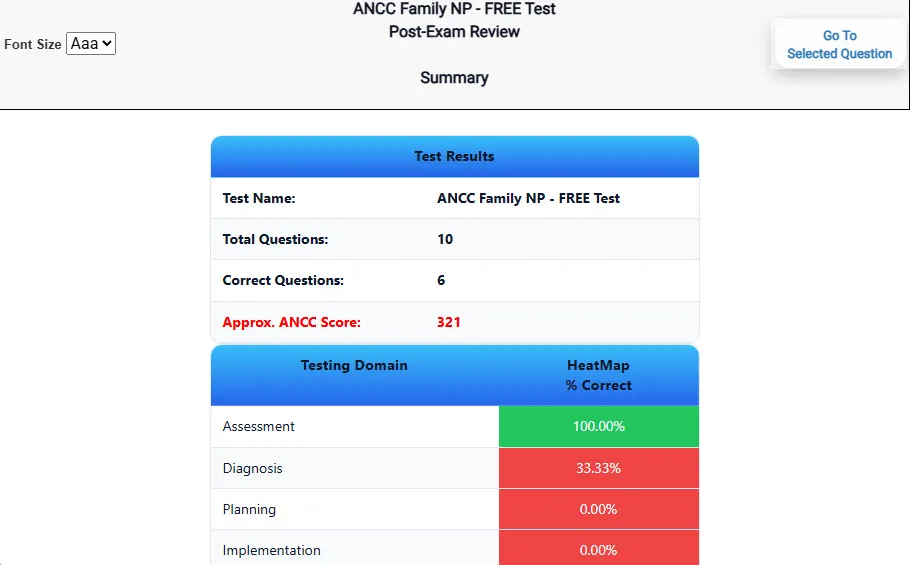
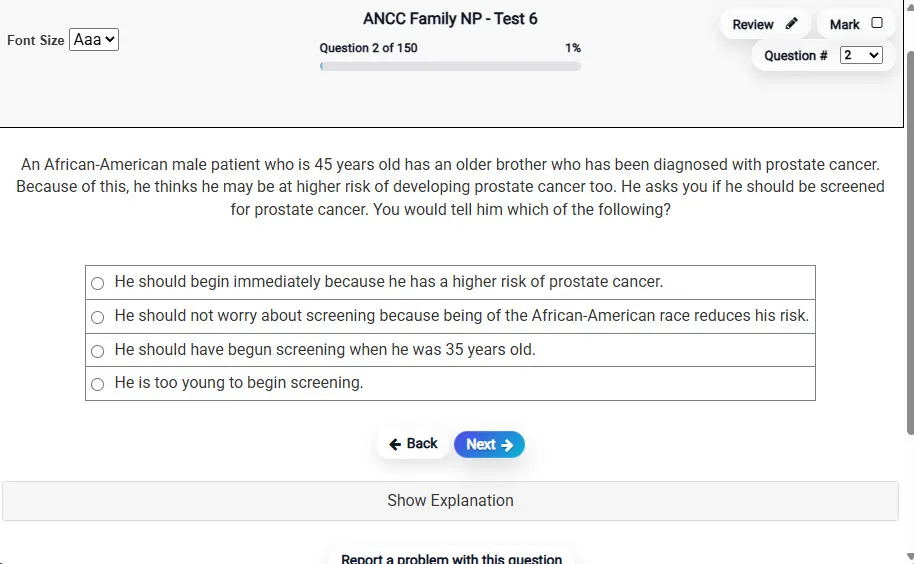
Answering a Question screen – Multiple-choice item view with navigation controls and progress tracker.
Answering a Question Multiple-choice item view with navigation controls and progress tracker.

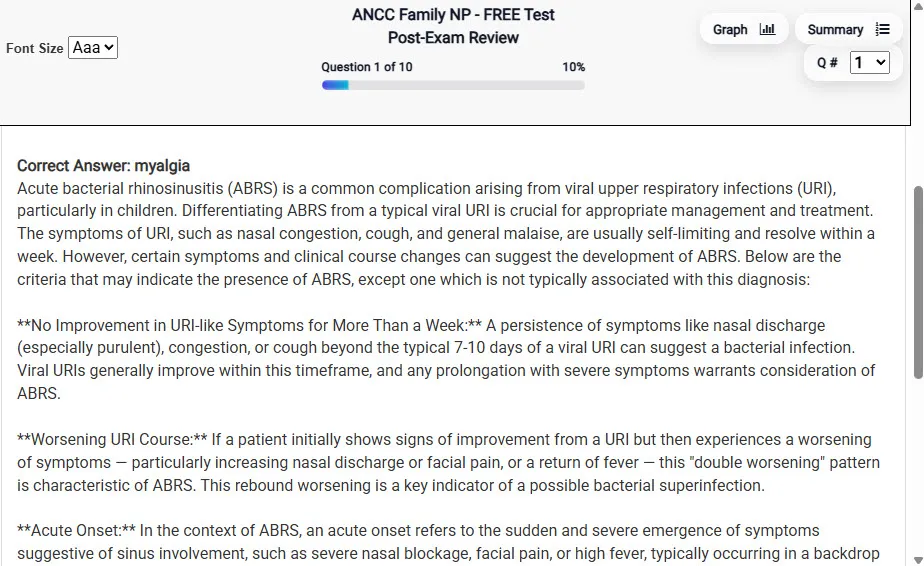
                           Detailed Explanation screen – 
                         Review mode showing chosen answer and rationale and references.
Detailed Explanation Review mode showing chosen answer and rationale and references.

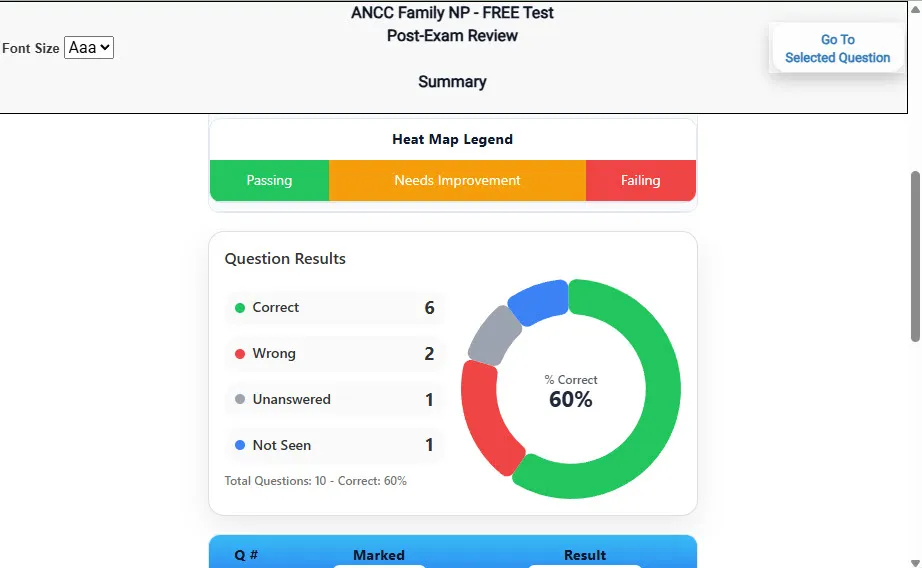
                           Review Summary 1 screen – 
                         Summary with counts for correct/wrong/unanswered and not seen items.
Review Summary 1 Summary with counts for correct/wrong/unanswered and not seen items.

                           Review Summary 2 screen – 
                         Advanced summary with category/domain breakdown and performance insights.
Review Summary 2 Advanced summary with category/domain breakdown and performance insights.

What Each Screen Shows

Answer Question Screen

  • Clean multiple-choice interface with progress bar.
  • Mark for review feature.
  • Matches real test pacing.

Detailed Explanation

  • Correct answer plus rationale.
  • Key concepts and guidelines highlighted.
  • Move between questions to fill knowledge gaps.

Review Summary 1

  • Overall results with total questions and scaled score.
  • Domain heatmap shows strengths and weaknesses.
  • Quick visual feedback on study priorities.

Review Summary 2

  • Chart of correct, wrong, unanswered, not seen.
  • Color-coded results for easy review.
  • Links back to missed items.

Top 10 Reasons to Use Exam Edge for your CCI Registered Phlebology Sonographer Exam Prep

  1. Focused on the CCI Registered Phlebology Sonographer Exam

    Our practice tests are built specifically for the CCI RPhS exam — every question mirrors the real topics, format, and difficulty so you're studying exactly what matters.

  2. Real Exam Simulation

    We match the per-question time limits and pressure of the actual CCI exam, so test day feels familiar and stress-free.

  3. 10 Full Practice Tests & 1,000 Unique Questions

    You'll have more than enough material to master every CCI RPhS concept — no repeats, no fluff.

  4. Lower Cost Than a Retake

    Ordering 5 practice exams costs less than retaking the CCI Registered Phlebology Sonographer exam after a failure. One low fee could save you both time and money.

  5. Flexible Testing

    Need to step away mid-exam? Pick up right where you left off — with your remaining time intact.

  6. Instant Scoring & Feedback

    See your raw score and an estimated CCI Registered Phlebology Sonographer score immediately after finishing each practice test.

  7. Detailed Explanations for Every Question

    Review correct and incorrect answers with clear, step-by-step explanations so you truly understand each topic.

  8. Trusted & Accredited

    We're fully accredited by the Better Business Bureau and uphold the highest standards of trust and transparency.

  9. Web-Based & Always Available

    No software to install. Access your CCI RPhS practice exams 24/7 from any computer or mobile device.

  10. Expert Support When You Need It

    Need extra help? Our specialized tutors are highly qualified and ready to support your CCI exam prep.


Pass the CCI Registered Phlebology Sonographer Exam with Realistic Practice Tests from Exam Edge

Preparing for your upcoming CCI Registered Phlebology Sonographer (RPhS) Certification Exam can feel overwhelming — but the right practice makes all the difference. Exam Edge gives you the tools, structure, and confidence to pass on your first try. Our online practice exams are built to match the real CCI RPhS exam in content, format, and difficulty.

  • 📝 10 CCI Registered Phlebology Sonographer Practice Tests: Access 10 full-length exams with 100 questions each, covering every major CCI Registered Phlebology Sonographer topic in depth.
  • Instant Online Access: Start practicing right away — no software, no waiting.
  • 🧠 Step-by-Step Explanations: Understand the reasoning behind every correct answer so you can master CCI RPhS exam concepts.
  • 🔄 Retake Each Exam Up to 4 Times: Build knowledge through repetition and track your improvement over time.
  • 🌐 Web-Based & Available 24/7: Study anywhere, anytime, on any device.
  • 🧘 Boost Your Test-Day Confidence: Familiarity with the CCI format reduces anxiety and helps you perform under pressure.

These CCI Registered Phlebology Sonographer practice exams are designed to simulate the real testing experience by matching question types, timing, and difficulty level. This approach helps you get comfortable not just with the exam content, but also with the testing environment, so you walk into your exam day focused and confident.


Exam Edge CCI (cardio) Reviews


Thank you for your services. I purchase the test prep for CCI Certified Cardiographic Technician and it was a big help. I passed my board exam the first time with a score of a 739. Thanks again, I will be using your services for my CCI CRAT boards here soon.

David, TN

Love all the different tests with rationale to test questions.

carlyle , alpharetta, Georgia

This is the go-to for RCS, CCI board review practice test. I failed two times and passed on my third attempt with the help of Exam Edge. I was not paid for this review, I just want to help others make the right decision in board preparation. Exam Edge has a great series of questions related to the R ...
Read More
Jason P,

Exam Edge is a great resource for people trying to study for their board exams. This is the second time I have used Exam Edge's services, and it gave me the confidence for when the time came for me to sit for the exams. I passed my CCI Cardiographic Technician and Rhythm Analysis Technician exams.

Amanda K, Ohio

"Thank you so much, Exam Edge!!! I just left Pearson Vue, Miami........ with 759! I couldn't have done it without your practice tests!"

AJR, Miami FL

I feel the practice exams prepared me very well for the real thing. I have test anxiety, so I purchased a set of 10 tests. I finished 6 of 10 tests and still passed with a nice score. I like the way your test are designed and how they make you actually learn physics and not just memorize the answers ...
Read More
Sherry B, Allen County, Indiana


CCI Registered Phlebology Sonographer Aliases Test Name

Here is a list of alternative names used for this exam.

  • CCI Registered Phlebology Sonographer
  • CCI Registered Phlebology Sonographer test
  • CCI Registered Phlebology Sonographer Certification Test
  • CCI RPhS test
  • CCI (cardio)
  • CCI (cardio) RPhS
  • RPhS test
  • CCI Registered Phlebology Sonographer (RPhS)
  • CCI Registered Phlebology Sonographer certification