This is the content of the pop-over!

CCI CCT (CCT) Practice Tests & Test Prep by Exam Edge


CCI Certified Cardiographic Technician  product image
(4.6)
Based on 34 Reviews

  • Real Exam Simulation: Timed questions and matching content build comfort for your CCI CCT test day.
  • Instant, 24/7 Access: Web-based CCI Certified Cardiographic Technician practice exams with no software needed.
  • Clear Explanations: Step-by-step answers and explanations for your CCI exam to strengthen understanding.
  • Boosted Confidence: Reduces anxiety and improves test-taking skills to ace your CCI Certified Cardiographic Technician (CCT).

Featured on

CCI Certified Cardiographic Technician Online Practice Test Bundles

BEST VALUE
10 practice tests

$99.50

$399.50

SAVE $300

Only $9.95 per test!

  • 100% Pass Guarantee
  • 10 online practice tests
  • 100 questions per test
  • Bonus: 100 Flash Cards + Study Guide
  • Instant access
  • Detailed Explanations
  • Practice tests never expire
  • Timed, untimed, or study guide mode
5 practice tests

$69.75

$199.75

SAVE $130

Only $13.95 per test!

  • 5 online practice tests
  • 100 questions per test
  • Bonus: 100 Flash Cards + Study Guide
  • Instant access
  • Detailed Explanations
  • Practice tests never expire
  • Timed, untimed, or study guide mode
1 practice test

$39.95

  • 1 online practice test
  • 100 questions per test
  • Instant access
  • Detailed Explanations
  • Practice tests never expire
  • Timed, untimed, or study guide mode
Quick Select
Tap to choose a bundle

** All Prices are in US Dollars (USD) **


CCI CCT (CCT) Resources

Jump to the section you need most.

Understanding the exact breakdown of the CCI Certified Cardiographic Technician test will help you know what to expect and how to most effectively prepare. The CCI Certified Cardiographic Technician has 130 multiple-choice questions . The exam will be broken down into the sections below:

CCI Certified Cardiographic Technician Exam Blueprint
Domain Name % Number of
Questions
Conducting Pre-Procedural Activities 10% 13
Performing Resting ECG (12-Lead - 15-Lead - etc.) 40% 52
Performing Stress Tests 20% 26
Performing Ambulatory Monitoring (Holter - Event - Telemetry - Transtelephonic - Pacemaker - etc.) 5% 7
Performing Rhythm Analysis 25% 33

CCI Certified Cardiographic Technician Study Tips by Domain

  • Verify patient identity with two identifiers and match the order to the correct test; red flag: wrong-patient/wrong-test errors often occur when names are similar or labels are preprinted.
  • Screen for contraindications and safety risks (e.g., adhesive allergy, skin breakdown, recent chest procedures, implanted devices) and escalate per policy; common trap: assuming a pacemaker/ICD automatically prevents monitoring rather than documenting and selecting appropriate lead placement.
  • Confirm required pre-test preparation (medication instructions, fasting/caffeine restrictions when applicable, bathing for ambulatory monitoring) and document deviations; priority rule: if prep is not met, notify the ordering provider before proceeding.
  • Prepare the skin correctly (clip hair, abrade lightly, clean/oil-free, fully dry) before electrode placement; red flag: skipping abrasion/degrea sing leads to artifact and false alarms or unreadable tracings.
  • Inspect and set up equipment (battery level, date/time accuracy, cable integrity, electrode expiration, calibration checks where applicable) before patient hookup; common trap: incorrect device clock/time zone causing unusable correlation with symptom diaries.
  • Provide concise patient instructions and obtain/verify required consent per facility policy (especially for ambulatory devices and stress testing workflows); red flag: patients leaving without knowing symptom-marker use, activity limits, and return time leads to incomplete studies.
  • Verify two patient identifiers and confirm the order (resting vs diagnostic add-ons like 15-lead) before electrode placement—red flag: recording under the wrong patient or test type invalidates interpretation.
  • Prep skin (clip hair, clean oils, abrade lightly) and ensure electrodes are not dried/expired—common trap: poor prep causes wandering baseline and intermittent lead dropouts that mimic pathology.
  • Place limb electrodes on true limbs when possible (RA/LA on arms, RL/LL on legs) and document any torso placement—priority rule: unreported limb-lead relocation can alter axis and ST-T morphology.
  • Confirm precordial lead positions precisely (V1 4th ICS RSB, V2 4th ICS LSB, V4 5th ICS MCL, V3 between V2/V4, V5 AAL, V6 MAL)—red flag: V1/V2 too high can simulate anterior ischemia or RBBB patterns.
  • Minimize artifact by having the patient still, warm, and not talking; set appropriate filters per facility policy and note if used—common trap: over-filtering can attenuate ST segments and obscure ischemic changes.
  • For 15-lead recordings, add V7–V9 (posterior) and/or right-sided leads (e.g., V3R–V4R) exactly as ordered and label clearly—red flag: mislabeling added leads leads to wrong localization of infarct (posterior vs right ventricular).
  • Verify a valid provider order and confirm indications/contraindications before setup; red flag: proceed only after resolving unstable angina, acute MI, uncontrolled arrhythmias, severe symptomatic aortic stenosis, or acute PE.
  • Prepare the patient with clear pre-test instructions (NPO/caffeine/meds as ordered) and obtain baseline vitals and 12-lead ECG; common trap: inadequate skin prep/lead placement causing motion artifact and false ST changes.
  • Select and follow the correct protocol (e.g., Bruce, modified Bruce, Naughton) and document stage, speed/grade, and symptoms each interval; priority rule: maintain consistent timing for BP/ECG capture to support valid comparisons.
  • Monitor continuously for ischemic patterns and dangerous rhythms during exercise and recovery; red flag: new ST elevation or significant ST depression with symptoms warrants immediate notification and termination per protocol.
  • Know and apply termination criteria (patient request, severe hypotension, progressive angina, CNS symptoms, sustained VT, poor perfusion); common trap: chasing target heart rate while ignoring symptom-limited endpoints.
  • Execute post-test recovery and documentation (recovery ECGs, vitals until near baseline, symptom resolution, event times); priority rule: do not disconnect monitoring early because many adverse events occur in early recovery.
  • Match the ordered monitoring type (Holter vs event vs telemetry vs transtelephonic) to symptoms and duration; red flag: using a short-term device for infrequent events often yields non-diagnostic data.
  • Prep skin aggressively (clip hair, abrade lightly, clean/dry) and place leads per facility map; common trap: poor prep causes baseline wander and false “artifact arrhythmias.”
  • Verify good signal quality in multiple positions (sitting, standing, walking) before discharge; priority rule: fix noise now because patients rarely replicate the setup correctly at home.
  • Educate on diary entries (time-stamped symptoms, activity, meds) and event-marker use; red flag: missing timestamps makes symptom-rhythm correlation unreliable.
  • For pacemaker/ICD monitoring or transtelephonic checks, confirm device ID, settings/indications, and what constitutes an urgent transmission; contraindication cue: don’t place electrodes directly over a generator pocket or irritated skin.
  • Secure and protect equipment (strain-relief on lead wires, waterproofing instructions if allowed, battery checks) and document start/stop times; common trap: loose cables and low batteries mimic pauses or dropped beats.
  • Verify rhythm strip technical quality before interpretation—confirm standard calibration (10 mm/mV) and speed (25 mm/s) because mis-set speed is a common trap that mimics tachycardia or bradycardia.
  • Start every analysis with rate, regularity, and QRS width; priority rule: treat any wide-complex tachycardia as VT until proven otherwise (red flag for immediate escalation).
  • Assess P waves and AV relationship (1:1, more P than QRS, or AV dissociation); red flag: progressive PR prolongation then dropped beat suggests Wenckebach, not “sinus pauses.”
  • Measure intervals systematically—PR 0.12–0.20 s, QRS <0.12 s, and QTc awareness; common trap: calling first-degree AV block when PR is normal but P waves are buried in T waves.
  • Differentiate ectopy and escape: premature beats have early timing, while escape beats occur after a pause; contraindication cue: do not label ventricular escape as PVCs because the response (support perfusion vs suppression) differs.
  • Identify life-threatening patterns quickly—ST-segment elevation/depression trends, torsades (polymorphic VT with prolonged QT), and VF; red flag: “artifact” that persists in multiple leads with no palpable pulse check is a dangerous assumption.


Built to Fit Into Your Busy Life

Everything you need to prepare with confidence—without wasting a minute.

Three Study Modes

Timed, No Time Limit, or Explanation mode.

Actionable Analytics

Heatmaps and scaled scores highlight weak areas.

High-Yield Rationales

Concise explanations emphasize key concepts.

Realistic Interface

Matches the feel of the actual exam environment.

Accessible by Design

Clean layout reduces cognitive load.

Anytime, Anywhere

Web-based access 24/7 on any device.
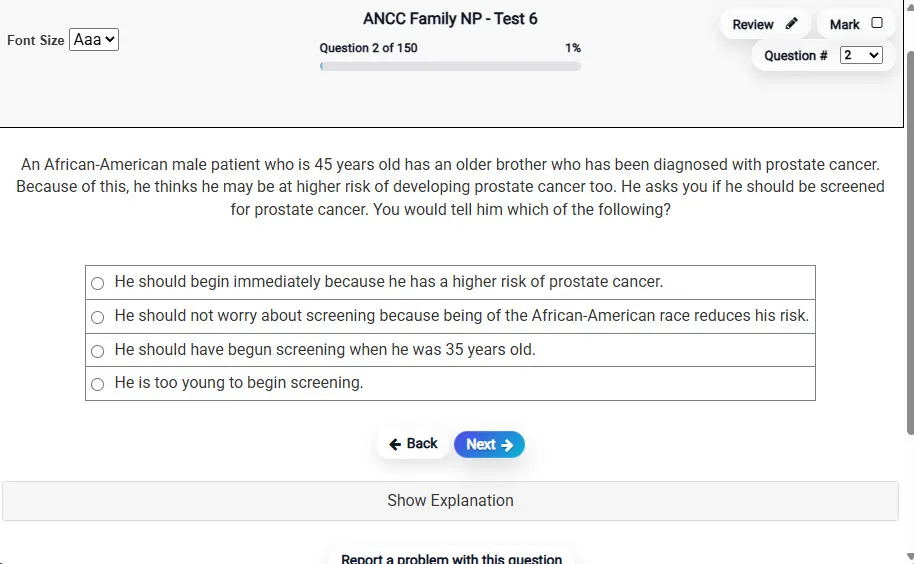
Answering a Question screen – Multiple-choice item view with navigation controls and progress tracker.
Answering a Question Multiple-choice item view with navigation controls and progress tracker.

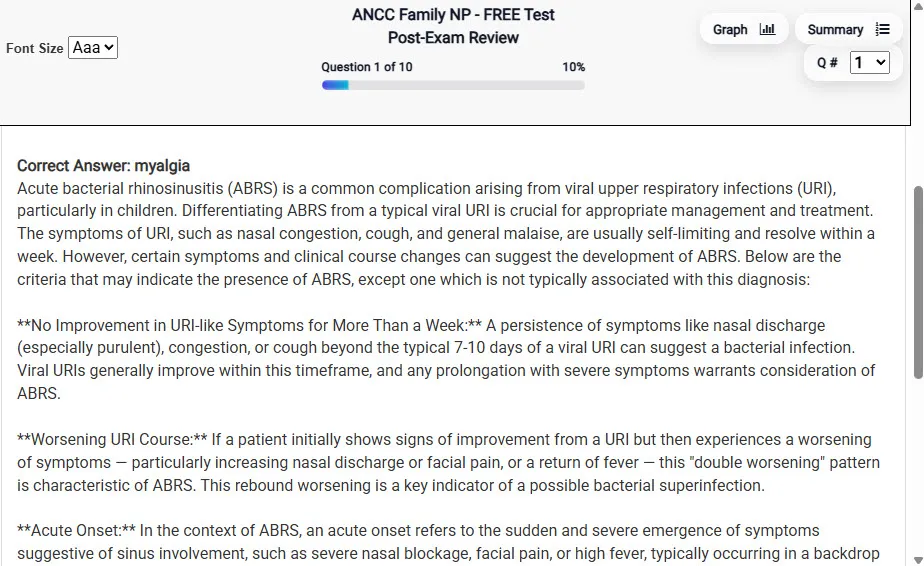
                           Detailed Explanation screen – 
                         Review mode showing chosen answer and rationale and references.
Detailed Explanation Review mode showing chosen answer and rationale and references.

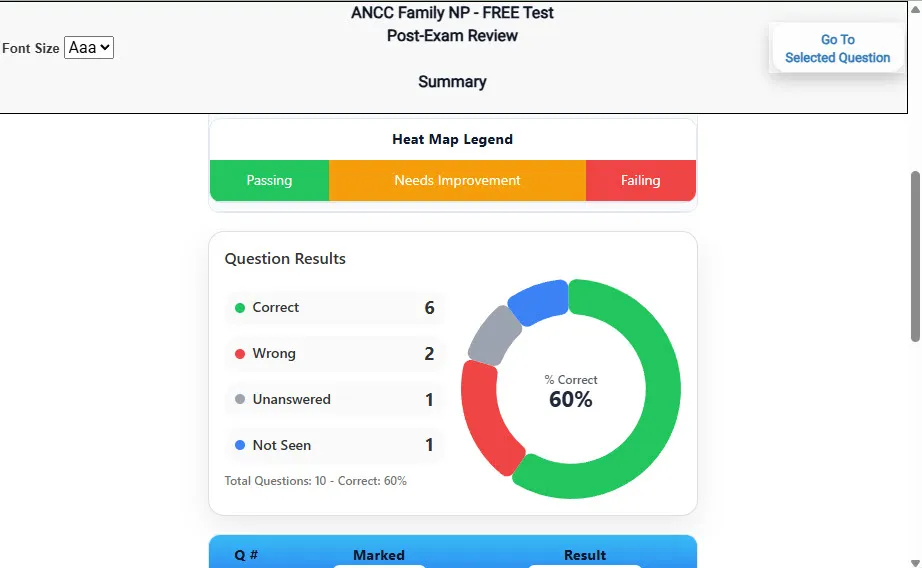
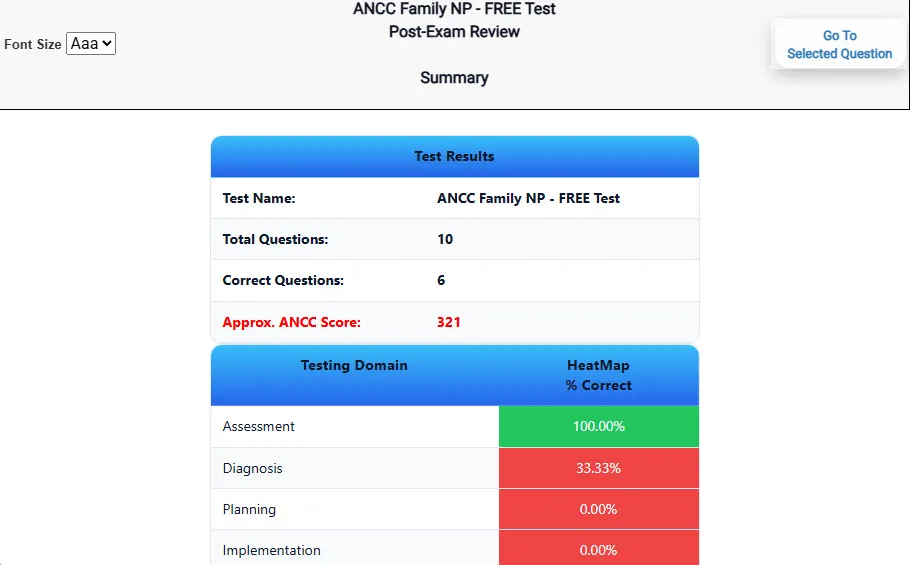
                           Review Summary 1 screen – 
                         Summary with counts for correct/wrong/unanswered and not seen items.
Review Summary 1 Summary with counts for correct/wrong/unanswered and not seen items.

                           Review Summary 2 screen – 
                         Advanced summary with category/domain breakdown and performance insights.
Review Summary 2 Advanced summary with category/domain breakdown and performance insights.

What Each Screen Shows

Answer Question Screen

  • Clean multiple-choice interface with progress bar.
  • Mark for review feature.
  • Matches real test pacing.

Detailed Explanation

  • Correct answer plus rationale.
  • Key concepts and guidelines highlighted.
  • Move between questions to fill knowledge gaps.

Review Summary 1

  • Overall results with total questions and scaled score.
  • Domain heatmap shows strengths and weaknesses.
  • Quick visual feedback on study priorities.

Review Summary 2

  • Chart of correct, wrong, unanswered, not seen.
  • Color-coded results for easy review.
  • Links back to missed items.

Top 10 Reasons to Use Exam Edge for your CCI Certified Cardiographic Technician Exam Prep

  1. Focused on the CCI Certified Cardiographic Technician Exam

    Our practice tests are built specifically for the CCI CCT exam — every question mirrors the real topics, format, and difficulty so you're studying exactly what matters.

  2. Real Exam Simulation

    We match the per-question time limits and pressure of the actual CCI exam, so test day feels familiar and stress-free.

  3. 10 Full Practice Tests & 1,000 Unique Questions

    You'll have more than enough material to master every CCI CCT concept — no repeats, no fluff.

  4. Lower Cost Than a Retake

    Ordering 5 practice exams costs less than retaking the CCI Certified Cardiographic Technician exam after a failure. One low fee could save you both time and money.

  5. Flexible Testing

    Need to step away mid-exam? Pick up right where you left off — with your remaining time intact.

  6. Instant Scoring & Feedback

    See your raw score and an estimated CCI Certified Cardiographic Technician score immediately after finishing each practice test.

  7. Detailed Explanations for Every Question

    Review correct and incorrect answers with clear, step-by-step explanations so you truly understand each topic.

  8. Trusted & Accredited

    We're fully accredited by the Better Business Bureau and uphold the highest standards of trust and transparency.

  9. Web-Based & Always Available

    No software to install. Access your CCI CCT practice exams 24/7 from any computer or mobile device.

  10. Expert Support When You Need It

    Need extra help? Our specialized tutors are highly qualified and ready to support your CCI exam prep.


Pass the CCI Certified Cardiographic Technician Exam with Realistic Practice Tests from Exam Edge

Preparing for your upcoming CCI Certified Cardiographic Technician (CCT) Certification Exam can feel overwhelming — but the right practice makes all the difference. Exam Edge gives you the tools, structure, and confidence to pass on your first try. Our online practice exams are built to match the real CCI CCT exam in content, format, and difficulty.

  • 📝 10 CCI Certified Cardiographic Technician Practice Tests: Access 10 full-length exams with 100 questions each, covering every major CCI Certified Cardiographic Technician topic in depth.
  • Instant Online Access: Start practicing right away — no software, no waiting.
  • 🧠 Step-by-Step Explanations: Understand the reasoning behind every correct answer so you can master CCI CCT exam concepts.
  • 🔄 Retake Each Exam Up to 4 Times: Build knowledge through repetition and track your improvement over time.
  • 🌐 Web-Based & Available 24/7: Study anywhere, anytime, on any device.
  • 🧘 Boost Your Test-Day Confidence: Familiarity with the CCI format reduces anxiety and helps you perform under pressure.

These CCI Certified Cardiographic Technician practice exams are designed to simulate the real testing experience by matching question types, timing, and difficulty level. This approach helps you get comfortable not just with the exam content, but also with the testing environment, so you walk into your exam day focused and confident.


Exam Edge CCI (cardio) Reviews


Thank you for your services. I purchase the test prep for CCI Certified Cardiographic Technician and it was a big help. I passed my board exam the first time with a score of a 739. Thanks again, I will be using your services for my CCI CRAT boards here soon.

David, TN

Exam Edge is a great resource for people trying to study for their board exams. This is the second time I have used Exam Edge's services, and it gave me the confidence for when the time came for me to sit for the exams. I passed my CCI Cardiographic Technician and Rhythm Analysis Technician exams.

Amanda K, Ohio

"Thank you so much, Exam Edge!!! I just left Pearson Vue, Miami........ with 759! I couldn't have done it without your practice tests!"

AJR, Miami FL

Love all the different tests with rationale to test questions.

carlyle , alpharetta, Georgia

This is the go-to for RCS, CCI board review practice test. I failed two times and passed on my third attempt with the help of Exam Edge. I was not paid for this review, I just want to help others make the right decision in board preparation. Exam Edge has a great series of questions related to the R ...
Read More
Jason P,

I feel the practice exams prepared me very well for the real thing. I have test anxiety, so I purchased a set of 10 tests. I finished 6 of 10 tests and still passed with a nice score. I like the way your test are designed and how they make you actually learn physics and not just memorize the answers ...
Read More
Sherry B, Allen County, Indiana


CCI Certified Cardiographic Technician Aliases Test Name

Here is a list of alternative names used for this exam.

  • CCI Certified Cardiographic Technician
  • CCI Certified Cardiographic Technician test
  • CCI Certified Cardiographic Technician Certification Test
  • CCI CCT test
  • CCI (cardio)
  • CCI (cardio) CCT
  • CCT test
  • CCI Certified Cardiographic Technician (CCT)
  • CCI Certified Cardiographic Technician certification