This is the content of the pop-over!

BCNS CNS (CNS) Practice Tests & Test Prep by Exam Edge


BCNS Certified Nutrition Specialist  product image
(5.0)
Based on 32 Reviews

  • Real Exam Simulation: Timed questions and matching content build comfort for your BCNS CNS test day.
  • Instant, 24/7 Access: Web-based BCNS Certified Nutrition Specialist practice exams with no software needed.
  • Clear Explanations: Step-by-step answers and explanations for your BCNS exam to strengthen understanding.
  • Boosted Confidence: Reduces anxiety and improves test-taking skills to ace your BCNS Certified Nutrition Specialist (CNS).

Featured on

BCNS Certified Nutrition Specialist Online Practice Test Bundles

BEST VALUE
20 practice tests

$174.00

$799.00

SAVE $625

Only $8.70 per test!

  • 100% Pass Guarantee
  • 20 online practice tests
  • 100 questions per test
  • Bonus: 100 Flash Cards + Study Guide
  • Instant access
  • Detailed Explanations
  • Practice tests never expire
  • Timed, untimed, or study guide mode
MOST POPULAR
10 practice tests

$99.50

$399.50

SAVE $300

Only $9.95 per test!

  • 10 online practice tests
  • 100 questions per test
  • Bonus: 100 Flash Cards + Study Guide
  • Instant access
  • Detailed Explanations
  • Practice tests never expire
  • Timed, untimed, or study guide mode
5 practice tests

$69.75

$199.75

SAVE $130

Only $13.95 per test!

  • 5 online practice tests
  • 100 questions per test
  • Bonus: 100 Flash Cards
  • Instant access
  • Detailed Explanations
  • Practice tests never expire
  • Timed, untimed, or study guide mode
1 practice test

$39.95

  • 1 online practice test
  • 100 questions per test
  • Instant access
  • Detailed Explanations
  • Practice tests never expire
  • Timed, untimed, or study guide mode
MOST FLEXIBLE
Question Bank

As low as $59.95

500 Questions

Choose 1, 3, 6, or 12 months
A second login is required.

  • Exam Edge content in a powerful question bank
  • Customize Tests
  • Multiple Test & Flash Card Modes
  • Track performance over time
  • Instant access
  • Detailed Explanations
Quick Select
Tap to choose a bundle

** All Prices are in US Dollars (USD) **


BCNS CNS (CNS) Resources

Jump to the section you need most.

Understanding the exact breakdown of the BCNS Certified Nutrition Specialist test will help you know what to expect and how to most effectively prepare. The BCNS Certified Nutrition Specialist has multiple-choice questions . The exam will be broken down into the sections below:

BCNS Certified Nutrition Specialist Exam Blueprint
Domain Name % Number of
Questions
Principles of Nutrition 13% 13
Nutritional Biochemistry 12% 12
Nutrients & Human Health 13% 13
Nutrition Assessment 13% 13
Clinical Intervention & Monitoring 16% 16
Medical Nutrition Therapy (MNT) 15% 15
Public Health 12% 12
Practice Management 6% 6

BCNS Certified Nutrition Specialist Study Tips by Domain

  • Differentiate macronutrient roles and energy yield (carb/protein ≈ 4 kcal/g, fat ≈ 9 kcal/g, alcohol ≈ 7 kcal/g) — red flag: forgetting fiber/polyols can lower actual metabolizable energy.
  • Apply dietary reference frameworks (EAR vs RDA vs AI vs UL) correctly — common trap: using the RDA to assess an individual’s adequacy when the EAR is the appropriate benchmark for probability of inadequacy.
  • Interpret food labels and ingredient lists for clinical relevance (serving size, %DV, added sugars, sodium, allergens) — red flag: assuming %DV is personalized (it is based on a 2,000-kcal reference unless otherwise specified).
  • Use digestion/absorption fundamentals (bile for fat absorption, pancreatic enzymes, transport mechanisms) — contraindication cue: fat-soluble vitamin deficiency risk rises with cholestasis, pancreatic insufficiency, or long-term very-low-fat intake.
  • Link diet patterns to cardiometabolic risk (saturated vs unsaturated fats, dietary fiber, glycemic load, sodium/potassium balance) — priority rule: emphasize replacing saturated fat with poly/monounsaturated fats rather than simply lowering total fat.
  • Integrate behavior and eating context (hunger/satiety cues, meal timing, food environment, cultural fit) — common trap: prescribing overly restrictive plans that undermine adherence and increase rebound eating.
  • Map macronutrient catabolism to fed vs fasted states (insulin vs glucagon) and know which pathways switch on/off; red flag: confusing hepatic gluconeogenesis with glycolysis when interpreting fasting labs.
  • Know rate-limiting enzymes and key regulation points (e.g., PFK-1, pyruvate dehydrogenase, HMG-CoA reductase) and what activates/inhibits them; common trap: assuming substrate availability always overrides hormonal control.
  • Differentiate aerobic vs anaerobic metabolism and lactate handling (Cori cycle) and relate to exercise or hypoxia; red flag: persistent elevated lactate with normal oxygenation suggests mitochondrial dysfunction or thiamin deficiency.
  • Recognize micronutrient cofactor roles (B vitamins, minerals) in energy and one-carbon metabolism; priority rule: unexplained macrocytosis or neuropathy warrants checking B12/folate status before high-dose folate supplementation.
  • Understand oxidative stress, antioxidant systems (glutathione, SOD, catalase), and lipid peroxidation; red flag: high-dose antioxidant supplementation can be contraindicated around certain chemo/radiation protocols.
  • Integrate common inborn/metabolic pathway disruptions (e.g., phenylketonuria, urea cycle defects, hemochromatosis) with biochemical consequences; common trap: missing hyperammonemia signs—acute confusion or vomiting—as a nutrition-related emergency.
  • Differentiate macro- and micronutrient deficiencies by hallmark patterns (e.g., microcytic anemia suggests iron; macrocytosis suggests folate/B12)—red flag: neurologic symptoms with anemia point strongly to B12 issues.
  • Know fat-soluble vitamin (A, D, E, K) storage/toxicity risk versus water-soluble—common trap: assuming “more is safe” with vitamin D or A despite accumulation and hypercalcemia/hepatotoxicity risk.
  • Link mineral balance to drug/supplement interactions—priority rule: separate iron, calcium, magnesium, and zinc from levothyroxine and certain antibiotics (tetracyclines/fluoroquinolones) to avoid impaired absorption.
  • Apply essential fatty acid physiology (omega-3/omega-6) to inflammation and cardiometabolic risk—common trap: recommending high-dose fish oil without considering bleeding risk with anticoagulants/antiplatelets.
  • Interpret protein needs across life stage and stress states (older adults, athletes, injury/illness)—red flag: low albumin alone is not a protein intake marker; it often reflects inflammation or fluid status.
  • Use fiber types (soluble/viscous vs insoluble/fermentable) to target outcomes—contraindication cue: aggressively increasing fiber in suspected bowel obstruction or severe gastroparesis can worsen symptoms.
  • Use a standardized workflow (ABCD/ADIME) and corroborate client self-report with objective data—red flag: plans based on a single data point (e.g., weight or a single lab) without trend/context.
  • Prioritize unintended weight change over time, BMI, and waist circumference, and document time frames—common trap: treating BMI as a diagnostic endpoint rather than a screening metric requiring clinical context.
  • Conduct diet assessment with a method matched to the question (24-hour recall vs. food record vs. FFQ) and check for underreporting—red flag: energy intake far below estimated needs without corresponding clinical signs.
  • Interpret labs in context of inflammation, hydration, and medication effects—priority rule: do not use albumin/prealbumin alone to diagnose protein malnutrition, especially with elevated CRP or acute illness.
  • Screen for malabsorption and GI dysfunction (stool changes, steatorrhea, post-prandial symptoms, bariatric history) and link to targeted testing—red flag: persistent diarrhea/greasy stools with weight loss warrants urgent medical evaluation.
  • Assess supplement/medication use, alcohol, and lifestyle factors (sleep, stress, activity) for nutrient interactions—common trap: missing contraindications such as high-dose vitamin A in pregnancy or warfarin interactions with vitamin K and botanicals.
  • Set SMART, measurable targets (e.g., A1c, LDL-C, BP, weight, symptom frequency) and define a reassessment interval up front; red flag: continuing a plan without objective trend data.
  • Stage interventions (diet, activity, sleep, stress, supplements) and change one major variable at a time; common trap: adding multiple supplements and dietary shifts simultaneously, making outcomes uninterpretable.
  • Monitor for medication–nutrient interactions and condition-specific contraindications (e.g., warfarin with variable vitamin K, statins with grapefruit, CKD with high-dose potassium/phosphorus); priority rule: safety overrides optimization.
  • Use symptom and tolerance monitoring to titrate interventions (GI distress, fatigue, hypoglycemia signs, orthostatic symptoms); red flag: persistent adverse effects beyond 1–2 weeks without dose/approach adjustment.
  • Verify supplement quality, dosing, and duration (USP/NSF where possible) and document rationale; common trap: chronic high-dose single nutrients (e.g., vitamin A, iron, iodine) without labs or clear indication.
  • Escalate or refer when findings exceed nutrition scope or suggest acute risk (unintentional rapid weight loss, dysphagia, GI bleeding, severe electrolyte symptoms, eating disorder risk); threshold cue: any sign of medical instability warrants same-day medical evaluation.
  • Match MNT to the diagnosis and severity using evidence-based targets (e.g., A1c/BP/lipids) and document measurable goals; red flag: prescribing a one-size-fits-all “diabetic” or “cardiac” diet without individualized goals.
  • Diabetes MNT: prioritize carbohydrate distribution/quality and hypoglycemia prevention, especially with insulin or sulfonylureas; common trap: advising major carbohydrate cuts without a medication adjustment plan or SMBG/CGM follow-up.
  • CKD MNT: individualize protein, sodium, potassium, and phosphorus based on stage, labs, and dialysis status; red flag: restricting potassium/phosphorus solely from a diagnosis label rather than current serum values and trends.
  • CVD/HTN MNT: focus on sodium reduction, fiber, unsaturated fats, and weight management while avoiding trans fats; common trap: emphasizing “low-fat” products that are high in refined carbs or sodium.
  • GI and food intolerance MNT (IBS, celiac, IBD): use structured elimination-challenge with a reintroduction plan to minimize unnecessary restriction; red flag: long-term low-FODMAP or gluten-free diets without confirmed indications and nutrient monitoring.
  • Nutrition support (enteral/parenteral): assess refeeding risk and advance calories slowly with electrolyte/thiamine support when indicated; priority rule: in high-risk patients, monitor phosphate, potassium, and magnesium closely during the first 72 hours.
  • Apply levels of prevention (primary/secondary/tertiary) to nutrition programs—red flag: choosing individual counseling when a population policy/environment change would reach the at-risk group more effectively.
  • Use basic epidemiology correctly (incidence vs prevalence; relative risk vs odds ratio)—common trap: interpreting an odds ratio from a case-control study as a risk ratio when the outcome is common.
  • Screen, confirm, and target interventions with appropriate population metrics (BMI-for-age percentiles, waist circumference, BP, A1c)—priority rule: screening is not diagnosis and must include a referral/confirmatory pathway.
  • Design and evaluate programs with SMART objectives and logic models—red flag: measuring “awareness” only with no outcome/impact measure (e.g., diet quality, food security, clinical risk factors).
  • Address health equity and social determinants (food access, cultural fit, literacy, cost, transportation)—common trap: assuming “noncompliance” when structural barriers are the primary driver.
  • Follow food safety and regulatory basics (HACCP principles, time/temperature control, allergen management, fortification/labeling claims)—contraindication: providing nutrition advice that implies disease treatment without appropriate scope/referral and documentation.
  • Document every encounter with a clear nutrition diagnosis, measurable goals, and follow-up interval; red flag: vague “improve diet” plans without objective metrics (e.g., labs, symptoms, anthropometrics) invite audit/quality issues.
  • Use informed consent and scope-of-practice boundaries for supplements, labs, and referrals; common trap: implying diagnosis or medical treatment when the client needs physician coordination.
  • Protect client privacy with minimum-necessary access, secure storage, and written policies for telehealth and messaging; red flag: discussing cases via unencrypted email/text without explicit safeguards.
  • Set fees, packages, and cancellation/refund terms in writing before services begin; priority rule: avoid “results-guaranteed” language that can be misleading or unethical.
  • Maintain professional liability coverage and a risk-management workflow (incident reporting, adverse event tracking, escalation); red flag: continuing an intervention after signs of intolerance or worsening symptoms without reassessment.
  • Implement quality improvement: standardized intake forms, outcomes tracking, and evidence review cadence; common trap: relying on anecdote over current guidelines when updating protocols.


Built to Fit Into Your Busy Life

Everything you need to prepare with confidence—without wasting a minute.

Three Study Modes

Timed, No Time Limit, or Explanation mode.

Actionable Analytics

Heatmaps and scaled scores highlight weak areas.

High-Yield Rationales

Concise explanations emphasize key concepts.

Realistic Interface

Matches the feel of the actual exam environment.

Accessible by Design

Clean layout reduces cognitive load.

Anytime, Anywhere

Web-based access 24/7 on any device.
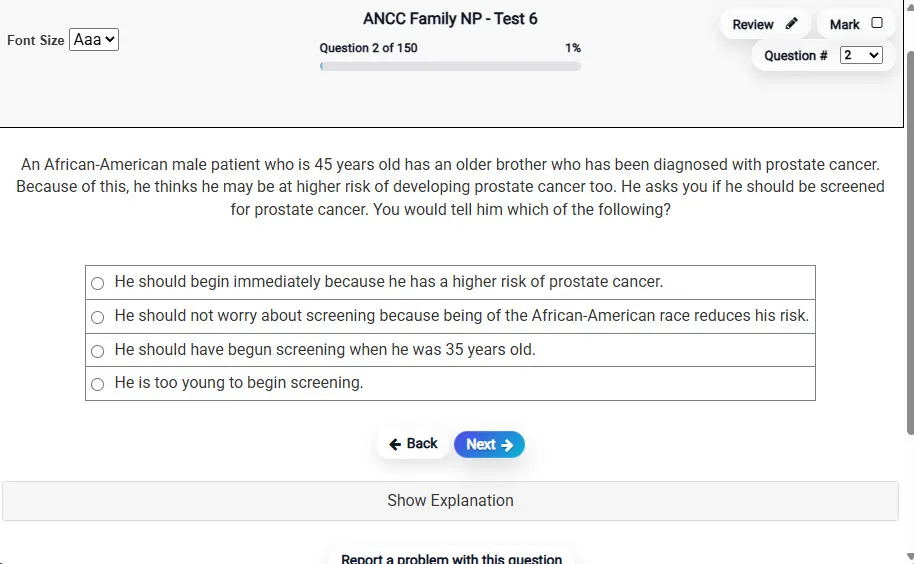
Answering a Question screen – Multiple-choice item view with navigation controls and progress tracker.
Answering a Question Multiple-choice item view with navigation controls and progress tracker.

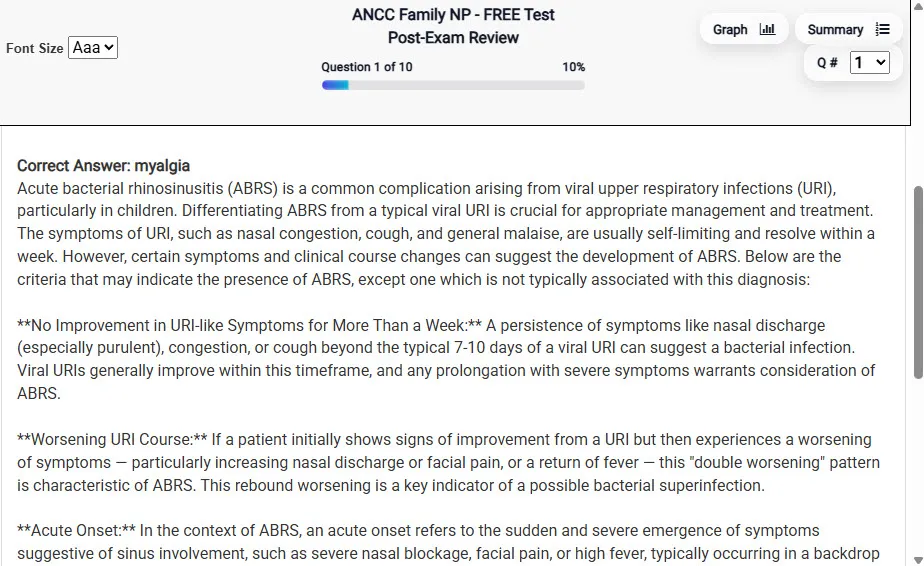
                           Detailed Explanation screen – 
                         Review mode showing chosen answer and rationale and references.
Detailed Explanation Review mode showing chosen answer and rationale and references.

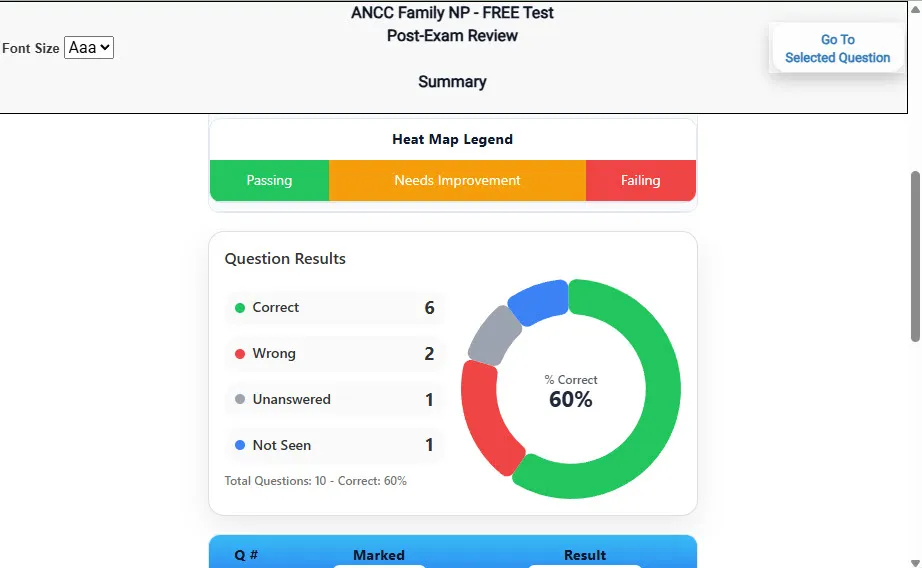
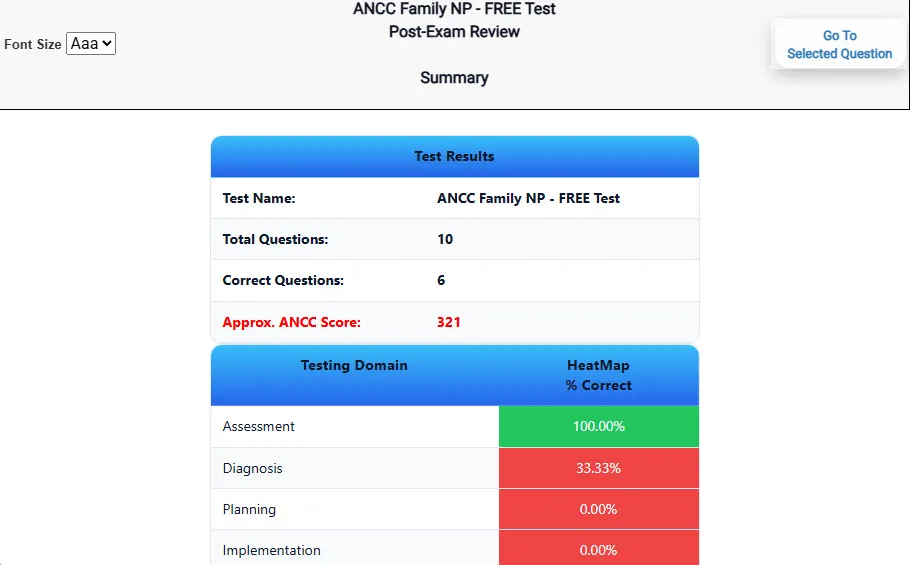
                           Review Summary 1 screen – 
                         Summary with counts for correct/wrong/unanswered and not seen items.
Review Summary 1 Summary with counts for correct/wrong/unanswered and not seen items.

                           Review Summary 2 screen – 
                         Advanced summary with category/domain breakdown and performance insights.
Review Summary 2 Advanced summary with category/domain breakdown and performance insights.

What Each Screen Shows

Answer Question Screen

  • Clean multiple-choice interface with progress bar.
  • Mark for review feature.
  • Matches real test pacing.

Detailed Explanation

  • Correct answer plus rationale.
  • Key concepts and guidelines highlighted.
  • Move between questions to fill knowledge gaps.

Review Summary 1

  • Overall results with total questions and scaled score.
  • Domain heatmap shows strengths and weaknesses.
  • Quick visual feedback on study priorities.

Review Summary 2

  • Chart of correct, wrong, unanswered, not seen.
  • Color-coded results for easy review.
  • Links back to missed items.

Top 10 Reasons to Use Exam Edge for your BCNS Certified Nutrition Specialist Exam Prep

  1. Focused on the BCNS Certified Nutrition Specialist Exam

    Our practice tests are built specifically for the BCNS CNS exam — every question mirrors the real topics, format, and difficulty so you're studying exactly what matters.

  2. Real Exam Simulation

    We match the per-question time limits and pressure of the actual BCNS exam, so test day feels familiar and stress-free.

  3. 20 Full Practice Tests & 2,000 Unique Questions

    You'll have more than enough material to master every BCNS CNS concept — no repeats, no fluff.

  4. Lower Cost Than a Retake

    Ordering 5 practice exams costs less than retaking the BCNS Certified Nutrition Specialist exam after a failure. One low fee could save you both time and money.

  5. Flexible Testing

    Need to step away mid-exam? Pick up right where you left off — with your remaining time intact.

  6. Instant Scoring & Feedback

    See your raw score and an estimated BCNS Certified Nutrition Specialist score immediately after finishing each practice test.

  7. Detailed Explanations for Every Question

    Review correct and incorrect answers with clear, step-by-step explanations so you truly understand each topic.

  8. Trusted & Accredited

    We're fully accredited by the Better Business Bureau and uphold the highest standards of trust and transparency.

  9. Web-Based & Always Available

    No software to install. Access your BCNS CNS practice exams 24/7 from any computer or mobile device.

  10. Expert Support When You Need It

    Need extra help? Our specialized tutors are highly qualified and ready to support your BCNS exam prep.


Pass the BCNS Certified Nutrition Specialist Exam with Realistic Practice Tests from Exam Edge

Preparing for your upcoming BCNS Certified Nutrition Specialist (CNS) Certification Exam can feel overwhelming — but the right practice makes all the difference. Exam Edge gives you the tools, structure, and confidence to pass on your first try. Our online practice exams are built to match the real BCNS CNS exam in content, format, and difficulty.

  • 📝 20 BCNS Certified Nutrition Specialist Practice Tests: Access 20 full-length exams with 100 questions each, covering every major BCNS Certified Nutrition Specialist topic in depth.
  • Instant Online Access: Start practicing right away — no software, no waiting.
  • 🧠 Step-by-Step Explanations: Understand the reasoning behind every correct answer so you can master BCNS CNS exam concepts.
  • 🔄 Retake Each Exam Up to 4 Times: Build knowledge through repetition and track your improvement over time.
  • 🌐 Web-Based & Available 24/7: Study anywhere, anytime, on any device.
  • 🧘 Boost Your Test-Day Confidence: Familiarity with the BCNS format reduces anxiety and helps you perform under pressure.

These BCNS Certified Nutrition Specialist practice exams are designed to simulate the real testing experience by matching question types, timing, and difficulty level. This approach helps you get comfortable not just with the exam content, but also with the testing environment, so you walk into your exam day focused and confident.


Exam Edge BCNS Reviews


BCNS Certified Nutrition Specialist Aliases Test Name

Here is a list of alternative names used for this exam.

  • BCNS Certified Nutrition Specialist
  • BCNS Certified Nutrition Specialist test
  • BCNS Certified Nutrition Specialist Certification Test
  • BCNS CNS test
  • BCNS
  • BCNS CNS
  • CNS test
  • BCNS Certified Nutrition Specialist (CNS)
  • Certified Nutrition Specialist certification