This is the content of the pop-over!

Lightning Deal Alert – 12% Off Ends at Midnight!

Strike while the savings are hot! Use promo code FlashSale at checkout for 12% off any Exam Edge test or bundle. Hurry—the clock is ticking!

BONENT Certified Peritoneal Dialysis Nurse (CPDN) Practice Tests & Test Prep by Exam Edge


BONENT Certified Peritoneal Dialysis Nurse  product image
(5.0)
Based on 40 Reviews

  • Real Exam Simulation: Timed questions and matching content build comfort for your BONENT Certified Peritoneal Dialysis Nurse test day.
  • Instant, 24/7 Access: Web-based BONENT Certified Peritoneal Dialysis Nurse practice exams with no software needed.
  • Clear Explanations: Step-by-step answers and explanations for your BONENT exam to strengthen understanding.
  • Boosted Confidence: Reduces anxiety and improves test-taking skills to ace your BONENT Certified Peritoneal Dialysis Nurse (CPDN).

Featured on

BONENT Certified Peritoneal Dialysis Nurse Online Practice Test Bundles

BEST VALUE
5 practice tests

$69.75

$199.75

SAVE $130

Only $13.95 per test!

  • 100% Pass Guarantee
  • 5 online practice tests
  • 100 questions per test
  • Bonus: 100 Flash Cards + Study Guide
  • Instant access
  • Detailed Explanations
  • Practice tests never expire
  • Timed, untimed, or study guide mode
1 practice test

$39.95

  • 1 online practice test
  • 100 questions per test
  • Instant access
  • Detailed Explanations
  • Practice tests never expire
  • Timed, untimed, or study guide mode
Quick Select
Tap to choose a bundle

** All Prices are in US Dollars (USD) **


BONENT Certified Peritoneal Dialysis Nurse (CPDN) Resources

Jump to the section you need most.

Understanding the exact breakdown of the BONENT Certified Peritoneal Dialysis Nurse test will help you know what to expect and how to most effectively prepare. The BONENT Certified Peritoneal Dialysis Nurse has 150 multiple-choice questions . The exam will be broken down into the sections below:

BONENT Certified Peritoneal Dialysis Nurse Exam Blueprint
Domain Name % Number of
Questions
Nursing Process 60% 90
Administration 10% 15
Education 20% 30
Professional Development 10% 15

BONENT Certified Peritoneal Dialysis Nurse Study Tips by Domain

  • Complete a pre-treatment assessment each exchange (vitals, weight, edema, breath sounds, pain, effluent clarity/volume) and treat a sudden weight gain or dyspnea as a red flag for fluid overload requiring prompt provider notification.
  • Use strict aseptic technique for connect/disconnect and exit-site care; any break in sterility is a priority rule to stop, clamp, and restart with new sterile supplies.
  • Monitor for peritonitis: cloudy effluent, abdominal pain, fever, or nausea; do not discard the first cloudy bag—send effluent for cell count/differential and culture before starting antibiotics if possible.
  • Troubleshoot poor drain/slow fill systematically (check clamps, kinks, catheter position, constipation, and patient posture) and treat constipation early as a common trap that causes flow failure.
  • Evaluate ultrafiltration and adequacy (net UF, glucose strength used, dwell times, and trends) and escalate if UF drops despite higher dextrose as a red flag for membrane changes or mechanical issues.
  • Inspect and document the exit site and tunnel findings each visit; increasing redness, drainage, or tenderness is a contraindication to “watchful waiting” and should prompt culture and timely therapy per protocol.
  • Verify PD orders and supplies match the prescribed modality (CAPD vs APD), dextrose strength, and exchange volumes—red flag: a shipment label or cycler program that doesn’t match the current prescription.
  • Maintain strict aseptic technique policies for connect/disconnect and exit-site care, including standardized hand hygiene and mask use—common trap: allowing “quick” connections without masking when the patient is asymptomatic.
  • Track and document ultrafiltration (UF), intake/output, and daily weights with defined escalation thresholds—priority rule: report sustained UF decline or rapid weight gain (e.g., ≥2 kg in 48 hours) as possible fluid overload or catheter issue.
  • Implement peritonitis surveillance and response workflows (effluent assessment, culture collection, antibiotic initiation per protocol)—red flag: cloudy effluent should be treated as peritonitis until proven otherwise.
  • Ensure medication administration and storage processes are PD-safe (dose adjustments for renal failure, compatibility with intraperitoneal routes, proper dwell times)—common trap: giving nephrotoxic or unadjusted doses without verifying current residual renal function and clearance.
  • Coordinate scheduling, home supply logistics, and emergency back-up plans (power outage for APD, urgent evaluation pathways)—priority rule: patients must have a documented contingency plan and minimum reserve supplies (e.g., several days) to prevent missed exchanges.
  • Assess readiness to learn (literacy, language, vision, dexterity, cognition) before teaching; red flag: proceeding without verifying the patient/caregiver can demonstrate the steps.
  • Teach aseptic technique for exchanges with return-demonstration and teach-back every session; common trap: “watching once” is not competency, especially for mask use and hand hygiene sequence.
  • Instruct on peritonitis prevention and early recognition (cloudy effluent, abdominal pain, fever) and require immediate contact/reporting; priority rule: treat cloudy drain as peritonitis until proven otherwise.
  • Reinforce exit-site care (daily inspection, cleansing, securement, and avoiding traction) and medication adherence as ordered; red flag: redness, drainage, or pain at the site warrants same-day evaluation.
  • Educate on fluid, diet, and glycemic considerations (protein needs, sodium restriction, glucose absorption with dextrose solutions) and monitoring parameters; common trap: missed weight/BP logs that delay detection of volume overload.
  • Train on equipment/supply management (storage, expiration checks, warming technique, cycler alarms, and emergency power/outage plan); contraindication: microwaving dialysate or using compromised packaging increases contamination risk.
  • Maintain active RN licensure and comply with your facility’s competency/annual skills validation for PD—red flag: performing independent PD assessments or training without documented competency sign-off.
  • Follow the PD program’s infection prevention standards (hand hygiene, mask use, aseptic technique, exit-site care) and audit adherence—common trap: treating peritonitis as a one-off event instead of triggering a retraining and root-cause review.
  • Use incident reporting and quality metrics (peritonitis rate, technique survival, hospitalizations, adequacy targets) to drive QAPI—priority rule: investigate any uptick in peritonitis above program baseline promptly rather than waiting for monthly trend review.
  • Practice within scope and escalate appropriately to the nephrologist/interdisciplinary team—contraindication: independently changing PD prescriptions (dwell time, dextrose strength, fill volume) without an authorized order.
  • Protect patient privacy and documentation integrity in all communications, including telehealth and texting—red flag: sharing photos of PD effluent or exit sites without secure, approved channels and consent.
  • Engage in continuing education focused on PD advancements (remote monitoring, incremental PD, troubleshooting cyclers) and reflect on learning needs—common trap: relying on vendor in-services alone instead of evidence-based updates and competency assessment.


Built to Fit Into Your Busy Life

Everything you need to prepare with confidence—without wasting a minute.

Three Study Modes

Timed, No Time Limit, or Explanation mode.

Actionable Analytics

Heatmaps and scaled scores highlight weak areas.

High-Yield Rationales

Concise explanations emphasize key concepts.

Realistic Interface

Matches the feel of the actual exam environment.

Accessible by Design

Clean layout reduces cognitive load.

Anytime, Anywhere

Web-based access 24/7 on any device.
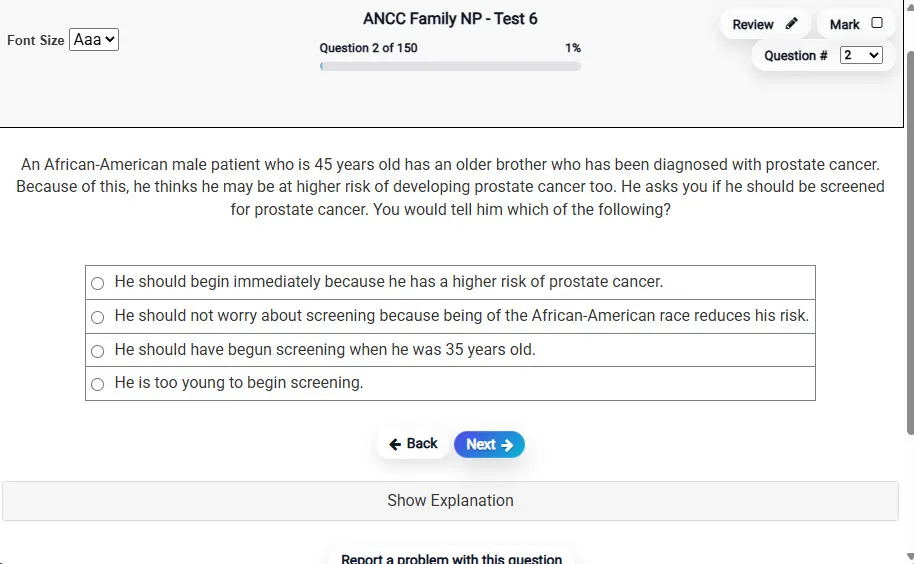
Answering a Question screen – Multiple-choice item view with navigation controls and progress tracker.
Answering a Question Multiple-choice item view with navigation controls and progress tracker.

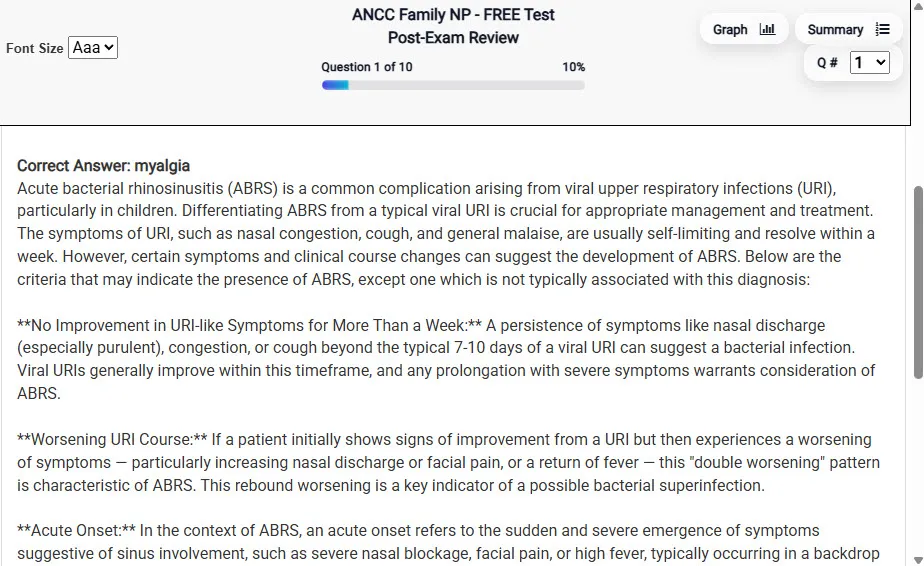
                           Detailed Explanation screen – 
                         Review mode showing chosen answer and rationale and references.
Detailed Explanation Review mode showing chosen answer and rationale and references.

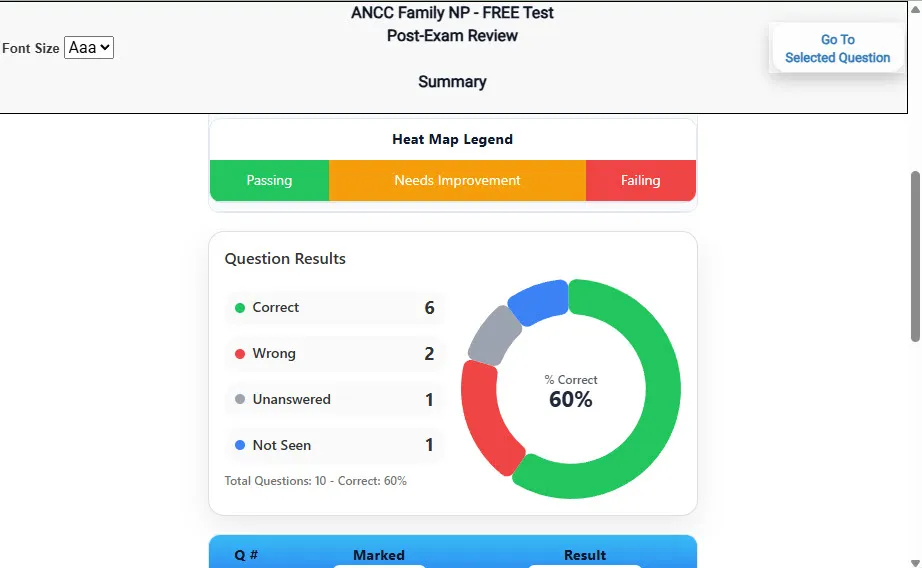
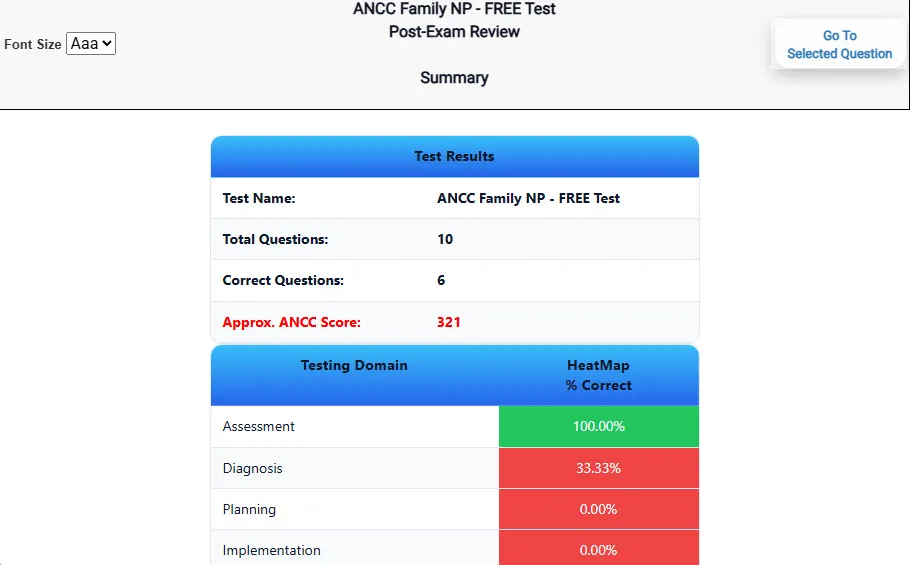
                           Review Summary 1 screen – 
                         Summary with counts for correct/wrong/unanswered and not seen items.
Review Summary 1 Summary with counts for correct/wrong/unanswered and not seen items.

                           Review Summary 2 screen – 
                         Advanced summary with category/domain breakdown and performance insights.
Review Summary 2 Advanced summary with category/domain breakdown and performance insights.

What Each Screen Shows

Answer Question Screen

  • Clean multiple-choice interface with progress bar.
  • Mark for review feature.
  • Matches real test pacing.

Detailed Explanation

  • Correct answer plus rationale.
  • Key concepts and guidelines highlighted.
  • Move between questions to fill knowledge gaps.

Review Summary 1

  • Overall results with total questions and scaled score.
  • Domain heatmap shows strengths and weaknesses.
  • Quick visual feedback on study priorities.

Review Summary 2

  • Chart of correct, wrong, unanswered, not seen.
  • Color-coded results for easy review.
  • Links back to missed items.

Top 10 Reasons to Use Exam Edge for your BONENT Certified Peritoneal Dialysis Nurse Exam Prep

  1. Focused on the BONENT Certified Peritoneal Dialysis Nurse Exam

    Our practice tests are built specifically for the BONENT Certified Peritoneal Dialysis Nurse exam — every question mirrors the real topics, format, and difficulty so you're studying exactly what matters.

  2. Real Exam Simulation

    We match the per-question time limits and pressure of the actual BONENT exam, so test day feels familiar and stress-free.

  3. 5 Full Practice Tests & 500 Unique Questions

    You'll have more than enough material to master every BONENT Certified Peritoneal Dialysis Nurse concept — no repeats, no fluff.

  4. Lower Cost Than a Retake

    Ordering 5 practice exams costs less than retaking the BONENT Certified Peritoneal Dialysis Nurse exam after a failure. One low fee could save you both time and money.

  5. Flexible Testing

    Need to step away mid-exam? Pick up right where you left off — with your remaining time intact.

  6. Instant Scoring & Feedback

    See your raw score and an estimated BONENT Certified Peritoneal Dialysis Nurse score immediately after finishing each practice test.

  7. Detailed Explanations for Every Question

    Review correct and incorrect answers with clear, step-by-step explanations so you truly understand each topic.

  8. Trusted & Accredited

    We're fully accredited by the Better Business Bureau and uphold the highest standards of trust and transparency.

  9. Web-Based & Always Available

    No software to install. Access your BONENT Certified Peritoneal Dialysis Nurse practice exams 24/7 from any computer or mobile device.

  10. Expert Support When You Need It

    Need extra help? Our specialized tutors are highly qualified and ready to support your BONENT exam prep.


Pass the BONENT Certified Peritoneal Dialysis Nurse Exam with Realistic Practice Tests from Exam Edge

Preparing for your upcoming BONENT Certified Peritoneal Dialysis Nurse (CPDN) Certification Exam can feel overwhelming — but the right practice makes all the difference. Exam Edge gives you the tools, structure, and confidence to pass on your first try. Our online practice exams are built to match the real BONENT Certified Peritoneal Dialysis Nurse exam in content, format, and difficulty.

  • 📝 5 BONENT Certified Peritoneal Dialysis Nurse Practice Tests: Access 5 full-length exams with 100 questions each, covering every major BONENT Certified Peritoneal Dialysis Nurse topic in depth.
  • Instant Online Access: Start practicing right away — no software, no waiting.
  • 🧠 Step-by-Step Explanations: Understand the reasoning behind every correct answer so you can master BONENT Certified Peritoneal Dialysis Nurse exam concepts.
  • 🔄 Retake Each Exam Up to 4 Times: Build knowledge through repetition and track your improvement over time.
  • 🌐 Web-Based & Available 24/7: Study anywhere, anytime, on any device.
  • 🧘 Boost Your Test-Day Confidence: Familiarity with the BONENT format reduces anxiety and helps you perform under pressure.

These BONENT Certified Peritoneal Dialysis Nurse practice exams are designed to simulate the real testing experience by matching question types, timing, and difficulty level. This approach helps you get comfortable not just with the exam content, but also with the testing environment, so you walk into your exam day focused and confident.


Exam Edge BONENT Reviews


Great, I practice to get my test!

Waleska , Boynton Beach, Florida


BONENT Certified Peritoneal Dialysis Nurse Aliases Test Name

Here is a list of alternative names used for this exam.

  • BONENT Certified Peritoneal Dialysis Nurse
  • BONENT Certified Peritoneal Dialysis Nurse test
  • BONENT Certified Peritoneal Dialysis Nurse Certification Test
  • BONENT
  • BONENT CPDN
  • CPDN test
  • BONENT Certified Peritoneal Dialysis Nurse (CPDN)
  • Certified Peritoneal Dialysis Nurse certification