This is the content of the pop-over!

Lightning Deal Alert – 12% Off Ends at Midnight!

Strike while the savings are hot! Use promo code FlashSale at checkout for 12% off any Exam Edge test or bundle. Hurry—the clock is ticking!

Certified Hemodialysis Technician Practice Test & Test Prep


BONENT Certified Hemodialysis Technologist/Technician   product image
(5.0)
Based on 32 Reviews

  • Real Exam Simulation: Timed questions and matching content build comfort for your BONENT Certified Hemodialysis Technologist/Technician test day.
  • Instant, 24/7 Access: Web-based BONENT Certified Hemodialysis Technologist/Technician practice exams with no software needed.
  • Clear Explanations: Step-by-step answers and explanations for your BONENT exam to strengthen understanding.
  • Boosted Confidence: Reduces anxiety and improves test-taking skills to ace your BONENT Certified Hemodialysis Technologist/Technician (CHT).

Featured on

BONENT Certified Hemodialysis Technologist/Technician Online Practice Test Bundles

BEST VALUE
5 practice tests

$69.75

$199.75

SAVE $130

Only $13.95 per test!

  • 100% Pass Guarantee
  • 5 online practice tests
  • 100 questions per test
  • Bonus: 100 Flash Cards + Study Guide
  • Instant access
  • Detailed Explanations
  • Practice tests never expire
  • Timed, untimed, or study guide mode
1 practice test

$39.95

  • 1 online practice test
  • 100 questions per test
  • Instant access
  • Detailed Explanations
  • Practice tests never expire
  • Timed, untimed, or study guide mode
Quick Select
Tap to choose a bundle

** All Prices are in US Dollars (USD) **


BONENT Certified Hemodialysis Technologist/Technician (CHT) Resources

Jump to the section you need most.

Understanding the exact breakdown of the BONENT Certified Hemodialysis Technologist/Technician test will help you know what to expect and how to most effectively prepare. The BONENT Certified Hemodialysis Technologist/Technician has 150 multiple-choice questions . The exam will be broken down into the sections below:

BONENT Certified Hemodialysis Technologist/Technician Exam Blueprint
Domain Name % Number of
Questions
Patient Care 45% 68
Machine Technology 12% 18
Water Treatment 15% 23
Infection Control 18% 27
Education/Personal Development 10% 15

BONENT Certified Hemodialysis Technologist/Technician Study Tips by Domain

  • Verify patient ID with two identifiers and match the dialysis prescription (dialyzer, blood flow, dialysate, time)—red flag: starting treatment with a “usual order” when today’s order differs.
  • Use pre-/post-dialysis weights to set ultrafiltration; practical threshold: if ordered UF exceeds safe tolerance (e.g., very high UFR or symptomatic during setup), notify RN/charge nurse before initiating.
  • Assess access patency before cannulation (look, listen, feel for bruit/thrill)—red flag: absent thrill/bruit or new swelling/pain; hold cannulation and escalate.
  • Cannulate using appropriate needle size, direction, and aseptic technique; common trap: infiltrations from poor needle stabilization—secure lines and recheck after the pump starts.
  • Monitor vitals and symptoms throughout treatment; priority rule: treat hypotension first (stop/reduce UF, Trendelenburg, saline per protocol) before troubleshooting non-urgent machine alarms.
  • Recognize and respond to emergencies (air embolism, hemolysis, chest pain, anaphylactoid reactions); red flag: sudden dyspnea/chest pain or dark “cola” blood—stop blood pump, clamp lines, and get immediate clinical assistance per facility protocol.
  • Before initiating treatment, complete a full pre-use machine check (self-test, alarms, air detector, venous clamp) and verify the dialyzer/lines match the prescription—red flag: bypassing checks after a room turnover.
  • Set and confirm critical prescription parameters (BFR, DFR, UF goal/rate, dialysate temperature and conductivity) and re-check after any pause—common trap: confusing UF goal (mL) with UF rate (mL/hr) during edits.
  • Interpret and respond to pressure trends (arterial, venous, TMP) rather than single numbers—priority rule: rapidly rising venous pressure suggests outflow/needle issue; rising TMP suggests clotting or dialyzer/line restriction.
  • Manage anticoagulation delivery as ordered and monitor for clotting signs in the circuit—red flag: visible fibrin, dark streaking in the dialyzer, or frequent saline flushes needed to maintain pressures.
  • Recognize and troubleshoot alarm categories (air, blood leak, conductivity/temperature, water alarms) and never override safety interlocks—contraindication: do not resume blood pump after an air alarm until the source is found and the circuit is cleared per policy.
  • Perform safe rinseback, termination, and disinfection/heat-sterilization steps per manufacturer instructions and facility logs—common trap: incomplete rinse leading to disinfectant residue exposure or missed documentation that fails audit requirements.
  • Verify the water treatment flow path (pretreatment → RO → distribution loop) and document required checks each shift; red flag: skipped logs or “assumed OK” readings are common audit failures.
  • Confirm chlorine/chloramine testing is performed at the correct sampling point and within facility limits before first patient; common trap: testing after carbon tanks but not between them, missing first-tank breakthrough.
  • Trend RO performance using conductivity/TDS and percent rejection; priority rule: sudden drops in rejection or rising product water conductivity require immediate action before treatments continue.
  • Maintain distribution loop integrity (continuous circulation, proper disinfection schedule, no dead legs); red flag: warm stagnant sections or infrequent disinfection correlate with high microbial counts/endotoxin risk.
  • Respond to alarm conditions correctly (low feed pressure, high conductivity, low product flow) per policy and manufacturer guidance; common trap: silencing alarms without correcting the cause or notifying the RN/biomed.
  • Use proper sampling and culture technique for bacteria/endotoxin monitoring and verify action levels; red flag: contaminated sampling (touching ports, non-sterile containers) can mask true system problems and delay corrective disinfection.
  • Perform hand hygiene at the correct moments (before/after patient contact, before aseptic tasks, after blood/body fluid exposure, after touching patient surroundings); red flag: wearing gloves is not a substitute for hand hygiene.
  • Use appropriate PPE for dialysis tasks (e.g., face/eye protection when priming, cannulating, or handling bloodlines); common trap: removing PPE before completing blood cleanup increases exposure risk.
  • Apply vascular access asepsis consistently (scrub-the-hub for catheter connections and proper skin antisepsis for cannulation); priority rule: do not connect/disconnect a catheter without a documented antiseptic dry time.
  • Clean and disinfect the station between patients using correct product, dilution, and contact time; red flag: wiping surfaces dry too soon negates disinfectant effectiveness.
  • Prevent cross-contamination by dedicating supplies to a single patient and avoiding shared items (tape rolls, tourniquets, medication vials); common trap: carrying used supplies from one station to another spreads organisms.
  • Follow bloodborne pathogen controls for spills and sharps (immediate disposal into sharps container, no recapping, correct spill kit steps); red flag: overfilled sharps containers or needle manipulation at the chairside is an avoidable exposure.
  • Verify scope and supervision before performing any task—red flag: independently administering medications, altering prescriptions, or making clinical judgments outside facility policy and state regulations.
  • Use structured communication (SBAR/read-back) for critical results and orders—common trap: assuming a verbal order is correct without repeating it back and documenting per policy.
  • Protect patient privacy under HIPAA—red flag: discussing treatments in public areas, leaving PHI on screens, or sharing dialysis details with family without documented permission.
  • Maintain competency with ongoing education and skills validation—priority rule: do not perform infrequent/high-risk procedures (e.g., needle cannulation in difficult access) until you have current documented competency.
  • Practice professional boundaries and respectful care—common trap: accepting gifts, sharing personal contact information, or engaging in social media posts that could identify a patient.
  • Document objectively, promptly, and only what you observed/did—red flag: late charting without noting a late entry, copying prior notes, or charting interventions you did not personally perform.


Built to Fit Into Your Busy Life

Everything you need to prepare with confidence—without wasting a minute.

Three Study Modes

Timed, No Time Limit, or Explanation mode.

Actionable Analytics

Heatmaps and scaled scores highlight weak areas.

High-Yield Rationales

Concise explanations emphasize key concepts.

Realistic Interface

Matches the feel of the actual exam environment.

Accessible by Design

Clean layout reduces cognitive load.

Anytime, Anywhere

Web-based access 24/7 on any device.
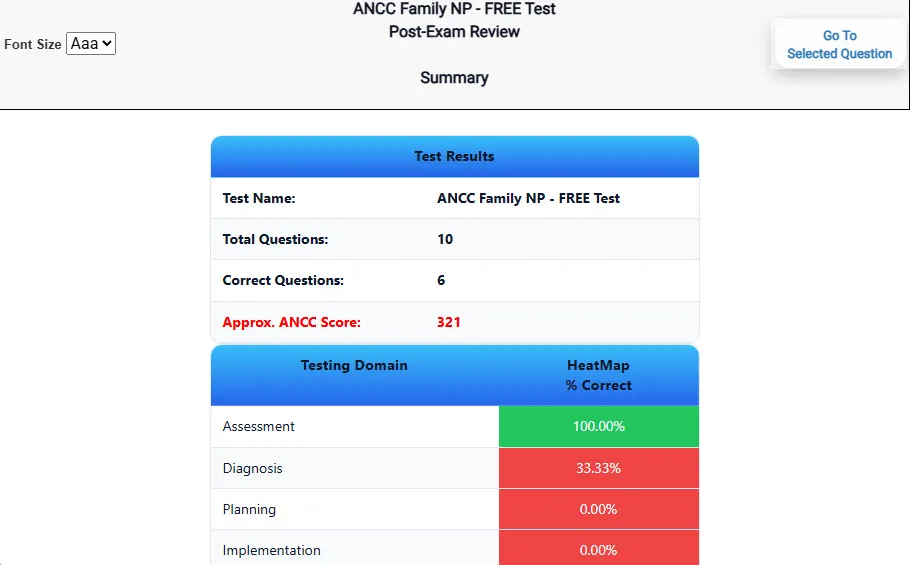
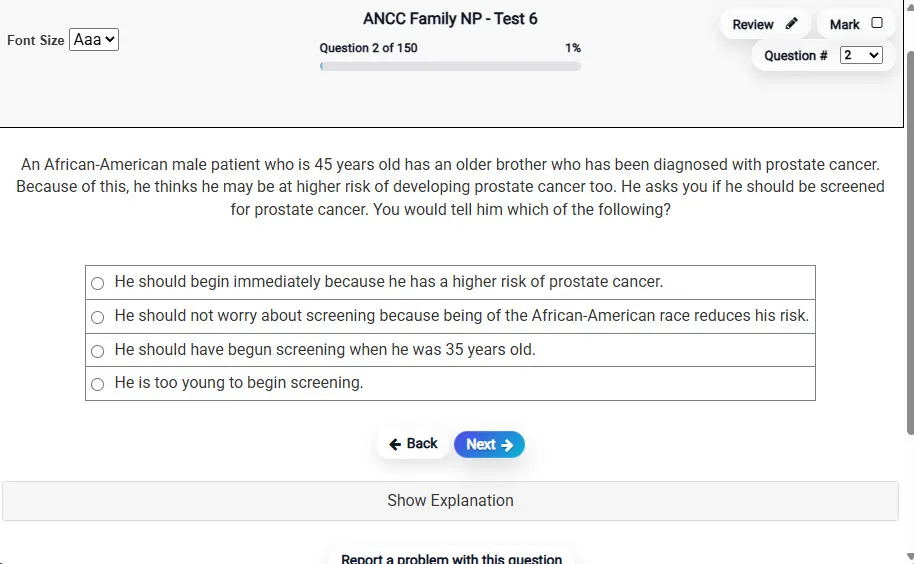
Answering a Question screen – Multiple-choice item view with navigation controls and progress tracker.
Answering a Question Multiple-choice item view with navigation controls and progress tracker.

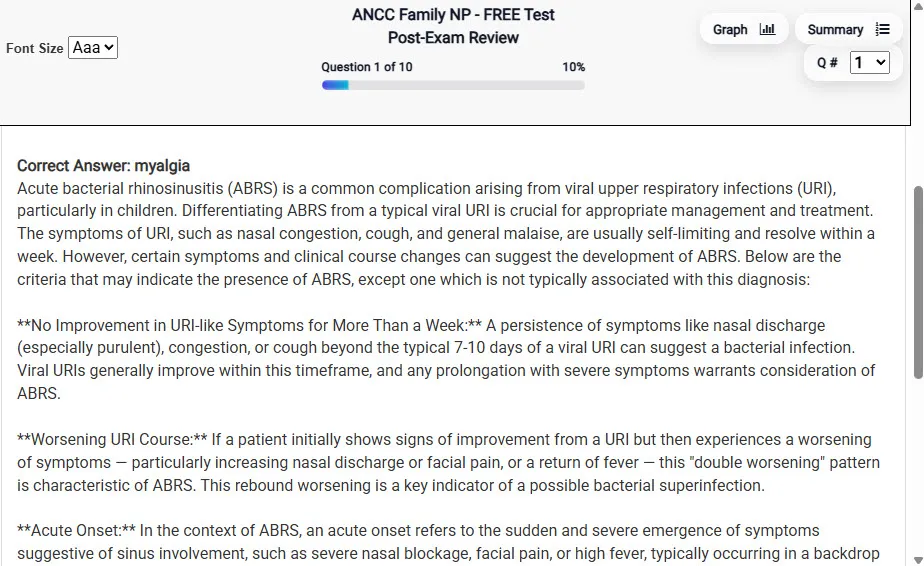
                           Detailed Explanation screen – 
                         Review mode showing chosen answer and rationale and references.
Detailed Explanation Review mode showing chosen answer and rationale and references.

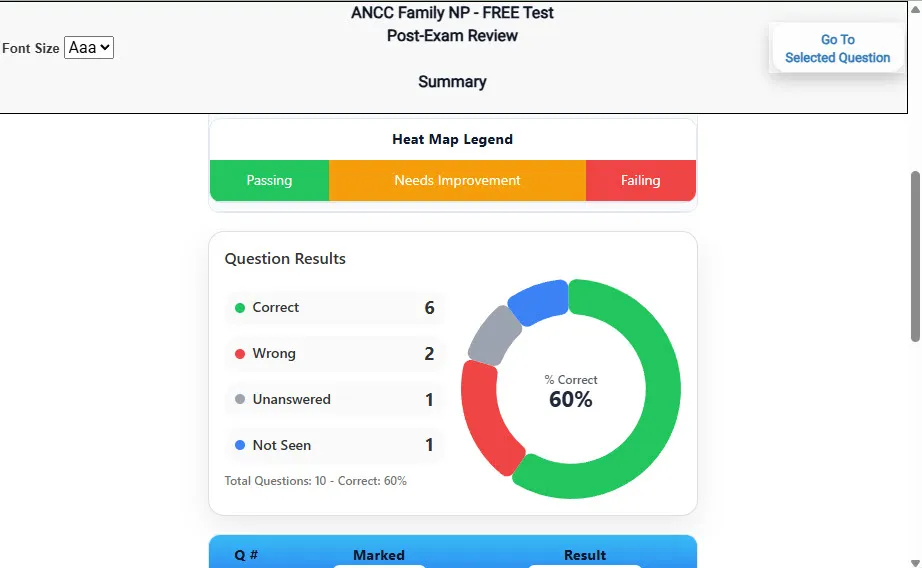
                           Review Summary 1 screen – 
                         Summary with counts for correct/wrong/unanswered and not seen items.
Review Summary 1 Summary with counts for correct/wrong/unanswered and not seen items.

                           Review Summary 2 screen – 
                         Advanced summary with category/domain breakdown and performance insights.
Review Summary 2 Advanced summary with category/domain breakdown and performance insights.

What Each Screen Shows

Answer Question Screen

  • Clean multiple-choice interface with progress bar.
  • Mark for review feature.
  • Matches real test pacing.

Detailed Explanation

  • Correct answer plus rationale.
  • Key concepts and guidelines highlighted.
  • Move between questions to fill knowledge gaps.

Review Summary 1

  • Overall results with total questions and scaled score.
  • Domain heatmap shows strengths and weaknesses.
  • Quick visual feedback on study priorities.

Review Summary 2

  • Chart of correct, wrong, unanswered, not seen.
  • Color-coded results for easy review.
  • Links back to missed items.

Top 10 Reasons to Use Exam Edge for your BONENT Certified Hemodialysis Technologist/Technician Exam Prep

  1. Focused on the BONENT Certified Hemodialysis Technologist/Technician Exam

    Our practice tests are built specifically for the BONENT Certified Hemodialysis Technologist/Technician exam — every question mirrors the real topics, format, and difficulty so you're studying exactly what matters.

  2. Real Exam Simulation

    We match the per-question time limits and pressure of the actual BONENT exam, so test day feels familiar and stress-free.

  3. 5 Full Practice Tests & 500 Unique Questions

    You'll have more than enough material to master every BONENT Certified Hemodialysis Technologist/Technician concept — no repeats, no fluff.

  4. Lower Cost Than a Retake

    Ordering 5 practice exams costs less than retaking the BONENT Certified Hemodialysis Technologist/Technician exam after a failure. One low fee could save you both time and money.

  5. Flexible Testing

    Need to step away mid-exam? Pick up right where you left off — with your remaining time intact.

  6. Instant Scoring & Feedback

    See your raw score and an estimated BONENT Certified Hemodialysis Technologist/Technician score immediately after finishing each practice test.

  7. Detailed Explanations for Every Question

    Review correct and incorrect answers with clear, step-by-step explanations so you truly understand each topic.

  8. Trusted & Accredited

    We're fully accredited by the Better Business Bureau and uphold the highest standards of trust and transparency.

  9. Web-Based & Always Available

    No software to install. Access your BONENT Certified Hemodialysis Technologist/Technician practice exams 24/7 from any computer or mobile device.

  10. Expert Support When You Need It

    Need extra help? Our specialized tutors are highly qualified and ready to support your BONENT exam prep.


Pass the BONENT Certified Hemodialysis Technologist/Technician Exam with Realistic Practice Tests from Exam Edge

Preparing for your upcoming BONENT Certified Hemodialysis Technologist/Technician (CHT) Certification Exam can feel overwhelming — but the right practice makes all the difference. Exam Edge gives you the tools, structure, and confidence to pass on your first try. Our online practice exams are built to match the real BONENT Certified Hemodialysis Technologist/Technician exam in content, format, and difficulty.

  • 📝 5 BONENT Certified Hemodialysis Technologist/Technician Practice Tests: Access 5 full-length exams with 100 questions each, covering every major BONENT Certified Hemodialysis Technologist/Technician topic in depth.
  • Instant Online Access: Start practicing right away — no software, no waiting.
  • 🧠 Step-by-Step Explanations: Understand the reasoning behind every correct answer so you can master BONENT Certified Hemodialysis Technologist/Technician exam concepts.
  • 🔄 Retake Each Exam Up to 4 Times: Build knowledge through repetition and track your improvement over time.
  • 🌐 Web-Based & Available 24/7: Study anywhere, anytime, on any device.
  • 🧘 Boost Your Test-Day Confidence: Familiarity with the BONENT format reduces anxiety and helps you perform under pressure.

These BONENT Certified Hemodialysis Technologist/Technician practice exams are designed to simulate the real testing experience by matching question types, timing, and difficulty level. This approach helps you get comfortable not just with the exam content, but also with the testing environment, so you walk into your exam day focused and confident.


Exam Edge BONENT Reviews


Great, I practice to get my test!

Waleska , Boynton Beach, Florida


BONENT Certified Hemodialysis Technologist/Technician Aliases Test Name

Here is a list of alternative names used for this exam.

  • BONENT Certified Hemodialysis Technologist/Technician
  • BONENT Certified Hemodialysis Technologist/Technician test
  • BONENT Certified Hemodialysis Technologist/Technician Certification Test
  • BONENT
  • BONENT CHT
  • CHT test
  • BONENT Certified Hemodialysis Technologist/Technician (CHT)
  • Certified Hemodialysis Technologist/Technician certification