This is the content of the pop-over!

Lightning Deal Alert – 12% Off Ends at Midnight!

Strike while the savings are hot! Use promo code FlashSale at checkout for 12% off any Exam Edge test or bundle. Hurry—the clock is ticking!

BCEN Certified Emergency Nurse (CEN) Practice Tests & Test Prep by Exam Edge


BCEN Certified Emergency Nurse  product image
(4.9)
Based on 34 Reviews

  • Real Exam Simulation: Timed questions and matching content build comfort for your BCEN Certified Emergency Nurse test day.
  • Instant, 24/7 Access: Web-based BCEN Certified Emergency Nurse practice exams with no software needed.
  • Clear Explanations: Step-by-step answers and explanations for your BCEN exam to strengthen understanding.
  • Boosted Confidence: Reduces anxiety and improves test-taking skills to ace your BCEN Certified Emergency Nurse (CEN).

Featured on

BCEN Certified Emergency Nurse Online Practice Test Bundles

BEST VALUE
5 practice tests

$69.75

$199.75

SAVE $130

Only $13.95 per test!

  • 100% Pass Guarantee
  • 5 online practice tests
  • 100 questions per test
  • Bonus: 100 Flash Cards + Study Guide
  • Instant access
  • Detailed Explanations
  • Practice tests never expire
  • Timed, untimed, or study guide mode
1 practice test

$39.95

  • 1 online practice test
  • 100 questions per test
  • Instant access
  • Detailed Explanations
  • Practice tests never expire
  • Timed, untimed, or study guide mode
MOST FLEXIBLE
Question Bank

As low as $59.95

500 Questions

Choose 1, 3, 6, or 12 months
A second login is required.

  • Exam Edge content in a powerful question bank
  • Customize Tests
  • Multiple Test & Flash Card Modes
  • Track performance over time
  • Instant access
  • Detailed Explanations
Quick Select
Tap to choose a bundle

** All Prices are in US Dollars (USD) **


BCEN Certified Emergency Nurse (CEN) Resources

Jump to the section you need most.

Understanding the exact breakdown of the BCEN Certified Emergency Nurse test will help you know what to expect and how to most effectively prepare. The BCEN Certified Emergency Nurse has 175 multiple-choice questions . The exam will be broken down into the sections below:

BCEN Certified Emergency Nurse Exam Blueprint
Domain Name % Number of
Questions
Cardiovascular Emergencies 12.7 % 22
Respiratory Emergencies 12.0 % 21
Neurological Emergencies 12.0 % 21
Gastrointestinal - Genitourinary - Gynecology & Obstetrical Emergencies 12.0 % 21
Mental Health Emergencies 7.3 % 13
Medical Emergencies 9.3 % 16
Musculoskeletal & Wound Emergencies 8.7% 15
Maxillofacial & Ocular Emergencies 7.3 % 13
Environment & Toxicology Emergencies Communicable Diseases 9.3% 16
Professional Issues 9.3 % 16

BCEN Certified Emergency Nurse Study Tips by Domain

  • In suspected ACS, obtain a 12-lead ECG within 10 minutes and repeat if symptoms persist with an initial nondiagnostic tracing—red flag: posterior MI can be missed without V7–V9 leads.
  • For STEMI, prioritize rapid reperfusion (PCI preferred) and avoid delays for nonessential testing—common trap: giving fibrinolytics when aortic dissection is possible (tearing pain, pulse deficit, mediastinal widening).
  • Treat unstable bradycardia/tachycardia with immediate synchronized cardioversion or pacing per ACLS rather than repeated medication trials—priority rule: instability signs (hypotension, altered mentation, ischemic chest pain, shock, acute HF) drive action.
  • In acute decompensated heart failure, support oxygenation/ventilation early (consider CPAP/BiPAP) and use nitrates/diuretics when appropriate—contraindication: avoid nitrates if recent PDE-5 inhibitor use or right ventricular infarct is suspected.
  • For cardiogenic shock, recognize cool clammy skin, narrow pulse pressure, and pulmonary edema and escalate early to vasoactive support and definitive reperfusion/assist devices—common trap: large fluid boluses worsen pulmonary edema unless RV infarct is likely.
  • Suspect pulmonary embolism with sudden dyspnea, pleuritic chest pain, tachycardia, or syncope and stratify risk to guide imaging and anticoagulation—red flag: hypotension suggests massive PE and warrants urgent thrombolysis/embolectomy consideration.
  • For acute dyspnea, prioritize ABCs and oxygenation/ventilation first, then treat the cause; red flag — altered mental status, silent chest, or inability to speak in full sentences signals impending respiratory failure.
  • Asthma/COPD exacerbation: give short-acting bronchodilator + steroids early and reassess after each treatment; common trap — waiting for chest X-ray or lab results before escalating to continuous neb, magnesium, or NIV when work of breathing is rising.
  • Anaphylaxis with respiratory involvement requires IM epinephrine immediately; contraindication myth — do not withhold epinephrine due to age, hypertension, or tachycardia when airway/breathing is compromised.
  • Pulmonary embolism: suspect with sudden dyspnea/pleuritic chest pain/hypoxia out of proportion to exam; priority rule — if hemodynamically unstable, move toward emergent reperfusion pathway rather than delaying for definitive imaging.
  • Pneumothorax/tension pneumothorax: unilateral decreased breath sounds with hypotension/JVD/tracheal deviation is a treat-now diagnosis; red flag — do not wait for radiology before needle decompression when tension is suspected.
  • Airway emergencies (upper airway obstruction/stridor): prepare difficult-airway setup early and call for help; common trap — agitating the patient or repeated blind attempts can worsen obstruction and precipitate complete airway loss.
  • Time-critical neuro deficits: treat any sudden focal deficit as stroke until proven otherwise—document last-known-well and do a rapid glucose check because hypoglycemia is a common stroke mimic.
  • Acute ischemic stroke: prioritize noncontrast head CT/CTA workflow and maintain oxygenation; red flag—lowering BP aggressively before reperfusion decision can worsen cerebral perfusion unless BP is above protocol thresholds.
  • Intracranial hemorrhage/?ICP: protect airway, keep head midline with HOB ~30°, and avoid hypotension; contraindication cue—do not give anticoagulants/antiplatelets until hemorrhage is excluded on imaging.
  • Seizure/status epilepticus: first-line is benzodiazepine with airway/ventilation readiness; trap—delaying meds while waiting for IV access (use IM/IN routes per protocol if needed).
  • Meningitis/encephalitis: fever + headache + neck stiffness or altered mental status warrants droplet precautions and prompt antimicrobials; red flag—don’t wait for LP if sepsis or focal deficits/signs of ?ICP are present.
  • Spinal cord emergencies: suspect with trauma or new weakness, sensory level, or bowel/bladder changes and immobilize early; priority rule—neuro checks and perfusion (avoid hypotension) matter more than pain control that masks exam changes.
  • Upper GI bleed: prioritize two large-bore IVs, type & screen/cross, and hemodynamic resuscitation before chasing diagnostics; red flag is orthostasis, syncope, or ongoing hematemesis even with a “normal” initial Hgb.
  • Suspected appendicitis or bowel obstruction: keep NPO, treat pain/antiemetics, and consider NG decompression for significant vomiting/distention; common trap is giving laxatives/enemas in obstruction or peritonitis.
  • Renal colic: control pain (NSAIDs if renal function/bleeding risk allows) and screen for infection; red flag is stone + fever/rigors or hypotension (obstructed infected system) — treat as urosepsis and expedite urology.
  • Testicular torsion: treat as a time-critical surgical emergency (don’t delay for ultrasound if high suspicion); practical cue is sudden unilateral pain with high-riding testis/absent cremasteric reflex — salvage drops after ~6 hours.
  • Ectopic pregnancy: any reproductive-age patient with abdominal pain or vaginal bleeding is pregnant until proven otherwise; red flag is hypotension, shoulder pain, or peritoneal signs — prioritize bedside pregnancy test, IV access, and rapid OB/GYN consult.
  • Obstetric emergencies: in shoulder dystocia use McRoberts + suprapubic pressure (avoid fundal pressure as a contraindication), and in postpartum hemorrhage start uterine massage and uterotonics while activating massive transfusion early if ongoing instability.
  • Use de-escalation first (calm voice, offer choices, reduce stimuli) and keep a clear egress path; red flag: agitation plus paranoia/intoxication predicts sudden violence.
  • Suicide risk assessment must include intent, plan, means, and past attempts; common trap: discharging after “contracts for safety” without lethal-means counseling and a documented safety plan.
  • For excited delirium/severe agitation, prioritize ABCs, temperature, glucose, and rapid sedation per protocol; red flag: hyperthermia, rigidity, and acidosis risk sudden cardiac arrest.
  • Know restraint/seclusion standards—use least restrictive measures, document ongoing need, and monitor airway, circulation, and neuro status; contraindication: prone restraint due to positional asphyxia risk.
  • Differentiate psychiatric symptoms from medical causes (hypoxia, hypoglycemia, head injury, infection, toxidromes) with targeted vitals and screening; common trap: attributing new-onset psychosis in older adults to “mental illness” instead of delirium.
  • Manage substance-related emergencies: treat withdrawal early (e.g., CIWA-guided benzos for alcohol) and monitor for co-ingestions; red flag: hallucinations with autonomic instability suggests delirium tremens requiring escalation.
  • Differentiate DKA vs HHS early—check anion gap, serum ketones, and effective osmolality; red flag: altered mental status with very high glucose suggests HHS and high thrombosis risk.
  • Sepsis care is time-critical—obtain lactate and give broad-spectrum antibiotics and 30 mL/kg crystalloid for hypotension or lactate ≥4; common trap: delaying antibiotics while waiting for imaging or cultures.
  • Recognize adrenal crisis (hypotension, hyponatremia, hyperkalemia, hypoglycemia)—treat with stress-dose hydrocortisone and isotonic fluids; red flag: refractory shock in a patient on chronic steroids or with adrenal insufficiency.
  • Manage thyroid storm vs myxedema coma—thyroid storm needs beta-blocker, thionamide, iodine after thionamide, and steroids; contraindication: giving iodine before thionamide can worsen hormone synthesis/release.
  • Hyperkalemia is an ECG emergency—give IV calcium for ECG changes, then shift K+ (insulin/dextrose, albuterol) and remove K+ (diuretics/dialysis); red flag: peaked T waves/widening QRS means treat before lab confirmation.
  • Heat illness vs hypothermia priorities—heat stroke requires rapid active cooling and airway support, while hypothermia needs gentle handling and rewarming; common trap: relying on oral/axillary temps—use core temperature to guide care.
  • Suspect compartment syndrome with pain out of proportion, pain on passive stretch, tense swelling, or paresthesias; red flag—don’t wait for pulselessness before escalating for pressure measurement and fasciotomy.
  • Open fractures are surgical and infection emergencies: cover with a sterile moist dressing, immobilize, and give antibiotics/tetanus early; common trap—repeatedly probing/irrigating in triage delays definitive care.
  • Neurovascular checks (5 Ps plus cap refill and motor/sensation) must be documented before and after splinting or reduction; red flag—new numbness or increasing pain after immobilization means the splint/cast may be too tight.
  • For major hemorrhage from wounds or amputations, prioritize direct pressure, hemostatic gauze, then tourniquet high and tight; priority rule—record tourniquet time and avoid intermittent loosening.
  • Joint dislocations (especially hip, knee, ankle) require prompt reduction to protect neurovascular status; contraindication cue—do not attempt ED reduction if fracture-dislocation is suspected without imaging and ortho involvement.
  • High-risk wounds (bites, punctures, devitalized tissue, immunocompromised, hands/feet) need careful infection prophylaxis and follow-up; common trap—primary closure of cat bites or contaminated puncture wounds increases infection risk.
  • For facial trauma, prioritize airway and anticipate difficult ventilation/intubation with bleeding, edema, or mandibular instability; red flag: hoarseness, stridor, or rapidly expanding neck/floor-of-mouth swelling.
  • Suspected mandibular fracture: assess malocclusion, trismus, and lower-lip numbness (inferior alveolar nerve); common trap: missing an open fracture—any intraoral laceration near the fracture line warrants antibiotics and urgent specialty follow-up.
  • Midface trauma with epistaxis, facial flattening, or CSF rhinorrhea suggests Le Fort/basilar skull injury; priority rule: avoid nasal instrumentation (NG/NT suction or intubation) when basilar skull fracture is suspected.
  • Orbital blowout injury: look for diplopia, pain with eye movement, infraorbital numbness, and enophthalmos; red flag: children with nausea/bradycardia (oculocardiac reflex) need urgent evaluation for muscle entrapment.
  • Eye chemical exposure is a time-critical emergency; threshold cue: start copious irrigation immediately and continue until ocular pH is 7.0–7.5 and stable, then recheck after 5–10 minutes.
  • Suspected globe rupture (teardrop pupil, uveal prolapse, markedly decreased vision) requires protection not pressure; common trap: do not patch tightly, measure IOP, or remove embedded objects—use a rigid shield, control nausea/pain, and keep NPO.
  • In suspected toxic alcohol ingestion (methanol/ethylene glycol), treat empirically with fomepizole when there’s an anion gap metabolic acidosis or elevated osmolal gap—do not wait for confirmatory levels.
  • For organophosphate poisoning, prioritize aggressive atropinization until secretions dry and bronchospasm resolves; a common trap is underdosing atropine because of tachycardia while the patient is still “wet.”
  • With carbon monoxide exposure, give 100% oxygen immediately and use co-oximetry for diagnosis; a red flag is normal SpO2 on pulse oximetry despite significant CO poisoning.
  • In heat stroke, initiate rapid active cooling (e.g., ice-water immersion when feasible) aiming for core temp ~38.9°C (102°F) then stop to avoid overshoot; avoid antipyretics since they don’t help exertional/environmental hyperthermia.
  • For suspected meningococcemia or other high-risk communicable rash with fever, implement droplet precautions immediately and give antibiotics promptly; a priority rule is to isolate first even before full workup if petechiae/purpura are present.
  • After potential rabies exposure, don’t delay post-exposure prophylaxis while awaiting animal testing when risk is significant; a common trap is forgetting to infiltrate rabies immune globulin into and around the wound (not just IM elsewhere).
  • Apply EMTALA basics: provide a medical screening exam and stabilize before transfer regardless of ability to pay; red flag—delays or “directing elsewhere” before MSE can trigger violations.
  • Know mandatory reporting triggers (e.g., child/elder abuse, certain wounds, impaired driving per local law) and document objective findings only; common trap—promising confidentiality when reporting is legally required.
  • Use time-sensitive documentation: chart assessments, reassessments, interventions, and response with exact times; red flag—copy-forward or late entries without proper notation can undermine legal defensibility.
  • Follow informed consent and capacity principles: if capacity is lacking, use surrogate/implied consent for emergencies; contraindication—sedation/intoxication can invalidate consent and demands reassessment of decision-making capacity.
  • Prioritize medication safety with high-alert drugs and weight-based dosing (especially pediatrics); common trap—mg vs mcg or using estimated weight without double-checking calculation and independent verification.
  • Maintain chain of custody for forensic evidence (sexual assault, weapons, clothing) with proper labeling and secure storage; red flag—unsealed bags or undocumented handoffs can make evidence inadmissible.


Built to Fit Into Your Busy Life

Everything you need to prepare with confidence—without wasting a minute.

Three Study Modes

Timed, No Time Limit, or Explanation mode.

Actionable Analytics

Heatmaps and scaled scores highlight weak areas.

High-Yield Rationales

Concise explanations emphasize key concepts.

Realistic Interface

Matches the feel of the actual exam environment.

Accessible by Design

Clean layout reduces cognitive load.

Anytime, Anywhere

Web-based access 24/7 on any device.
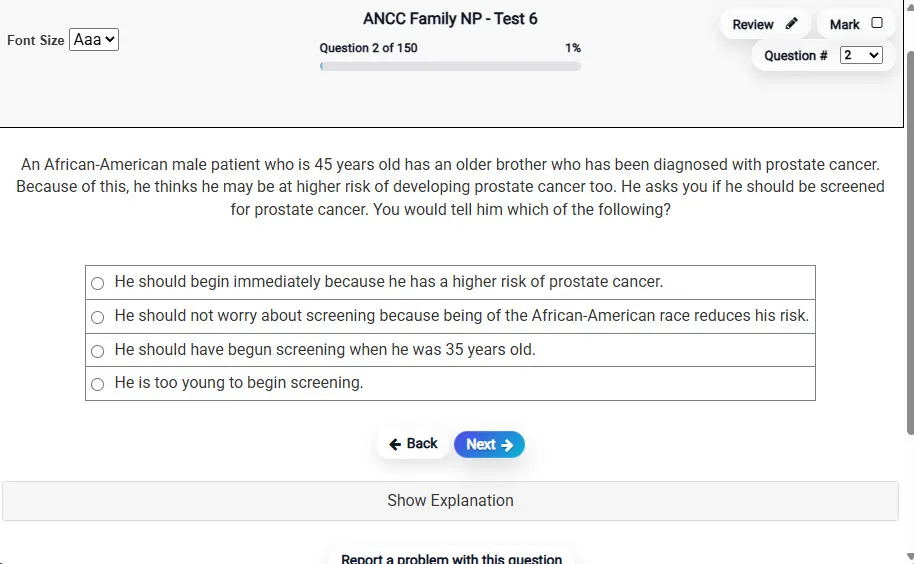
Answering a Question screen – Multiple-choice item view with navigation controls and progress tracker.
Answering a Question Multiple-choice item view with navigation controls and progress tracker.

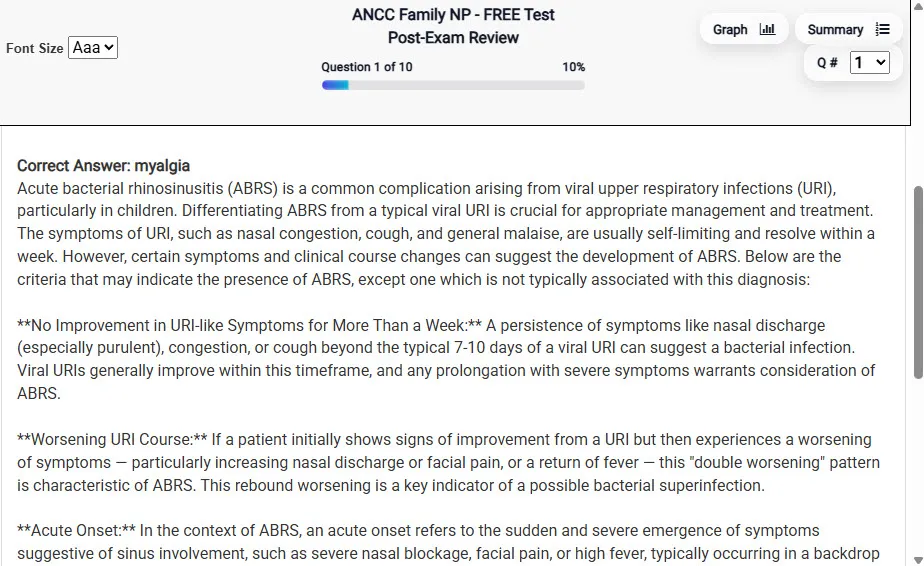
                           Detailed Explanation screen – 
                         Review mode showing chosen answer and rationale and references.
Detailed Explanation Review mode showing chosen answer and rationale and references.

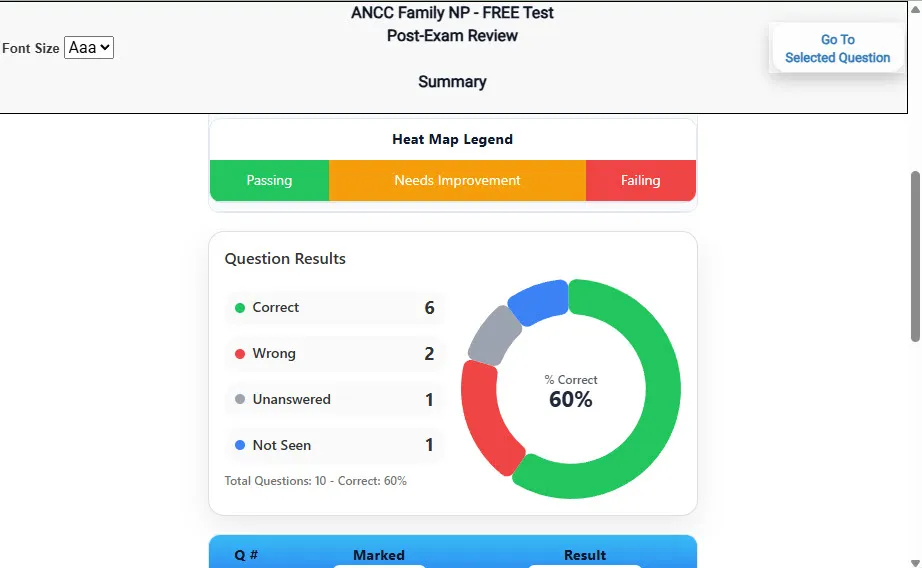
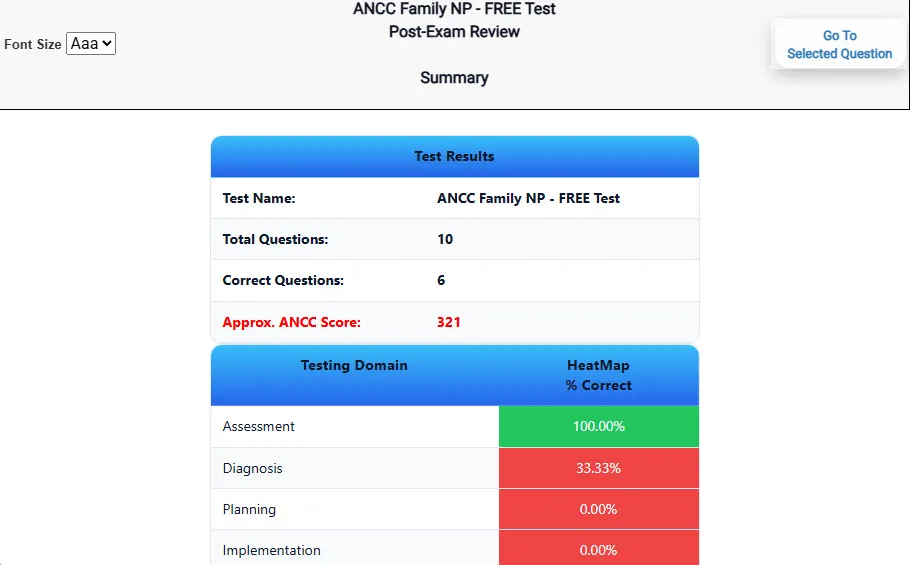
                           Review Summary 1 screen – 
                         Summary with counts for correct/wrong/unanswered and not seen items.
Review Summary 1 Summary with counts for correct/wrong/unanswered and not seen items.

                           Review Summary 2 screen – 
                         Advanced summary with category/domain breakdown and performance insights.
Review Summary 2 Advanced summary with category/domain breakdown and performance insights.

What Each Screen Shows

Answer Question Screen

  • Clean multiple-choice interface with progress bar.
  • Mark for review feature.
  • Matches real test pacing.

Detailed Explanation

  • Correct answer plus rationale.
  • Key concepts and guidelines highlighted.
  • Move between questions to fill knowledge gaps.

Review Summary 1

  • Overall results with total questions and scaled score.
  • Domain heatmap shows strengths and weaknesses.
  • Quick visual feedback on study priorities.

Review Summary 2

  • Chart of correct, wrong, unanswered, not seen.
  • Color-coded results for easy review.
  • Links back to missed items.

Top 10 Reasons to Use Exam Edge for your BCEN Certified Emergency Nurse Exam Prep

  1. Focused on the BCEN Certified Emergency Nurse Exam

    Our practice tests are built specifically for the BCEN Certified Emergency Nurse exam — every question mirrors the real topics, format, and difficulty so you're studying exactly what matters.

  2. Real Exam Simulation

    We match the per-question time limits and pressure of the actual BCEN exam, so test day feels familiar and stress-free.

  3. 5 Full Practice Tests & 500 Unique Questions

    You'll have more than enough material to master every BCEN Certified Emergency Nurse concept — no repeats, no fluff.

  4. Lower Cost Than a Retake

    Ordering 5 practice exams costs less than retaking the BCEN Certified Emergency Nurse exam after a failure. One low fee could save you both time and money.

  5. Flexible Testing

    Need to step away mid-exam? Pick up right where you left off — with your remaining time intact.

  6. Instant Scoring & Feedback

    See your raw score and an estimated BCEN Certified Emergency Nurse score immediately after finishing each practice test.

  7. Detailed Explanations for Every Question

    Review correct and incorrect answers with clear, step-by-step explanations so you truly understand each topic.

  8. Trusted & Accredited

    We're fully accredited by the Better Business Bureau and uphold the highest standards of trust and transparency.

  9. Web-Based & Always Available

    No software to install. Access your BCEN Certified Emergency Nurse practice exams 24/7 from any computer or mobile device.

  10. Expert Support When You Need It

    Need extra help? Our specialized tutors are highly qualified and ready to support your BCEN exam prep.


Pass the BCEN Certified Emergency Nurse Exam with Realistic Practice Tests from Exam Edge

Preparing for your upcoming BCEN Certified Emergency Nurse (CEN) Certification Exam can feel overwhelming — but the right practice makes all the difference. Exam Edge gives you the tools, structure, and confidence to pass on your first try. Our online practice exams are built to match the real BCEN Certified Emergency Nurse exam in content, format, and difficulty.

  • 📝 5 BCEN Certified Emergency Nurse Practice Tests: Access 5 full-length exams with 100 questions each, covering every major BCEN Certified Emergency Nurse topic in depth.
  • Instant Online Access: Start practicing right away — no software, no waiting.
  • 🧠 Step-by-Step Explanations: Understand the reasoning behind every correct answer so you can master BCEN Certified Emergency Nurse exam concepts.
  • 🔄 Retake Each Exam Up to 4 Times: Build knowledge through repetition and track your improvement over time.
  • 🌐 Web-Based & Available 24/7: Study anywhere, anytime, on any device.
  • 🧘 Boost Your Test-Day Confidence: Familiarity with the BCEN format reduces anxiety and helps you perform under pressure.

These BCEN Certified Emergency Nurse practice exams are designed to simulate the real testing experience by matching question types, timing, and difficulty level. This approach helps you get comfortable not just with the exam content, but also with the testing environment, so you walk into your exam day focused and confident.


Exam Edge BCEN Reviews


The questions on this application aren't really what the CPEN covers. A lot of obscure stuff. Also, the questions are too easy (like I said, not CPEN-quality.) Skip this app.

Domonic , Vallejo , California


BCEN Certified Emergency Nurse Aliases Test Name

Here is a list of alternative names used for this exam.

  • BCEN Certified Emergency Nurse
  • BCEN Certified Emergency Nurse test
  • BCEN Certified Emergency Nurse Certification Test
  • BCEN
  • BCEN CEN
  • CEN test
  • BCEN Certified Emergency Nurse (CEN)
  • Certified Emergency Nurse certification