This is the content of the pop-over!

Lightning Deal Alert – 12% Off Ends at Midnight!

Strike while the savings are hot! Use promo code FlashSale at checkout for 12% off any Exam Edge test or bundle. Hurry—the clock is ticking!

ASWB Clinical Exam (CE) Practice Tests & Test Prep by Exam Edge


ASWB Clinical Exam  product image
(4.4)
Based on 22 Reviews

  • Real Exam Simulation: Timed questions and matching content build comfort for your ASWB Clinical Exam test day.
  • Instant, 24/7 Access: Web-based ASWB Clinical Exam practice exams with no software needed.
  • Clear Explanations: Step-by-step answers and explanations for your ASWB exam to strengthen understanding.
  • Boosted Confidence: Reduces anxiety and improves test-taking skills to ace your ASWB Clinical Exam (CE).

Featured on

ASWB Clinical Exam Online Practice Test Bundles

BEST VALUE
5 practice tests

$69.75

$199.75

SAVE $130

Only $13.95 per test!

  • 100% Pass Guarantee
  • 5 online practice tests
  • 100 questions per test
  • Bonus: 100 Flash Cards + Study Guide
  • Instant access
  • Detailed Explanations
  • Practice tests never expire
  • Timed, untimed, or study guide mode
1 practice test

$39.95

  • 1 online practice test
  • 100 questions per test
  • Instant access
  • Detailed Explanations
  • Practice tests never expire
  • Timed, untimed, or study guide mode
Quick Select
Tap to choose a bundle

** All Prices are in US Dollars (USD) **


ASWB Clinical Exam (CE) Resources

Jump to the section you need most.

Understanding the exact breakdown of the ASWB Clinical Exam test will help you know what to expect and how to most effectively prepare. The ASWB Clinical Exam has multiple-choice questions . The exam will be broken down into the sections below:

ASWB Clinical Exam Exam Blueprint
Domain Name % Number of
Questions
Human Development - Diversity Behavior in the Environment 31% 31
Assessment - Diagnosis Treatment Planning 26% 26
Psychotherapy - Clinical Interventions Case Management 25% 25
Professional Ethics and Values 18% 18

ASWB Clinical Exam Study Tips by Domain

  • Use a biopsychosocial-spiritual lens across the lifespan; red flag: attributing behavior solely to a diagnosis while ignoring developmental stage and context.
  • Differentiate normal developmental transitions (e.g., adolescence, perinatal, aging) from pathology; common trap: overpathologizing age-appropriate risk-taking or grief responses.
  • Assess culture, identity, and intersectionality as clinical factors; priority rule: ask clients how they define their identities and experiences rather than relying on assumptions or stereotypes.
  • Evaluate environmental stressors and supports (housing, employment, immigration/legal, discrimination, community violence); red flag: escalating treatment intensity without first addressing safety/basic needs.
  • Screen for trauma and adverse experiences while considering resilience and protective factors; contraindication: pushing trauma processing before stabilization, coping skills, and adequate support are in place.
  • Incorporate family systems and social networks (roles, boundaries, attachment, caregiver strain); common trap: focusing only on the identified client when systemic dynamics maintain the presenting problem.
  • Start every assessment with safety screening (SI/HI, plan, intent, means, past attempts) and protective factors; red flag: access to lethal means plus intent requires immediate higher level of care.
  • Differentiate substance/medication-induced symptoms and medical etiologies before finalizing a mental disorder diagnosis; common trap: diagnosing a primary mood/anxiety disorder without ruling out intoxication/withdrawal, thyroid issues, or sleep disorders.
  • Use a biopsychosocial (and cultural) formulation to connect presenting problem, precipitating factors, and functioning across settings; red flag: focusing only on symptoms while missing impairment, context, or strengths needed for planning.
  • Apply DSM-5-TR criteria carefully and document differential diagnoses, specifiers, and severity; common trap: labeling a disorder when duration/impairment thresholds are not met (e.g., normal grief vs. Major Depressive Disorder).
  • Create treatment plans with SMART goals, measurable objectives, and interventions matched to stage of change and risk level; priority rule: address safety, stabilization, and basic needs before insight-oriented goals.
  • Reassess and revise the plan based on response, barriers, and new data (labs, collateral, records) while tracking outcomes with brief measures when possible; red flag: continuing the same interventions despite no improvement or worsening risk.
  • Start with safety: assess suicidality/homicidality, plan/means/intent, and protective factors; red flag—don’t rely on a “no-suicide contract” when risk indicators are present.
  • Use phase-based intervention: stabilize first (grounding, coping skills), then process trauma; common trap—initiating exposure/trauma narration while the client is actively using substances or is highly dysregulated.
  • Match technique to presentation: panic/acute anxiety calls for paced breathing and cognitive restructuring, while mania/psychosis prioritizes reality testing, structure, and medication referral; contraindication—avoid challenging delusions head-on in an agitated client.
  • For substance use, use motivational interviewing (OARS, rolling with resistance) and assess readiness to change; priority rule—avoid confrontational “you must” statements that increase sustain talk and dropout risk.
  • In case management, coordinate level of care and warm handoffs (release of information, appointment made, transportation plan); red flag—referring out without confirming access creates treatment gaps and liability.
  • Document measurable goals and progress (frequency, intensity, duration) and update the plan when there’s no improvement after a reasonable trial; common trap—continuing the same intervention without reassessing barriers, adherence, or diagnosis.
  • Apply the NASW Code of Ethics hierarchy: protect life/safety first, then client self-determination—red flag is treating “client preference” as absolute when there is imminent risk.
  • Informed consent must cover purpose, risks/benefits, limits of confidentiality, and alternatives; common trap is skipping a documented consent update when services change (e.g., telehealth, group, collateral contacts).
  • Know confidentiality exceptions and act on credible threats, abuse/neglect, and court orders; priority rule is to disclose the minimum necessary and document your rationale and what was shared.
  • Maintain boundaries and avoid dual relationships, gifts, and social media contact; red flag is any situation where your needs (financial, emotional, or social) start driving clinical decisions.
  • Practice within scope/competence and use supervision/consultation when unsure; common trap is continuing a treatment modality you’re not trained in instead of referring or getting appropriate training.
  • Accurate documentation and billing are ethical duties: record clinically relevant facts, informed consent, risk assessments, and interventions; red flag is backdating/altering notes after an incident or billing for time not provided.


Built to Fit Into Your Busy Life

Everything you need to prepare with confidence—without wasting a minute.

Three Study Modes

Timed, No Time Limit, or Explanation mode.

Actionable Analytics

Heatmaps and scaled scores highlight weak areas.

High-Yield Rationales

Concise explanations emphasize key concepts.

Realistic Interface

Matches the feel of the actual exam environment.

Accessible by Design

Clean layout reduces cognitive load.

Anytime, Anywhere

Web-based access 24/7 on any device.
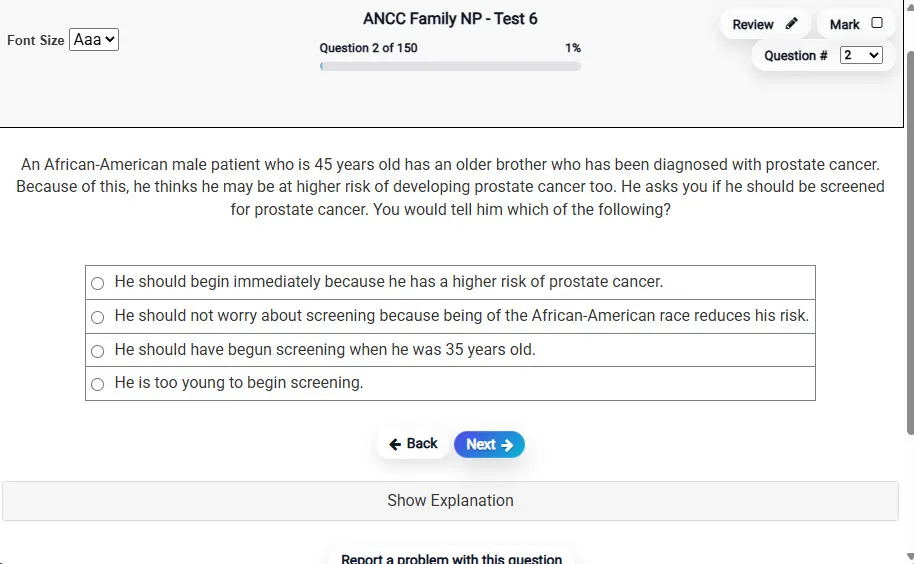
Answering a Question screen – Multiple-choice item view with navigation controls and progress tracker.
Answering a Question Multiple-choice item view with navigation controls and progress tracker.

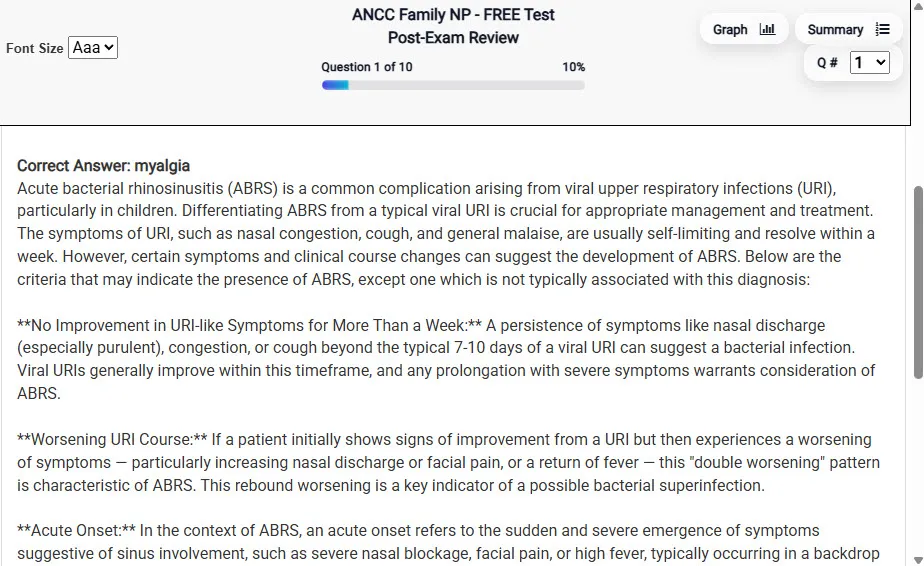
                           Detailed Explanation screen – 
                         Review mode showing chosen answer and rationale and references.
Detailed Explanation Review mode showing chosen answer and rationale and references.

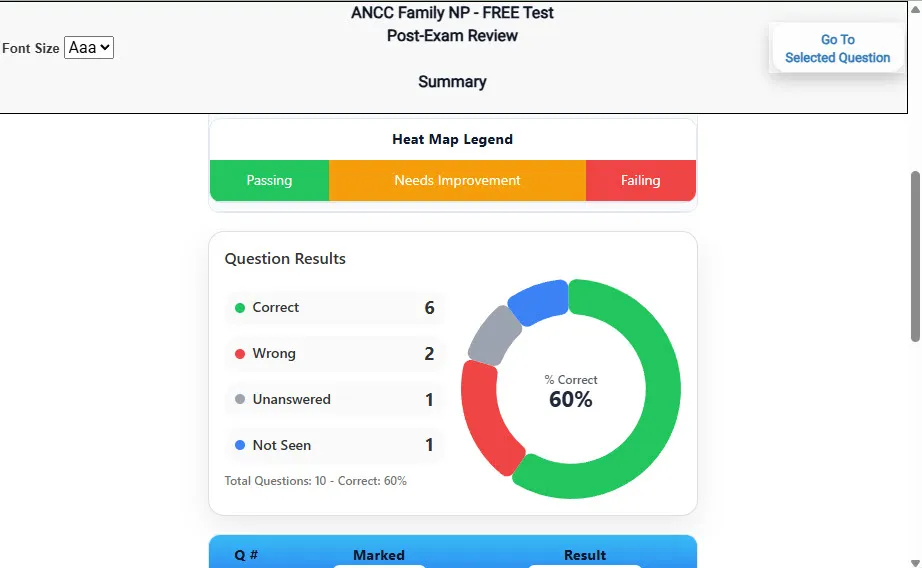
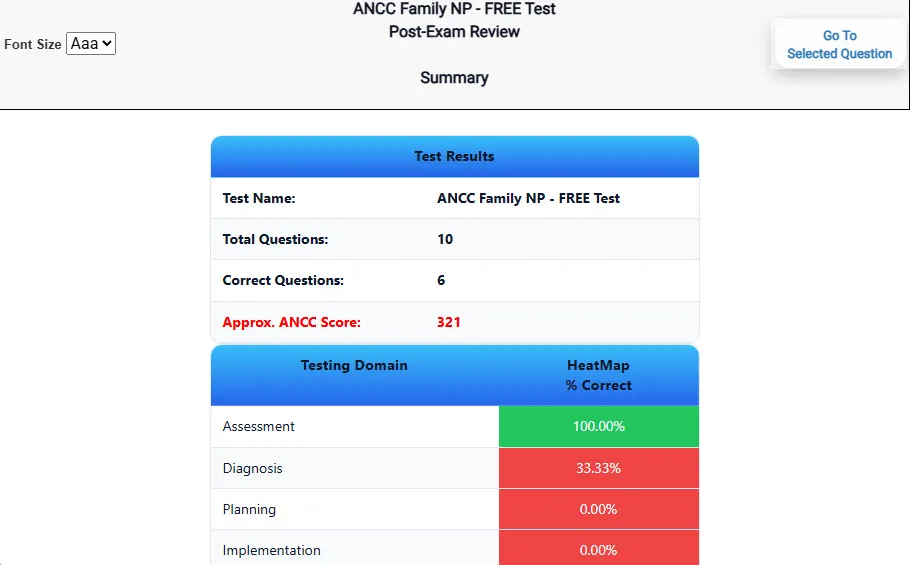
                           Review Summary 1 screen – 
                         Summary with counts for correct/wrong/unanswered and not seen items.
Review Summary 1 Summary with counts for correct/wrong/unanswered and not seen items.

                           Review Summary 2 screen – 
                         Advanced summary with category/domain breakdown and performance insights.
Review Summary 2 Advanced summary with category/domain breakdown and performance insights.

What Each Screen Shows

Answer Question Screen

  • Clean multiple-choice interface with progress bar.
  • Mark for review feature.
  • Matches real test pacing.

Detailed Explanation

  • Correct answer plus rationale.
  • Key concepts and guidelines highlighted.
  • Move between questions to fill knowledge gaps.

Review Summary 1

  • Overall results with total questions and scaled score.
  • Domain heatmap shows strengths and weaknesses.
  • Quick visual feedback on study priorities.

Review Summary 2

  • Chart of correct, wrong, unanswered, not seen.
  • Color-coded results for easy review.
  • Links back to missed items.

Top 10 Reasons to Use Exam Edge for your ASWB Clinical Exam Exam Prep

  1. Focused on the ASWB Clinical Exam Exam

    Our practice tests are built specifically for the ASWB Clinical Exam exam — every question mirrors the real topics, format, and difficulty so you're studying exactly what matters.

  2. Real Exam Simulation

    We match the per-question time limits and pressure of the actual ASWB exam, so test day feels familiar and stress-free.

  3. 5 Full Practice Tests & 500 Unique Questions

    You'll have more than enough material to master every ASWB Clinical Exam concept — no repeats, no fluff.

  4. Lower Cost Than a Retake

    Ordering 5 practice exams costs less than retaking the ASWB Clinical Exam exam after a failure. One low fee could save you both time and money.

  5. Flexible Testing

    Need to step away mid-exam? Pick up right where you left off — with your remaining time intact.

  6. Instant Scoring & Feedback

    See your raw score and an estimated ASWB Clinical Exam score immediately after finishing each practice test.

  7. Detailed Explanations for Every Question

    Review correct and incorrect answers with clear, step-by-step explanations so you truly understand each topic.

  8. Trusted & Accredited

    We're fully accredited by the Better Business Bureau and uphold the highest standards of trust and transparency.

  9. Web-Based & Always Available

    No software to install. Access your ASWB Clinical Exam practice exams 24/7 from any computer or mobile device.

  10. Expert Support When You Need It

    Need extra help? Our specialized tutors are highly qualified and ready to support your ASWB exam prep.


Pass the ASWB Clinical Exam Exam with Realistic Practice Tests from Exam Edge

Preparing for your upcoming ASWB Clinical Exam (CE) Certification Exam can feel overwhelming — but the right practice makes all the difference. Exam Edge gives you the tools, structure, and confidence to pass on your first try. Our online practice exams are built to match the real ASWB Clinical Exam exam in content, format, and difficulty.

  • 📝 5 ASWB Clinical Exam Practice Tests: Access 5 full-length exams with 100 questions each, covering every major ASWB Clinical Exam topic in depth.
  • Instant Online Access: Start practicing right away — no software, no waiting.
  • 🧠 Step-by-Step Explanations: Understand the reasoning behind every correct answer so you can master ASWB Clinical Exam exam concepts.
  • 🔄 Retake Each Exam Up to 4 Times: Build knowledge through repetition and track your improvement over time.
  • 🌐 Web-Based & Available 24/7: Study anywhere, anytime, on any device.
  • 🧘 Boost Your Test-Day Confidence: Familiarity with the ASWB format reduces anxiety and helps you perform under pressure.

These ASWB Clinical Exam practice exams are designed to simulate the real testing experience by matching question types, timing, and difficulty level. This approach helps you get comfortable not just with the exam content, but also with the testing environment, so you walk into your exam day focused and confident.


Exam Edge ASWB Reviews


ASWB Clinical Exam Aliases Test Name

Here is a list of alternative names used for this exam.

  • ASWB Clinical Exam
  • ASWB Clinical Exam test
  • ASWB Clinical Exam Certification Test
  • ASWB
  • ASWB CE
  • CE test
  • ASWB Clinical Exam (CE)
  • Clinical Exam certification