This is the content of the pop-over!

Lightning Deal Alert – 12% Off Ends at Midnight!

Strike while the savings are hot! Use promo code FlashSale at checkout for 12% off any Exam Edge test or bundle. Hurry—the clock is ticking!

ASHA CCC-A (CCC-A) Practice Tests & Test Prep by Exam Edge


ASHA Clinical Competence in Audiology product image
(4.5)
Based on 29 Reviews

  • Real Exam Simulation: Timed questions and matching content build comfort for your ASHA CCC-A test day.
  • Instant, 24/7 Access: Web-based ASHA Clinical Competence in Audiology practice exams with no software needed.
  • Clear Explanations: Step-by-step answers and explanations for your ASHA exam to strengthen understanding.
  • Boosted Confidence: Reduces anxiety and improves test-taking skills to ace your ASHA Clinical Competence in Audiology (CCC-A).

Featured on

ASHA Clinical Competence in Audiology Online Practice Test Bundles

BEST VALUE
5 practice tests

$69.75

$199.75

SAVE $130

Only $13.95 per test!

  • 100% Pass Guarantee
  • 5 online practice tests
  • 120 questions per test
  • Bonus: 100 Flash Cards + Study Guide
  • Instant access
  • Detailed Explanations
  • Practice tests never expire
  • Timed, untimed, or study guide mode
1 practice test

$39.95

  • 1 online practice test
  • 120 questions per test
  • Instant access
  • Detailed Explanations
  • Practice tests never expire
  • Timed, untimed, or study guide mode
Quick Select
Tap to choose a bundle

** All Prices are in US Dollars (USD) **


ASHA CCC-A (CCC-A) Resources

Jump to the section you need most.

Understanding the exact breakdown of the ASHA Clinical Competence in Audiology test will help you know what to expect and how to most effectively prepare. The ASHA Clinical Competence in Audiology has 120 multiple-choice questions . The exam will be broken down into the sections below:

ASHA Clinical Competence in Audiology Exam Blueprint
Domain Name % Number of
Questions
Foundations 10% 12
Prevention and Identification 10% 12
Assessment 40% 48
Intervention 30% 36
Professional Issues 10% 12

ASHA Clinical Competence in Audiology Study Tips by Domain

  • Link auditory anatomy/physiology to site-of-lesion patterns (outer/middle ear vs cochlear vs retrocochlear vs central); red flag: asymmetric sensorineural loss with poor word recognition for degree of loss suggests retrocochlear involvement.
  • Apply acoustic principles (dB SPL vs dB HL, frequency, intensity, impedance) to predict test outcomes; common trap: mixing reference systems and misinterpreting audiometer dial values as physical sound pressure.
  • Use psychometrics to judge test quality (reliability, validity, sensitivity/specificity, predictive values); priority rule: don’t overcall a “screen fail” without considering false positives when prevalence is low.
  • Understand calibration standards and transducer effects (insert earphones vs supra-aural, occlusion/collapsed canals); red flag: unexplained low-frequency air–bone gaps that resolve with inserts may indicate ear-canal collapse artifact.
  • Integrate speech and auditory processing science (SNR, masking, binaural cues) when interpreting speech-in-noise complaints; common trap: normal pure-tone thresholds do not rule out functional communication deficits in noise.
  • Ground clinical reasoning in evidence-based practice (best evidence + clinical expertise + patient values) and ASHA ethics; priority rule: avoid overreliance on a single study or manufacturer claim when selecting procedures or recommending technology.
  • Prioritize newborn hearing screening benchmarks (e.g., 1–3–6 or 1–2–3 months) and document timely referrals; red flag: “lost to follow-up” after a refer result is a common compliance failure.
  • Use risk-factor surveillance (e.g., NICU stay, ototoxic meds, CMV, family history) to trigger earlier/extra monitoring; common trap: assuming a “pass” means no further audiologic follow-up despite risk factors.
  • In schools and community programs, select age-appropriate screening tools and protocols (pure-tone/otoacoustic emissions/tympanometry) and define pass/fail criteria in advance; red flag: screening in uncontrolled noise leading to excessive false referrals.
  • Identify red flags for urgent referral (sudden sensorineural hearing loss, unilateral tinnitus with asymmetry, otalgia with fever/mastoid tenderness, neurologic signs); priority rule: same-day ENT/ED referral for sudden loss.
  • Implement hearing conservation for noise exposure (education, HPD fit/use, baseline and periodic monitoring) with clear action levels; common trap: providing earplugs without verifying fit or counseling on consistent use.
  • Ensure infection-related prevention and early identification counseling (otitis media, meningitis, congenital infections) and coordinate follow-up testing; red flag: failing to schedule post-treatment audiology after meningitis due to high risk of rapid-onset loss.
  • Verify test validity by cross-checking results across behavioral and physiologic measures; red flag: poor agreement (e.g., SRT not aligning with PTA within ~10 dB) suggests reinstruction, retest, or nonorganic factors.
  • Prioritize safe and accurate transducer selection and placement (insert vs supra-aural, bone oscillator positioning); common trap: collapsed ear canals or poor seal causing false high-frequency thresholds.
  • Use immittance appropriately to differentiate conductive vs sensorineural components; red flag: Type B tympanogram with large ear canal volume indicates possible perforation or patent tube, changing test and referral decisions.
  • Apply masking rules consistently for air- and bone-conduction testing; common trap: under-masking leading to shadow curves or over-masking producing apparent threshold shifts.
  • Select speech measures (SRT, WRS, speech-in-noise) that answer the referral question and document presentation level and materials; priority rule: avoid interpreting word recognition without noting level (e.g., PB-max vs conversational) and patient audibility.
  • For pediatric or difficult-to-test patients, combine age-appropriate behavioral methods (VRA/CPA) with OAEs/ABR and note state/conditions; red flag: absent OAEs with normal tympanometry warrants consideration of cochlear pathology even if behavioral results are inconsistent.
  • Select amplification and assistive listening technology based on audibility, comfort, and patient goals; red flag: fitting to “average” targets without verifying output against prescriptive targets (e.g., real-ear measures).
  • Plan aural rehabilitation with measurable outcomes (communication strategies, speechreading, auditory training) and document progress; common trap: providing counseling without functional, goal-based measures (e.g., HHIE/APHAB/IOI-HA).
  • For cochlear implant and implantable device candidates, ensure timely referral and team-based counseling; priority rule: do not delay referral when aided speech recognition remains poor despite optimized hearing aids.
  • Manage tinnitus and hyperacusis using education, sound therapy, and referrals as indicated; contraindication: attributing unilateral/pulsatile tinnitus to benign causes without coordinating medical evaluation.
  • Implement hearing conservation and communication access supports (remote mic systems, captioning, environmental modifications) when workplace/school demands drive participation limits; red flag: recommending devices without assessing listening environments and signal-to-noise needs.
  • Provide pediatric intervention with family-centered coaching and consistent device use monitoring; common trap: failing to verify earmold fit/feedback control and datalogging wear time when outcomes are lagging.
  • Maintain licensure/certification and meet ASHA CCC-A requirements (e.g., supervision documentation, CF/mentorship where applicable) — red flag: providing billable services with lapsed state license or expired CCC-A.
  • Apply the ASHA Code of Ethics in daily practice (truthful representation, conflicts of interest, patient welfare) — common trap: accepting manufacturer incentives that could bias device selection without full disclosure.
  • Protect privacy and confidentiality under HIPAA/state laws and facility policy — red flag: emailing audiograms or reports via unsecured channels or discussing cases in public areas.
  • Use informed consent and shared decision-making for tests, amplification, and release of information — priority rule: document risks/benefits and alternatives, especially when patient capacity or language access is a concern.
  • Follow evidence-based practice and appropriate documentation standards for medical necessity and payer compliance — common trap: copy-forward notes or missing objective measures that support billing codes and device justification.
  • Practice within scope and refer appropriately for medical red flags (e.g., sudden unilateral loss, otalgia with drainage, asymmetric findings) — contraindication: proceeding with routine hearing-aid fitting without timely medical referral when urgent symptoms are present.


Built to Fit Into Your Busy Life

Everything you need to prepare with confidence—without wasting a minute.

Three Study Modes

Timed, No Time Limit, or Explanation mode.

Actionable Analytics

Heatmaps and scaled scores highlight weak areas.

High-Yield Rationales

Concise explanations emphasize key concepts.

Realistic Interface

Matches the feel of the actual exam environment.

Accessible by Design

Clean layout reduces cognitive load.

Anytime, Anywhere

Web-based access 24/7 on any device.
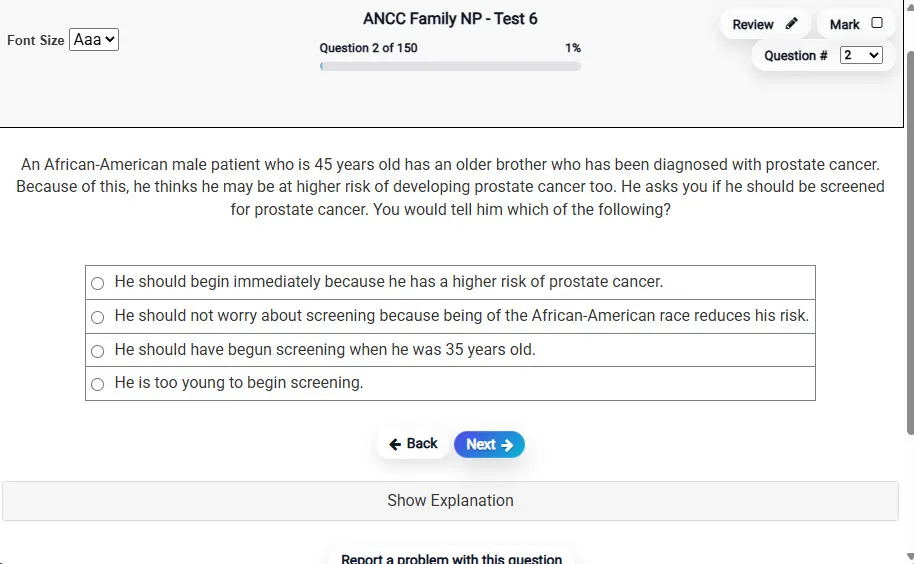
Answering a Question screen – Multiple-choice item view with navigation controls and progress tracker.
Answering a Question Multiple-choice item view with navigation controls and progress tracker.

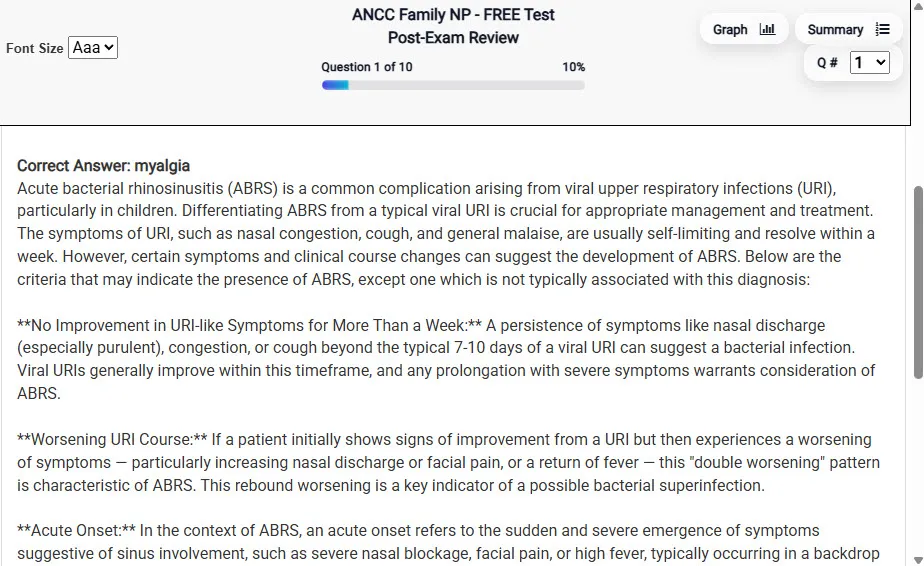
                           Detailed Explanation screen – 
                         Review mode showing chosen answer and rationale and references.
Detailed Explanation Review mode showing chosen answer and rationale and references.

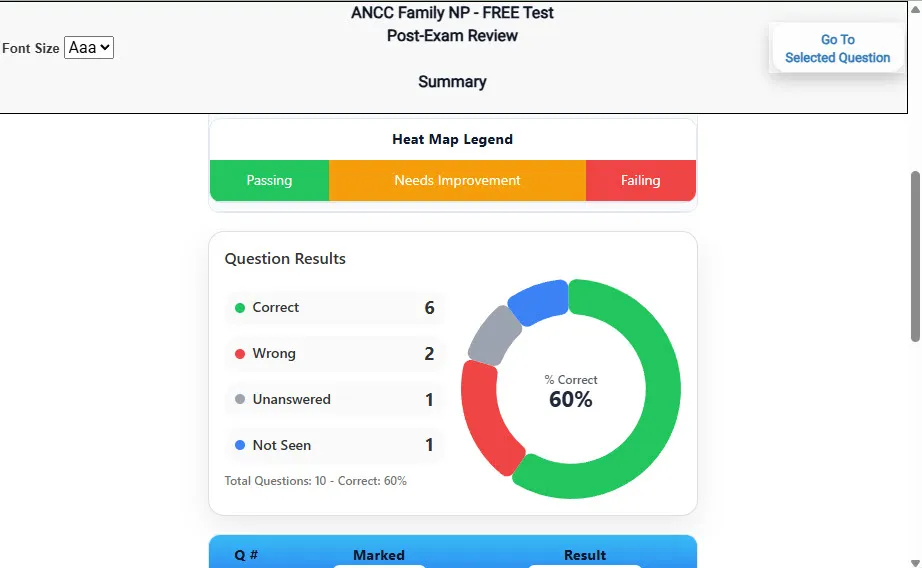
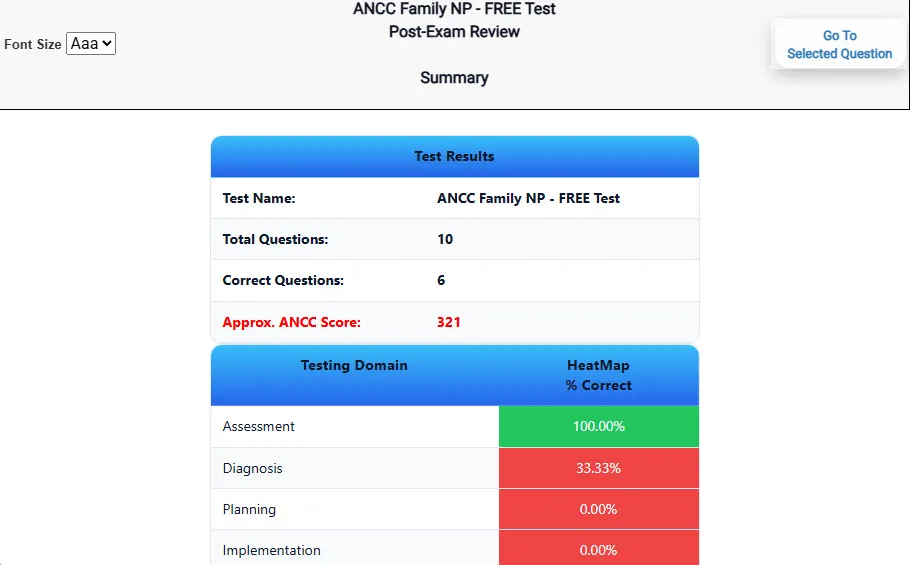
                           Review Summary 1 screen – 
                         Summary with counts for correct/wrong/unanswered and not seen items.
Review Summary 1 Summary with counts for correct/wrong/unanswered and not seen items.

                           Review Summary 2 screen – 
                         Advanced summary with category/domain breakdown and performance insights.
Review Summary 2 Advanced summary with category/domain breakdown and performance insights.

What Each Screen Shows

Answer Question Screen

  • Clean multiple-choice interface with progress bar.
  • Mark for review feature.
  • Matches real test pacing.

Detailed Explanation

  • Correct answer plus rationale.
  • Key concepts and guidelines highlighted.
  • Move between questions to fill knowledge gaps.

Review Summary 1

  • Overall results with total questions and scaled score.
  • Domain heatmap shows strengths and weaknesses.
  • Quick visual feedback on study priorities.

Review Summary 2

  • Chart of correct, wrong, unanswered, not seen.
  • Color-coded results for easy review.
  • Links back to missed items.

Top 10 Reasons to Use Exam Edge for your ASHA Clinical Competence in Audiology Exam Prep

  1. Focused on the ASHA Clinical Competence in Audiology Exam

    Our practice tests are built specifically for the ASHA CCC-A exam — every question mirrors the real topics, format, and difficulty so you're studying exactly what matters.

  2. Real Exam Simulation

    We match the per-question time limits and pressure of the actual ASHA exam, so test day feels familiar and stress-free.

  3. 5 Full Practice Tests & 600 Unique Questions

    You'll have more than enough material to master every ASHA CCC-A concept — no repeats, no fluff.

  4. Lower Cost Than a Retake

    Ordering 5 practice exams costs less than retaking the ASHA Clinical Competence in Audiology exam after a failure. One low fee could save you both time and money.

  5. Flexible Testing

    Need to step away mid-exam? Pick up right where you left off — with your remaining time intact.

  6. Instant Scoring & Feedback

    See your raw score and an estimated ASHA Clinical Competence in Audiology score immediately after finishing each practice test.

  7. Detailed Explanations for Every Question

    Review correct and incorrect answers with clear, step-by-step explanations so you truly understand each topic.

  8. Trusted & Accredited

    We're fully accredited by the Better Business Bureau and uphold the highest standards of trust and transparency.

  9. Web-Based & Always Available

    No software to install. Access your ASHA CCC-A practice exams 24/7 from any computer or mobile device.

  10. Expert Support When You Need It

    Need extra help? Our specialized tutors are highly qualified and ready to support your ASHA exam prep.


Pass the ASHA Clinical Competence in Audiology Exam with Realistic Practice Tests from Exam Edge

Preparing for your upcoming ASHA Clinical Competence in Audiology (CCC-A) Certification Exam can feel overwhelming — but the right practice makes all the difference. Exam Edge gives you the tools, structure, and confidence to pass on your first try. Our online practice exams are built to match the real ASHA CCC-A exam in content, format, and difficulty.

  • 📝 5 ASHA Clinical Competence in Audiology Practice Tests: Access 5 full-length exams with 120 questions each, covering every major ASHA Clinical Competence in Audiology topic in depth.
  • Instant Online Access: Start practicing right away — no software, no waiting.
  • 🧠 Step-by-Step Explanations: Understand the reasoning behind every correct answer so you can master ASHA CCC-A exam concepts.
  • 🔄 Retake Each Exam Up to 4 Times: Build knowledge through repetition and track your improvement over time.
  • 🌐 Web-Based & Available 24/7: Study anywhere, anytime, on any device.
  • 🧘 Boost Your Test-Day Confidence: Familiarity with the ASHA format reduces anxiety and helps you perform under pressure.

These ASHA Clinical Competence in Audiology practice exams are designed to simulate the real testing experience by matching question types, timing, and difficulty level. This approach helps you get comfortable not just with the exam content, but also with the testing environment, so you walk into your exam day focused and confident.


Exam Edge ASHA Reviews


ASHA Clinical Competence in Audiology Aliases Test Name

Here is a list of alternative names used for this exam.

  • ASHA Clinical Competence in Audiology
  • ASHA Clinical Competence in Audiology test
  • ASHA Clinical Competence in Audiology Certification Test
  • ASHA CCC-A test
  • ASHA
  • ASHA CCC-A
  • CCC-A test
  • ASHA Clinical Competence in Audiology (CCC-A)
  • Clinical Competence in Audiology certification