This is the content of the pop-over!

ARRT® RRA (RRA) Practice Tests & Test Prep by Exam Edge


ARRT Registered Radiologist Assistant  product image
(4.9)
Based on 34 Reviews

  • Real Exam Simulation: Timed questions and matching content build comfort for your ARRT RRA test day.
  • Instant, 24/7 Access: Web-based ARRT Registered Radiologist Assistant practice exams with no software needed.
  • Clear Explanations: Step-by-step answers and explanations for your ARRT exam to strengthen understanding.
  • Boosted Confidence: Reduces anxiety and improves test-taking skills to ace your ARRT Registered Radiologist Assistant (RRA).

Featured on

ARRT Registered Radiologist Assistant Online Practice Test Bundles

BEST VALUE
10 practice tests

$99.50

$399.50

SAVE $300

Only $9.95 per test!

  • 100% Pass Guarantee
  • 10 online practice tests
  • 96 questions + 4 essays per test
  • Bonus: 100 Flash Cards + Study Guide
  • Instant access
  • Detailed Explanations
  • Practice tests never expire
  • Timed, untimed, or study guide mode
5 practice tests

$69.75

$199.75

SAVE $130

Only $13.95 per test!

  • 5 online practice tests
  • 96 questions + 4 essays per test
  • Bonus: 100 Flash Cards + Study Guide
  • Instant access
  • Detailed Explanations
  • Practice tests never expire
  • Timed, untimed, or study guide mode
1 practice test

$39.95

  • 1 online practice test
  • 96 questions + 4 essays per test
  • Instant access
  • Detailed Explanations
  • Practice tests never expire
  • Timed, untimed, or study guide mode
Quick Select
Tap to choose a bundle

** All Prices are in US Dollars (USD) **


ARRT RRA (RRA) Resources

Jump to the section you need most.

Understanding the exact breakdown of the ARRT Registered Radiologist Assistant test will help you know what to expect and how to most effectively prepare. The ARRT Registered Radiologist Assistant has multiple-choice questions . The exam will be broken down into the sections below:

ARRT Registered Radiologist Assistant Exam Blueprint
Domain Name % Number of
Questions
Patient Communication - Assessment Management 18% 16
Drugs and Contrast Materials 15% 13
Anatomy - Physiology Pathophysiology 26% 23
Radiologic Procedures 19% 17
Radiation Safety - Radiation Biology Fluoroscopic Operation 19% 17
Medical-Legal - Professional Governmental Standards 8% 7
Case Studies 4% 4

ARRT Registered Radiologist Assistant Study Tips by Domain

  • Use a structured pain and symptom assessment (OPQRST, severity 0–10, onset) and document baseline status before imaging—red flag: chest pain, acute neuro deficit, or escalating dyspnea requires immediate escalation, not routine workup.
  • Verify identity with two identifiers and confirm the correct exam/site/side and indication—common trap: relying on room number or verbal cues when the patient is confused, sedated, or has a language barrier.
  • Assess ability to cooperate (breath-hold, positioning tolerance, claustrophobia, mobility limits) and proactively adjust communication and immobilization—priority rule: safety and image quality; do not proceed if positioning will worsen an unstable injury.
  • Screen for contrast-related risks using targeted questions (prior reaction, asthma, renal disease/dialysis status, thyroid disease, metformin use) and align with facility protocol—red flag: prior anaphylaxis or active bronchospasm warrants physician notification and preparedness before contrast.
  • Use teach-back and plain-language instructions for prep and during-procedure steps (NPO, hydration, breath-hold timing, post-contrast precautions)—common trap: asking “Do you understand?” instead of confirming comprehension with patient repetition.
  • Manage acute reactions and patient deterioration with an organized response (stop exposure/contrast, call for help, monitor vitals, document time course) and communicate clearly to the team—red flag: hypotension, stridor, or altered mental status indicates an emergency response pathway.
  • Screen for prior iodinated contrast reaction, asthma, and multiple allergies—red flag: a history of anaphylaxis warrants a clear premedication plan and immediate availability of epinephrine.
  • Verify renal risk before iodinated contrast (e.g., known CKD or recent AKI)—common trap: proceeding without a recent eGFR/creatinine when the patient has diabetes, dehydration, or nephrotoxic meds.
  • For metformin, follow facility policy tied to renal function and contrast type—priority rule: hold and reassess renal status when indicated to reduce lactic acidosis risk in patients with impaired kidney function.
  • Gadolinium-based agents require strict attention to severe renal impairment—red flag: eGFR <30 or dialysis patients increase risk for NSF, so use the safest agent/lowest dose per protocol or consider alternatives.
  • Differentiate extravasation management from allergic reaction—common trap: treating swelling/pain at the IV site as an allergy; stop injection, assess severity, elevate/ice or warm per protocol, and document volume/site.
  • Know emergency drugs and contraindications in the imaging suite—priority cue: epinephrine is first-line for anaphylaxis, while beta-blocker use can blunt response and may require glucagon per protocol.
  • Correlate surface anatomy with cross-sectional imaging planes (axial/coronal/sagittal) to localize pathology quickly; red flag: right/left marker or patient position errors can invert localization.
  • Know cardiopulmonary physiology essentials (cardiac output, ventilation/perfusion, oxygenation) to anticipate instability during imaging; priority rule: new hypoxia, chest pain, or hypotension warrants immediate escalation before proceeding.
  • Recognize high-yield abdominal organ relationships (liver segments, biliary tree, pancreas, spleen, kidneys) that drive differential diagnoses; common trap: confusing peritoneal vs retroperitoneal location changes the likely source of fluid or air.
  • Identify neurovascular anatomy (Circle of Willis, carotid/vertebral circulation, spinal cord levels) and common stroke/hemorrhage patterns; red flag: acute focal neurologic deficit is time-critical and should not be delayed for nonessential views.
  • Apply musculoskeletal anatomy (joint spaces, growth plates, common fracture/dislocation patterns) and recognize compartment/nerve-vessel risks; priority cue: severe pain out of proportion or tense swelling suggests compartment syndrome.
  • Link pathophysiology to imaging findings for common entities (infection, inflammation, ischemia, neoplasm, obstruction); common trap: attributing postoperative changes to disease without checking expected timelines and typical post-procedure anatomy.
  • Verify laterality and procedure match the order, consent, and site marker before positioning; red flag: any mismatch is a stop-and-resolve event.
  • Use protocol-driven positioning and centering (including appropriate collimation) to avoid repeat exposures; common trap: relying on wide collimation to “capture everything” instead of accurate centering.
  • Select and confirm the correct imaging sequence for the modality (e.g., scout/localizer before contrast phases) to prevent nondiagnostic studies; red flag: skipping baseline images that establish anatomy and comparison.
  • Manage sterile technique for invasive/contrast-assisted procedures (prep, drape, timeout, sterile field integrity); common trap: reaching over a sterile field or adjusting equipment without re-sterilizing contaminated items.
  • Anticipate and prepare for procedure-specific complications (e.g., bleeding, perforation, aspiration) with immediate escalation pathways; red flag: new severe pain, hypotension, or respiratory compromise during/after the exam.
  • Document key procedural elements (views obtained, patient tolerance, deviations from protocol, and communication to the radiologist) promptly; priority rule: if images are limited or altered, record why and what was done to mitigate.
  • Apply ALARA in fluoro: maximize distance, minimize time, and use shielding; red flag—leaving the beam on during positioning or conversation.
  • Use pulsed fluoro and the lowest acceptable frame rate, and prefer last-image hold over continuous screening; common trap—defaulting to high dose-rate modes without a clinical need.
  • Collimate tightly and avoid magnification unless essential because both increase patient skin dose; priority rule—collimate before stepping on the pedal.
  • Manage peak skin dose risk by varying beam angulation, limiting steep obliques, and tracking cumulative air kerma/kerma-area product; red flag—long, stationary projections over the same skin site.
  • Protect staff with ceiling-suspended shields, table skirts, and correct dosimeter placement (collar outside apron, waist under apron if double-badged); common trap—wearing a single badge under the apron only.
  • Know deterministic vs stochastic effects and pregnancy considerations; contraindication cue—ignoring a possible pregnancy screen or failing to document fetal dose-risk counseling when indicated.
  • Start every case by verifying indication and contraindications (e.g., pregnancy status, renal function for iodinated contrast)—red flag: proceeding on a vague requisition without clarifying the clinical question.
  • Use a structured differential tied to imaging patterns and patient history—common trap: anchoring on the first plausible diagnosis and ignoring discordant findings.
  • Prioritize immediate threats first (airway compromise, active hemorrhage, tension pneumothorax, intracranial bleed) and escalate urgently—priority rule: communicate critical results immediately per facility policy.
  • Correlate imaging with vitals, labs, and prior studies to assess change over time—common trap: calling stability without confirming same modality/technique and comparable positioning.
  • Recognize when additional views or alternative modalities are warranted (e.g., ultrasound for suspected cholecystitis, CT angiography for suspected PE)—threshold: if the study is non-diagnostic, document limitations and recommend the next step.
  • Document and communicate key case elements (what was done, contrast details, complications, patient tolerance, and follow-up) succinctly—red flag: missing contrast reaction timeline and treatment, which can compromise care and reporting.


Built to Fit Into Your Busy Life

Everything you need to prepare with confidence—without wasting a minute.

Three Study Modes

Timed, No Time Limit, or Explanation mode.

Actionable Analytics

Heatmaps and scaled scores highlight weak areas.

High-Yield Rationales

Concise explanations emphasize key concepts.

Realistic Interface

Matches the feel of the actual exam environment.

Accessible by Design

Clean layout reduces cognitive load.

Anytime, Anywhere

Web-based access 24/7 on any device.
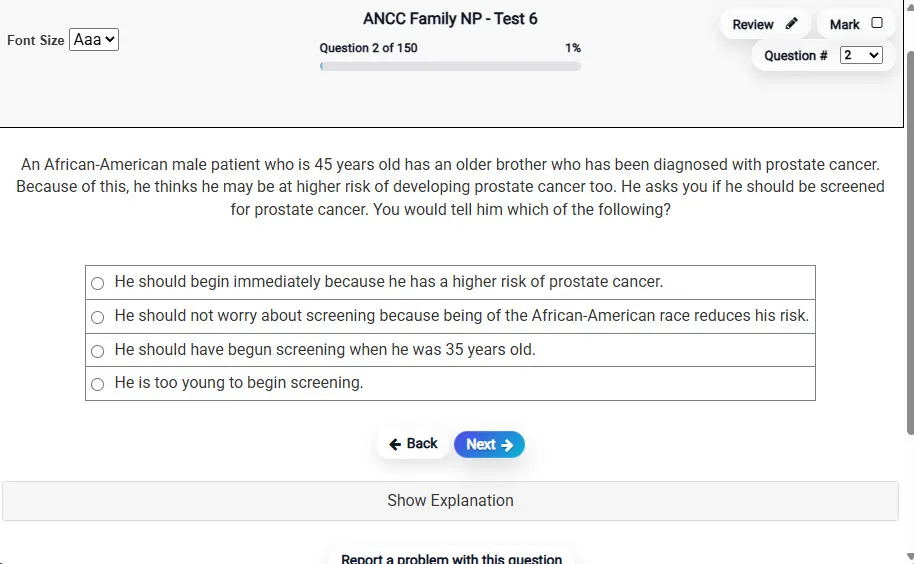
Answering a Question screen – Multiple-choice item view with navigation controls and progress tracker.
Answering a Question Multiple-choice item view with navigation controls and progress tracker.

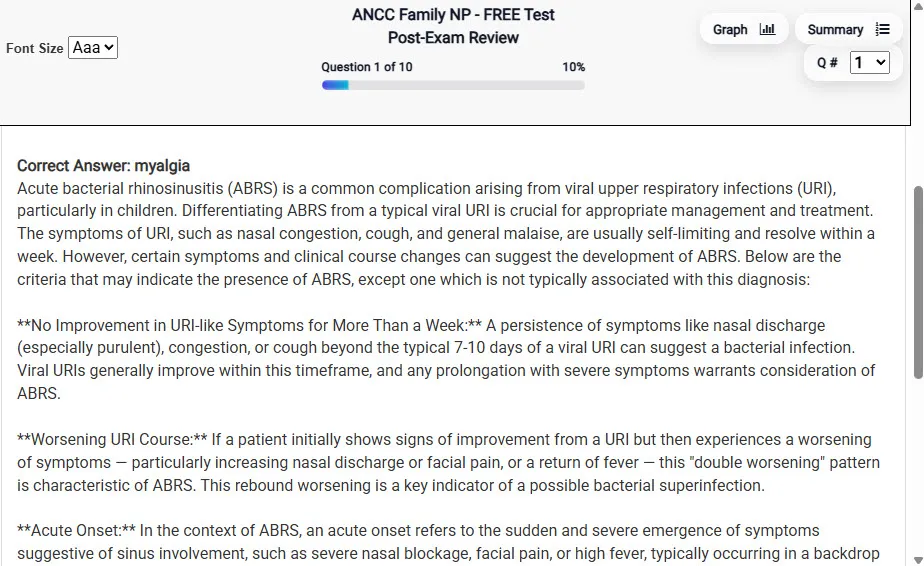
                           Detailed Explanation screen – 
                         Review mode showing chosen answer and rationale and references.
Detailed Explanation Review mode showing chosen answer and rationale and references.

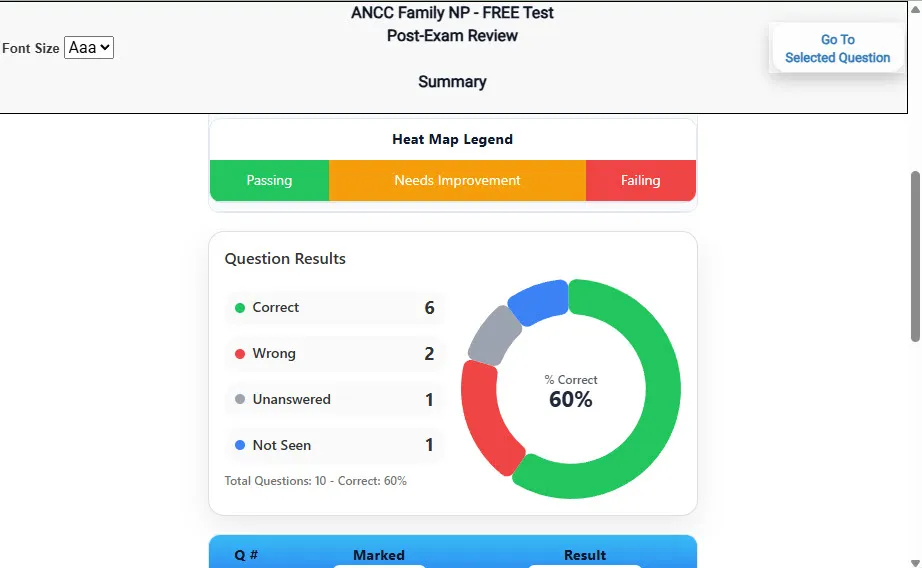
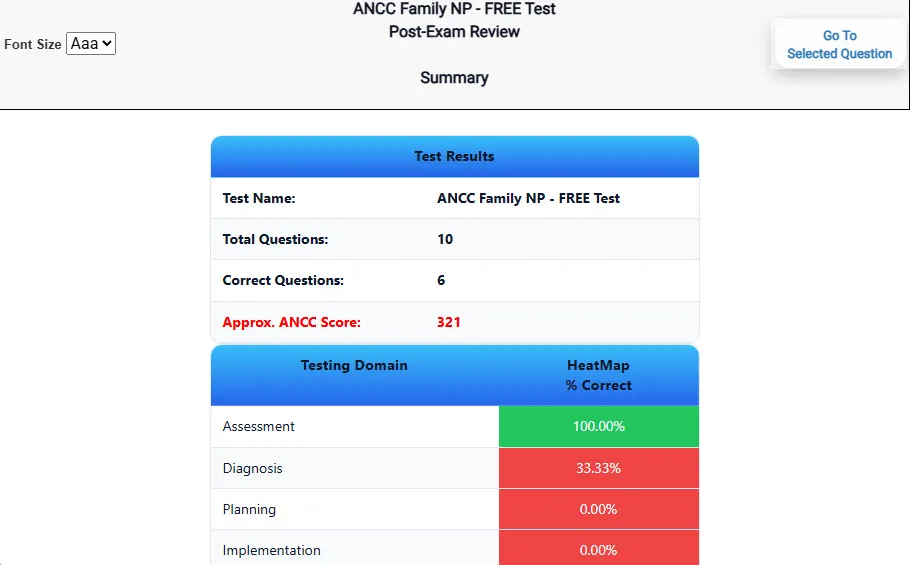
                           Review Summary 1 screen – 
                         Summary with counts for correct/wrong/unanswered and not seen items.
Review Summary 1 Summary with counts for correct/wrong/unanswered and not seen items.

                           Review Summary 2 screen – 
                         Advanced summary with category/domain breakdown and performance insights.
Review Summary 2 Advanced summary with category/domain breakdown and performance insights.

What Each Screen Shows

Answer Question Screen

  • Clean multiple-choice interface with progress bar.
  • Mark for review feature.
  • Matches real test pacing.

Detailed Explanation

  • Correct answer plus rationale.
  • Key concepts and guidelines highlighted.
  • Move between questions to fill knowledge gaps.

Review Summary 1

  • Overall results with total questions and scaled score.
  • Domain heatmap shows strengths and weaknesses.
  • Quick visual feedback on study priorities.

Review Summary 2

  • Chart of correct, wrong, unanswered, not seen.
  • Color-coded results for easy review.
  • Links back to missed items.

Top 10 Reasons to Use Exam Edge for your ARRT Registered Radiologist Assistant Exam Prep

  1. Focused on the ARRT Registered Radiologist Assistant Exam

    Our practice tests are built specifically for the ARRT RRA exam — every question mirrors the real topics, format, and difficulty so you're studying exactly what matters.

  2. Real Exam Simulation

    We match the per-question time limits and pressure of the actual ARRT exam, so test day feels familiar and stress-free.

  3. 10 Full Practice Tests & 1,000 Unique Questions

    You'll have more than enough material to master every ARRT RRA concept — no repeats, no fluff.

  4. Lower Cost Than a Retake

    Ordering 5 practice exams costs less than retaking the ARRT Registered Radiologist Assistant exam after a failure. One low fee could save you both time and money.

  5. Flexible Testing

    Need to step away mid-exam? Pick up right where you left off — with your remaining time intact.

  6. Instant Scoring & Feedback

    See your raw score and an estimated ARRT Registered Radiologist Assistant score immediately after finishing each practice test.

  7. Detailed Explanations for Every Question

    Review correct and incorrect answers with clear, step-by-step explanations so you truly understand each topic.

  8. Trusted & Accredited

    We're fully accredited by the Better Business Bureau and uphold the highest standards of trust and transparency.

  9. Web-Based & Always Available

    No software to install. Access your ARRT RRA practice exams 24/7 from any computer or mobile device.

  10. Expert Support When You Need It

    Need extra help? Our specialized tutors are highly qualified and ready to support your ARRT exam prep.


Pass the ARRT Registered Radiologist Assistant Exam with Realistic Practice Tests from Exam Edge

Preparing for your upcoming ARRT Registered Radiologist Assistant (RRA) Certification Exam can feel overwhelming — but the right practice makes all the difference. Exam Edge gives you the tools, structure, and confidence to pass on your first try. Our online practice exams are built to match the real ARRT RRA exam in content, format, and difficulty.

  • 📝 10 ARRT Registered Radiologist Assistant Practice Tests: Access 10 full-length exams with 100 questions each, covering every major ARRT Registered Radiologist Assistant topic in depth.
  • Instant Online Access: Start practicing right away — no software, no waiting.
  • 🧠 Step-by-Step Explanations: Understand the reasoning behind every correct answer so you can master ARRT RRA exam concepts.
  • 🔄 Retake Each Exam Up to 4 Times: Build knowledge through repetition and track your improvement over time.
  • 🌐 Web-Based & Available 24/7: Study anywhere, anytime, on any device.
  • 🧘 Boost Your Test-Day Confidence: Familiarity with the ARRT format reduces anxiety and helps you perform under pressure.

These ARRT Registered Radiologist Assistant practice exams are designed to simulate the real testing experience by matching question types, timing, and difficulty level. This approach helps you get comfortable not just with the exam content, but also with the testing environment, so you walk into your exam day focused and confident.


Exam Edge ARRT Reviews


Hi, I just wanted to say thank you ! The tests really helped me prepare for the advanced level MRI ARRT Registry exam. 

Anthony , California

Thank you! I had tried to pass this exam before I found your site and was never able to do it. After your practice exams, I was able to pass on the next attempt!

Jane, PA

Thank you for being a great tool site for my VI certification exam. It helped me prepare for "battle". Practice makes perfect, alright.

Noel , NY

Sorry, but it didn't help me.

MARIA , Austin, Texas

Great practice for taking the MRI registry..the test gave me a baseline on the knowledge I have and the knowledge I need to study more on before taking the exam. It helped with the verbiage used for the questions.

DEBORA , Allen, Texas

Like MRI in Practice.

keith , Silver Spring , MD


ARRT Registered Radiologist Assistant Aliases Test Name

Here is a list of alternative names used for this exam.

  • ARRT Registered Radiologist Assistant
  • ARRT Registered Radiologist Assistant test
  • ARRT Registered Radiologist Assistant Certification Test
  • ARRT RRA test
  • ARRT
  • ARRT RRA
  • RRA test
  • ARRT Registered Radiologist Assistant (RRA)
  • Registered Radiologist Assistant certification