This is the content of the pop-over!

AICPA BEC (BEC) Practice Tests & Test Prep by Exam Edge


AICPA Business Environment and Concepts  product image
(4.7)
Based on 20 Reviews

  • Real Exam Simulation: Timed questions and matching content build comfort for your AICPA BEC test day.
  • Instant, 24/7 Access: Web-based AICPA Business Environment and Concepts practice exams with no software needed.
  • Clear Explanations: Step-by-step answers and explanations for your AICPA exam to strengthen understanding.
  • Boosted Confidence: Reduces anxiety and improves test-taking skills to ace your AICPA Business Environment and Concepts (BEC).

Featured on

AICPA Business Environment and Concepts Online Practice Test Bundles

BEST VALUE
5 practice tests

$69.75

$199.75

SAVE $130

Only $13.95 per test!

  • 100% Pass Guarantee
  • 5 online practice tests
  • 100 questions per test
  • Bonus: 100 Flash Cards + Study Guide
  • Instant access
  • Detailed Explanations
  • Practice tests never expire
  • Timed, untimed, or study guide mode
1 practice test

$39.95

  • 1 online practice test
  • 100 questions per test
  • Instant access
  • Detailed Explanations
  • Practice tests never expire
  • Timed, untimed, or study guide mode
MOST FLEXIBLE
Question Bank

As low as $59.95

500 Questions

Choose 1, 3, 6, or 12 months
A second login is required.

  • Exam Edge content in a powerful question bank
  • Customize Tests
  • Multiple Test & Flash Card Modes
  • Track performance over time
  • Instant access
  • Detailed Explanations
Quick Select
Tap to choose a bundle

** All Prices are in US Dollars (USD) **


AICPA BEC (BEC) Resources

Jump to the section you need most.

Understanding the exact breakdown of the AICPA Business Environment and Concepts test will help you know what to expect and how to most effectively prepare. The AICPA Business Environment and Concepts has multiple-choice questions . The exam will be broken down into the sections below:

AICPA Business Environment and Concepts Exam Blueprint
Domain Name % Number of
Questions
Corporate Governance 17-27% 23
Economic Concepts and Analysis 17-27% 23
Financial Management 11-21% 15
Information Technology 15-25% 20
Operations Management 15-25% 20

AICPA Business Environment and Concepts Study Tips by Domain

  • Know the board’s core duties (oversight, strategy, risk) vs management execution; red flag: weak tone at the top often signals broader control failures.
  • Audit committee responsibilities include oversight of financial reporting, internal control, and external auditor independence; common trap: assuming management (not the audit committee) appoints/compensates the external auditor.
  • Independence matters—director/audit committee member financial ties or providing prohibited nonaudit services can impair auditor independence; cue: evaluate both actual and perceived conflicts.
  • Internal control roles split among management (design/implementation), internal audit (independent assurance), and external audit (opinion); priority rule: control environment deficiencies can undermine strong control activities.
  • Entity-wide risk assessment should link objectives to risks and responses (including fraud risk); common trap: focusing only on financial reporting risks and ignoring operational/compliance risks.
  • Ethics and compliance programs require clear policies, training, reporting channels, and consistent discipline; red flag: retaliation concerns or lack of anonymous reporting reduces issue detection.
  • Know how inflation and interest rates affect discounted cash flows and bond prices—red flag: using nominal cash flows with a real discount rate (or vice versa).
  • Interpret GDP, unemployment, and CPI together; priority rule: one data point is rarely sufficient—watch for stagflation signals (rising CPI with weak GDP).
  • Apply elasticity to revenue impacts; common trap: assuming a price increase always raises revenue when demand is elastic.
  • Distinguish fiscal vs. monetary policy tools and expected lags; exam cue: monetary policy directly targets money/credit conditions, not government spending levels.
  • Use comparative advantage and understand trade restrictions; red flag: confusing absolute advantage with comparative advantage when determining who should specialize.
  • Analyze exchange rates and currency risk; common trap: reversing the quote convention (e.g., $/FC vs. FC/$) and getting appreciation/depreciation effects backward.
  • Know working capital drivers (AR, AP, inventory) and the cash conversion cycle; red flag: improving current ratio by stretching payables can worsen supplier terms and cash costs.
  • Compute and interpret leverage and coverage (debt-to-equity, times interest earned); common trap: using EBIT instead of EBITDA or forgetting to annualize interest when comparing periods.
  • Apply time value of money for NPV/IRR and bond/loan pricing; priority rule: accept projects with NPV > 0 at the firm’s required return—don’t rely on IRR when cash flows are nonconventional.
  • Differentiate cost behaviors and contribution margin for CVP and breakeven; red flag: treating mixed costs as fixed without separating variable components skews margin and decision thresholds.
  • Use variance analysis (price/rate vs efficiency/usage) to evaluate performance; common trap: labeling an unfavorable variance as “bad” without checking volume effects and controllability.
  • Understand capital structure and dividend/share repurchase impacts on EPS and financial risk; contraindication: EPS accretion alone is not value creation if WACC increases or cash liquidity drops below operating needs.
  • Differentiate general controls (access, change management, operations) from application controls (edit checks, authorizations) because AICPA often tests that weak ITGCs can undermine reliance on automated controls—red flag: shared logins or no evidence of change approvals.
  • Know core cybersecurity principles (CIA triad, least privilege, defense-in-depth) and that risk is prioritized by likelihood × impact—common trap: focusing only on confidentiality while ignoring availability for critical systems.
  • Understand IT governance and alignment (COBIT-style objectives, policies, metrics) where management sets oversight and accountability—priority rule: unclear roles/segregation of duties is a major control deficiency.
  • Cloud and outsourcing: responsibility is shared, so evaluate vendor controls via SOC reports (Type 1 vs Type 2) and complementary user entity controls—red flag: relying on a SOC 1 Type 1 for operating effectiveness over time.
  • Data management basics (databases, ETL, master data, data quality dimensions) and how bad inputs create bad outputs—common trap: assuming BI dashboards are reliable without reconciling source data and transformation logic.
  • System development and change control: requirements, testing, migration, and back-out plans should be documented—contraindication: emergency changes not retrospectively reviewed and approved.
  • Use break-even and contribution margin to evaluate operating leverage; red flag: treating fixed costs as variable (or vice versa) will distort CVP conclusions.
  • Budgeting and variance analysis should separate price vs. quantity (rate vs. efficiency) effects; common trap: interpreting a favorable variance as “good” without checking volume/quality impacts.
  • In working capital management, monitor the cash conversion cycle (DSO, DIO, DPO); priority rule: a shrinking CCC usually improves liquidity but may signal stockouts or strained supplier terms.
  • For inventory, know FIFO vs. LIFO effects on COGS and taxes in inflationary periods; red flag: inconsistent assumptions about inventory flow can reverse profitability and cash-flow implications.
  • In capital budgeting, rely on NPV/IRR using after-tax incremental cash flows; common trap: including sunk costs or ignoring changes in net working capital at project start and end.
  • Evaluate supply chain and production choices (make-or-buy, outsourcing, constraints) using relevant costs; contraindication: allocating fixed overhead to decide a special order can lead to rejecting profitable incremental work.


Built to Fit Into Your Busy Life

Everything you need to prepare with confidence—without wasting a minute.

Three Study Modes

Timed, No Time Limit, or Explanation mode.

Actionable Analytics

Heatmaps and scaled scores highlight weak areas.

High-Yield Rationales

Concise explanations emphasize key concepts.

Realistic Interface

Matches the feel of the actual exam environment.

Accessible by Design

Clean layout reduces cognitive load.

Anytime, Anywhere

Web-based access 24/7 on any device.
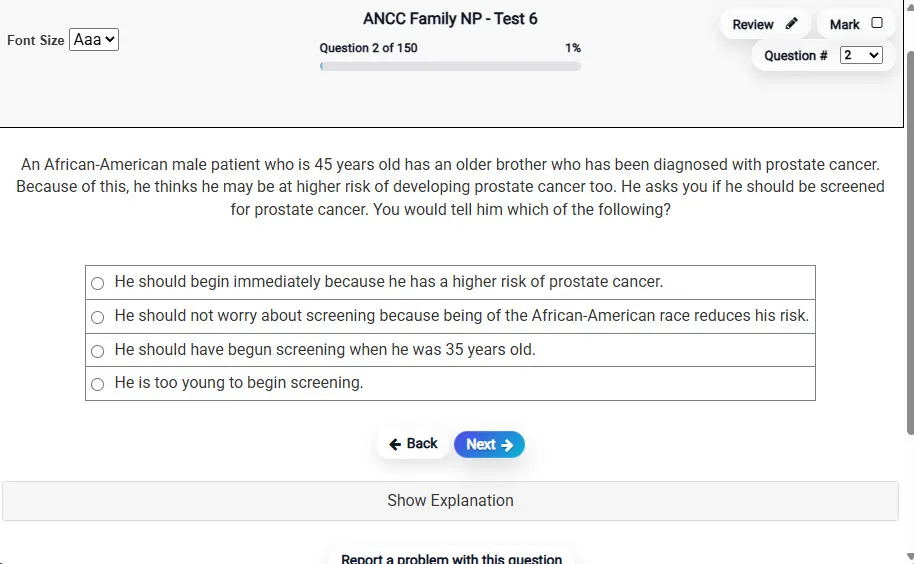
Answering a Question screen – Multiple-choice item view with navigation controls and progress tracker.
Answering a Question Multiple-choice item view with navigation controls and progress tracker.

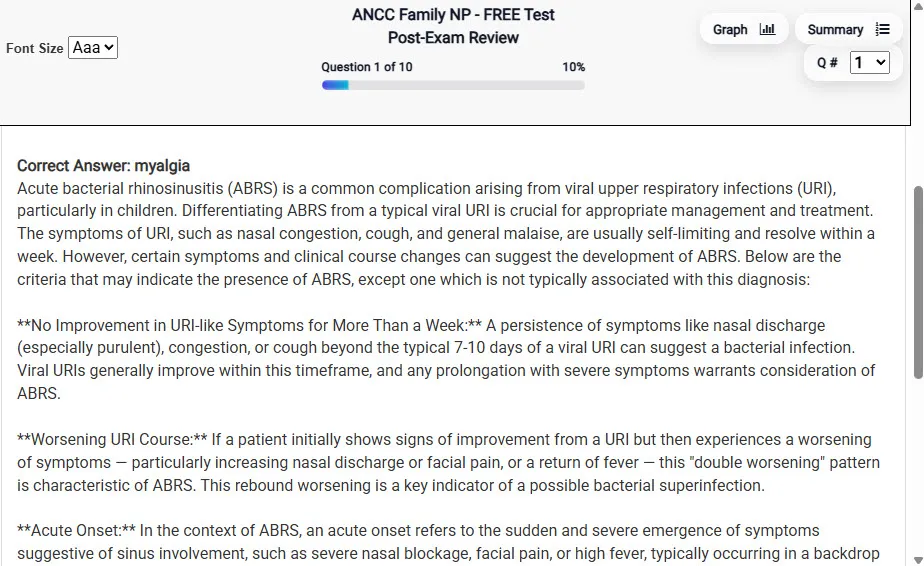
                           Detailed Explanation screen – 
                         Review mode showing chosen answer and rationale and references.
Detailed Explanation Review mode showing chosen answer and rationale and references.

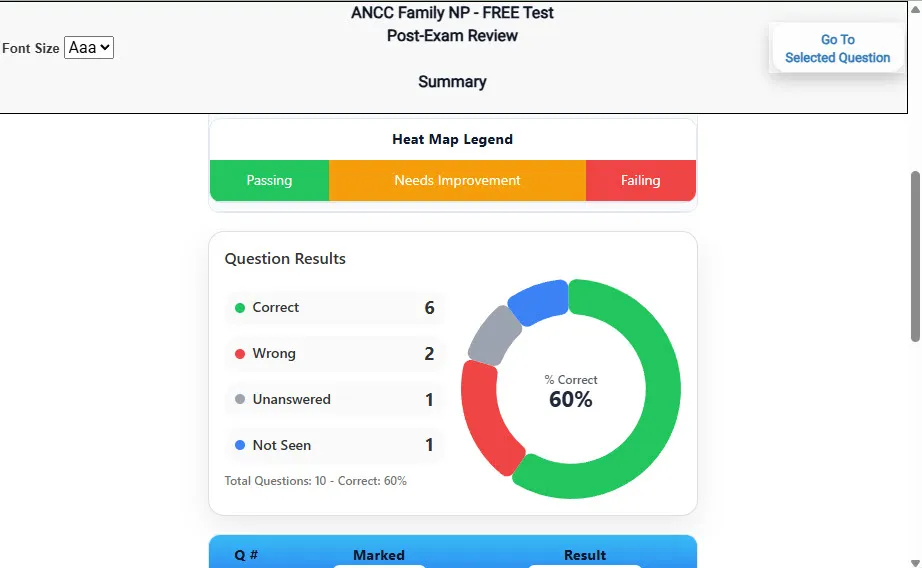
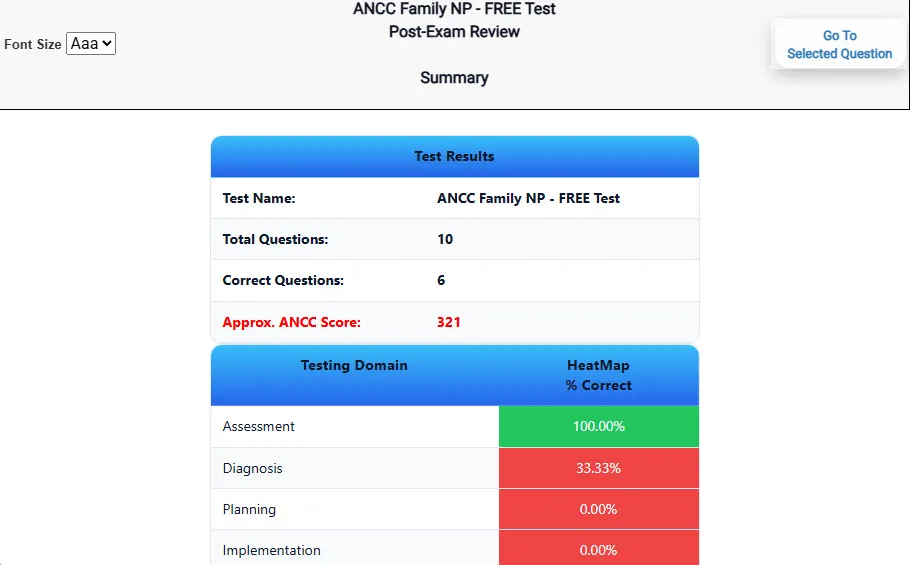
                           Review Summary 1 screen – 
                         Summary with counts for correct/wrong/unanswered and not seen items.
Review Summary 1 Summary with counts for correct/wrong/unanswered and not seen items.

                           Review Summary 2 screen – 
                         Advanced summary with category/domain breakdown and performance insights.
Review Summary 2 Advanced summary with category/domain breakdown and performance insights.

What Each Screen Shows

Answer Question Screen

  • Clean multiple-choice interface with progress bar.
  • Mark for review feature.
  • Matches real test pacing.

Detailed Explanation

  • Correct answer plus rationale.
  • Key concepts and guidelines highlighted.
  • Move between questions to fill knowledge gaps.

Review Summary 1

  • Overall results with total questions and scaled score.
  • Domain heatmap shows strengths and weaknesses.
  • Quick visual feedback on study priorities.

Review Summary 2

  • Chart of correct, wrong, unanswered, not seen.
  • Color-coded results for easy review.
  • Links back to missed items.

Top 10 Reasons to Use Exam Edge for your AICPA Business Environment and Concepts Exam Prep

  1. Focused on the AICPA Business Environment and Concepts Exam

    Our practice tests are built specifically for the AICPA BEC exam — every question mirrors the real topics, format, and difficulty so you're studying exactly what matters.

  2. Real Exam Simulation

    We match the per-question time limits and pressure of the actual AICPA exam, so test day feels familiar and stress-free.

  3. 5 Full Practice Tests & 500 Unique Questions

    You'll have more than enough material to master every AICPA BEC concept — no repeats, no fluff.

  4. Lower Cost Than a Retake

    Ordering 5 practice exams costs less than retaking the AICPA Business Environment and Concepts exam after a failure. One low fee could save you both time and money.

  5. Flexible Testing

    Need to step away mid-exam? Pick up right where you left off — with your remaining time intact.

  6. Instant Scoring & Feedback

    See your raw score and an estimated AICPA Business Environment and Concepts score immediately after finishing each practice test.

  7. Detailed Explanations for Every Question

    Review correct and incorrect answers with clear, step-by-step explanations so you truly understand each topic.

  8. Trusted & Accredited

    We're fully accredited by the Better Business Bureau and uphold the highest standards of trust and transparency.

  9. Web-Based & Always Available

    No software to install. Access your AICPA BEC practice exams 24/7 from any computer or mobile device.

  10. Expert Support When You Need It

    Need extra help? Our specialized tutors are highly qualified and ready to support your AICPA exam prep.


Pass the AICPA Business Environment and Concepts Exam with Realistic Practice Tests from Exam Edge

Preparing for your upcoming AICPA Business Environment and Concepts (BEC) Certification Exam can feel overwhelming — but the right practice makes all the difference. Exam Edge gives you the tools, structure, and confidence to pass on your first try. Our online practice exams are built to match the real AICPA BEC exam in content, format, and difficulty.

  • 📝 5 AICPA Business Environment and Concepts Practice Tests: Access 5 full-length exams with 100 questions each, covering every major AICPA Business Environment and Concepts topic in depth.
  • Instant Online Access: Start practicing right away — no software, no waiting.
  • 🧠 Step-by-Step Explanations: Understand the reasoning behind every correct answer so you can master AICPA BEC exam concepts.
  • 🔄 Retake Each Exam Up to 4 Times: Build knowledge through repetition and track your improvement over time.
  • 🌐 Web-Based & Available 24/7: Study anywhere, anytime, on any device.
  • 🧘 Boost Your Test-Day Confidence: Familiarity with the AICPA format reduces anxiety and helps you perform under pressure.

These AICPA Business Environment and Concepts practice exams are designed to simulate the real testing experience by matching question types, timing, and difficulty level. This approach helps you get comfortable not just with the exam content, but also with the testing environment, so you walk into your exam day focused and confident.


Exam Edge AICPA Reviews


This is the best testing resource available! I love how you can do notes with explanations. You can learn right away the correct answer.

Sydney , Ripon, California


AICPA Business Environment and Concepts Aliases Test Name

Here is a list of alternative names used for this exam.

  • AICPA Business Environment and Concepts
  • AICPA Business Environment and Concepts test
  • AICPA Business Environment and Concepts Certification Test
  • AICPA BEC test
  • AICPA
  • AICPA BEC
  • BEC test
  • AICPA Business Environment and Concepts (BEC)
  • Business Environment and Concepts certification