
This is the content of the pop-over!

AACN ACCNS-AG (ACCNS-AG) Practice Tests & Test Prep by Exam Edge


AACN Adult-Gerontology Clinical Nurse Specialists  product image
(4.9)
Based on 22 Reviews

  • Real Exam Simulation: Timed questions and matching content build comfort for your AACN ACCNS-AG test day.
  • Instant, 24/7 Access: Web-based AACN Adult-Gerontology Clinical Nurse Specialists practice exams with no software needed.
  • Clear Explanations: Step-by-step answers and explanations for your AACN exam to strengthen understanding.
  • Boosted Confidence: Reduces anxiety and improves test-taking skills to ace your AACN Adult-Gerontology Clinical Nurse Specialists (ACCNS-AG).

Featured on

AACN Adult-Gerontology Clinical Nurse Specialists Online Practice Test Bundles

BEST VALUE
30 practice tests

$238.50

$1,198.50

SAVE $960

Only $7.95 per test!

  • 100% Pass Guarantee
  • 30 online practice tests
  • 100 questions per test
  • Bonus: 100 Flash Cards + Study Guide
  • Instant access
  • Detailed Explanations
  • Practice tests never expire
  • Timed, untimed, or study guide mode
MOST POPULAR
15 practice tests

$149.25

$599.25

SAVE $450

Only $9.95 per test!

  • 15 online practice tests
  • 100 questions per test
  • Bonus: 100 Flash Cards + Study Guide
  • Instant access
  • Detailed Explanations
  • Practice tests never expire
  • Timed, untimed, or study guide mode
5 practice tests

$69.75

$199.75

SAVE $130

Only $13.95 per test!

  • 5 online practice tests
  • 100 questions per test
  • Bonus: 100 Flash Cards
  • Instant access
  • Detailed Explanations
  • Practice tests never expire
  • Timed, untimed, or study guide mode
1 practice test

$39.95

  • 1 online practice test
  • 100 questions per test
  • Instant access
  • Detailed Explanations
  • Practice tests never expire
  • Timed, untimed, or study guide mode
Quick Select
Tap to choose a bundle

** All Prices are in US Dollars (USD) **


AACN ACCNS-AG (ACCNS-AG) Resources

Jump to the section you need most.

Understanding the exact breakdown of the AACN Adult-Gerontology Clinical Nurse Specialists test will help you know what to expect and how to most effectively prepare. The AACN Adult-Gerontology Clinical Nurse Specialists has multiple-choice questions . The exam will be broken down into the sections below:

AACN Adult-Gerontology Clinical Nurse Specialists Exam Blueprint
Domain Name % Number of
Questions
Clinical Judgment 61% 30
     Cardiovascular 13% 6
     Pulmonary 11% 5
     Endocrine 3% 1
     Musculoskeletal 2% 1
     Hematology/immunology/Oncology 3% 1
     Neurology 7% 3
     Gastrointestinal 5% 2
     Renal/Genitourinary 5% 2
     Integumentary 2% 1
     Multisystem 7% 3
     Psychosocial/Behavioral/Cognitive Health 3% 1
Professional Caring And Ethical Practice 39% 19
     Advocacy/moral agency 5% 2
     Caring Practices 7% 3
     Collaboration 5% 2
     Systems thinking 7% 3
     Response to diversity 3% 1
     Clinical inquiry 7% 3
     Facilitation of learning 6% 3

AACN Adult-Gerontology Clinical Nurse Specialists Study Tips by Domain

  • Prioritize ABCs and perfusion first; a red flag is new hypotension with altered mentation—treat as shock until proven otherwise.
  • Trend data over single values; a common trap is dismissing a rising lactate or increasing O2 requirement because the latest vital signs look “stable.”
  • Match intervention to the most likely life-threatening cause; if sepsis is suspected, the priority rule is obtain cultures and give broad-spectrum antibiotics within 1 hour (don’t delay for imaging).
  • Use medication safety checks every time; a contraindication cue is holding beta-blockers or opioids when bradycardia, hypotension, or hypoventilation is present unless a clear plan and monitoring are in place.
  • Escalate early using objective triggers; a red flag is acute change in neuro status (new focal deficit, decreasing GCS, or seizure)—activate stroke/seizure pathways and secure airway as needed.
  • Reassess after each action and document response; a common trap is failing to evaluate effect (e.g., urine output <0.5 mL/kg/hr after fluids) and not adjusting the plan or consulting ICU/rapid response.
  • For suspected acute coronary syndrome, obtain a 12-lead ECG within 10 minutes and do not delay aspirin unless there is a true allergy or active major bleeding—red flag: ongoing chest pain with new ST changes.
  • Manage acute decompensated heart failure by distinguishing “wet vs dry” and “warm vs cold”; common trap: giving large fluid boluses in pulmonary edema when JVD, crackles, and hypertension suggest volume overload.
  • Before rate control in tachyarrhythmias, assess hemodynamic stability; priority rule: unstable (hypotension, altered mentation, shock, ischemic chest pain, acute HF) requires synchronized cardioversion.
  • Anticoagulation safety is high-yield: for atrial fibrillation, verify CHA2DS2-VASc and bleeding risk, and avoid DOACs in mechanical valves—contraindication that is frequently missed.
  • In suspected aortic dissection, control heart rate and blood pressure (beta-blocker first) and avoid thrombolytics/anticoagulants until ruled out; red flag: tearing pain with pulse deficit or neurologic signs.
  • After invasive cardiac procedures (PCI, lines), monitor access sites and perfusion; common trap: missing a retroperitoneal bleed with femoral access—cue: hypotension, flank/back pain, and dropping hemoglobin with minimal groin findings.
  • For acute hypoxemia, target SpO2 92%–96% (or 88%–92% if COPD with chronic CO2 retention); red flag: escalating O2 needs with rising PaCO2 suggests impending ventilatory failure.
  • Suspect pulmonary embolism with sudden dyspnea/pleuritic chest pain plus tachycardia or unexplained hypoxemia; priority rule: start anticoagulation when clinical probability is high unless a major bleeding contraindication exists.
  • For severe asthma/COPD exacerbation, red flag findings are “silent chest,” fatigue, altered mental status, or rising PaCO2; common trap: delaying escalation to NIV or intubation while repeatedly giving bronchodilators.
  • In ARDS, use lung-protective ventilation (VT 4–8 mL/kg predicted body weight) and adequate PEEP; common trap: setting tidal volume based on actual weight, increasing volutrauma.
  • Prevent ventilator-associated pneumonia with HOB 30–45°, daily sedation interruption/readiness-to-extubate checks, and oral care with chlorhexidine per policy; red flag: new fever/leukocytosis and increased secretions after 48 hours of intubation.
  • With chest trauma or sudden deterioration on positive-pressure ventilation, suspect tension pneumothorax if hypotension, unilateral absent breath sounds, and tracheal deviation; priority rule: needle decompression should not wait for imaging.
  • DKA vs HHS: suspect DKA with Kussmaul respirations/fruity breath and anion-gap metabolic acidosis, and HHS with profound dehydration and very high glucose with minimal ketones—red flag is delaying insulin when potassium is <3.3 mEq/L (replete K+ first).
  • Thyroid storm: fever, tachycardia, agitation, diarrhea in a hyperthyroid patient—priority is beta-blocker then thionamide then iodine (iodine given before thionamide is a common trap).
  • Myxedema coma: hypothermia, bradycardia, hypotension, hypoventilation, altered mental status—give IV levothyroxine and stress-dose hydrocortisone until adrenal insufficiency is excluded (contraindication is aggressive warming causing vasodilation/collapse).
  • Adrenal crisis (acute adrenal insufficiency): refractory hypotension, hyponatremia, hyperkalemia, hypoglycemia after steroids stopped or during stress—priority is IV fluids + IV hydrocortisone; do not wait for cortisol results.
  • SIADH vs diabetes insipidus: SIADH causes hyponatremia with low serum osmolality and inappropriately concentrated urine; DI causes hypernatremia with dilute urine—red flag is rapid sodium correction (>8–10 mEq/L/24 h) risking osmotic demyelination.
  • Hypercalcemia of malignancy vs hypocalcemia (often post-thyroid/parathyroid surgery): hypercalcemia presents with constipation, polyuria, confusion; hypocalcemia with perioral tingling, tetany, Chvostek/Trousseau—priority rule is treat symptomatic hypocalcemia with IV calcium gluconate and continuous ECG monitoring.
  • Suspect acute compartment syndrome with pain out of proportion, pain on passive stretch, paresthesia, and tense swelling; red flag: do not rely on “5 P’s” late findings—measure compartment pressures and escalate for emergent fasciotomy.
  • In older adults, any fall with hip/groin pain or inability to bear weight warrants hip fracture evaluation even if initial X-ray is negative; trap: delayed diagnosis—push for MRI/CT and prioritize early mobilization/VTE prophylaxis.
  • For suspected septic arthritis or acute osteomyelitis, prioritize blood cultures and joint aspiration before antibiotics when feasible; red flag: fever may be absent in immunocompromised patients—do not dismiss a hot, swollen, painful joint.
  • Manage postoperative orthopedic patients with a DVT/PE prevention rule: mechanical plus pharmacologic prophylaxis unless contraindicated; trap: holding anticoagulation without a documented bleeding risk while the patient is immobile.
  • Recognize fat embolism syndrome after long-bone or pelvic fractures (24–72 hours): hypoxemia, neuro changes, petechiae; red flag: sudden oxygen requirement increase—support oxygenation and prompt ICU-level evaluation.
  • Screen for spinal cord/cauda equina emergencies in back pain: new urinary retention/incontinence, saddle anesthesia, progressive leg weakness; priority rule: treat as time-critical—urgent MRI and neurosurgical consult.
  • Suspect heparin-induced thrombocytopenia when platelets fall ≥50% 5–10 days after heparin (or sooner with recent exposure)—stop all heparin immediately and use a non-heparin anticoagulant; don’t transfuse platelets unless life-threatening bleeding.
  • For neutropenic fever (ANC <500 or expected fall) treat as an emergency—give broad-spectrum antipseudomonal IV antibiotics within 60 minutes; a common trap is waiting for cultures/imaging before the first dose.
  • With suspected tumor lysis syndrome (high-risk hematologic malignancy, rising K/Phos/uric acid, falling Ca), prioritize aggressive IV hydration and prophylaxis (allopurinol/rasburicase) and continuous ECG monitoring; red flag is new arrhythmia or seizure.
  • In a sickle cell vaso-occlusive crisis, first-line priorities are rapid analgesia, oxygen only if hypoxemic, and cautious IV fluids; avoid the trap of routine transfusion unless acute chest syndrome, stroke, or severe symptomatic anemia.
  • When DIC is suspected (bleeding plus low platelets/fibrinogen and high PT/aPTT/D-dimer), treat the underlying cause and transfuse based on bleeding/thresholds (e.g., platelets <50k with bleeding or procedures); red flag is oozing from lines with hypotension.
  • After chemotherapy, assess for mucositis and infection risk daily—implement oral care and avoid rectal temps/suppositories in neutropenia; a common trap is giving live vaccines or allowing fresh flowers/raw foods in high-risk neutropenic patients.
  • Suspect acute ischemic stroke with any sudden focal deficit; red flag: treat last-known-well time as a hard threshold for IV thrombolysis eligibility and avoid delaying CT/CTA for nonessential labs.
  • Increased intracranial pressure management prioritizes oxygenation and perfusion; red flag: rising systolic BP with bradycardia and irregular respirations (Cushing response) demands immediate escalation and avoidance of hypotonic fluids.
  • New-onset seizure requires airway protection and rapid glucose check; common trap: missing nonconvulsive status epilepticus in an obtunded patient—obtain urgent EEG if mental status doesn’t clear.
  • For suspected meningitis/encephalitis, give antibiotics/acyclovir promptly; priority rule: don’t delay antimicrobials for lumbar puncture if there are signs of sepsis or focal deficits requiring CT first.
  • With myasthenic crisis vs cholinergic crisis, assess respiratory muscle strength; red flag: declining negative inspiratory force or vital capacity (e.g., VC < 20 mL/kg) signals need for early intubation rather than waiting for ABG changes.
  • Spinal cord compression/cauda equina is a neurologic emergency; red flag: saddle anesthesia, urinary retention, or bilateral leg weakness requires emergent MRI and surgical consultation—don’t attribute symptoms to simple back pain.
  • Suspect upper GI bleed with melena/coffee-ground emesis and hypotension; priority is 2 large-bore IVs, type & cross, and resuscitation before endoscopy—don’t delay for NG lavage.
  • Acute pancreatitis: use aggressive isotonic fluids and opioid analgesia early; red flag is hypocalcemia, rising BUN, or persistent SIRS suggesting severe disease and ICU-level monitoring.
  • Acute liver failure/cirrhosis decompensation: monitor for encephalopathy and treat with lactulose to 2–3 soft stools/day; common trap is giving sedatives/opioids that worsen mental status.
  • Suspected spontaneous bacterial peritonitis in ascites: diagnostic paracentesis first—PMN ≥250 cells/mm3 is treatment threshold; start empiric antibiotics promptly and don’t wait on culture.
  • Bowel obstruction/ileus: keep NPO, NG decompression if vomiting/distention, and correct electrolytes; red flag is peritonitis, fever, leukocytosis, or lactic acidosis requiring urgent surgical evaluation.
  • Clostridioides difficile: prioritize contact precautions and stop the inciting antibiotic when possible; common trap is using antimotility agents, which can precipitate toxic megacolon.
  • Prioritize emergent hyperkalemia management in AKI/ESRD (e.g., ECG changes, K+ ≥6.0) — red flag: peaked T waves/widened QRS should trigger immediate stabilization before definitive removal.
  • For oliguria/anuria, first assess volume status and obstruction (bladder scan, catheter patency) — common trap: giving repeated fluid boluses without ruling out postrenal retention or pulmonary edema risk.
  • In CKD, trend eGFR and albuminuria together for staging and progression risk — priority rule: persistent ACR ≥30 mg/g is clinically meaningful even with near-normal creatinine.
  • Adjust medication dosing for renal function and avoid nephrotoxins — contraindication cue: hold/limit NSAIDs and use caution with IV contrast, aminoglycosides, and combined ACEi/ARB therapy in unstable renal perfusion.
  • Manage urosepsis/pyelonephritis with prompt cultures and appropriate antibiotics, but don’t delay treatment for imaging — red flag: fever plus flank pain/hypotension warrants sepsis bundle and source control consideration.
  • Dialysis access and complications: protect AV fistula (no BP/venipuncture) and recognize urgent issues — red flag: sudden access bruit/thrill loss, severe headache, or confusion during HD suggests thrombosis or dialysis disequilibrium requiring immediate escalation.
  • Stage pressure injuries correctly (1–4, unstageable, deep tissue pressure injury) and never document “stageable erythema”—red flag: blanchable erythema is NOT a pressure injury.
  • Differentiate venous stasis vs arterial vs neuropathic ulcers to drive treatment—trap: starting compression without confirming adequate perfusion (check ABI; avoid compression if ABI <0.5 and use caution/modified compression if 0.5–0.8 per policy).
  • Escalate urgently for suspected necrotizing soft tissue infection (pain out of proportion, rapid spread, bullae, crepitus, systemic toxicity)—priority rule: do not delay surgery for imaging or cultures.
  • Use aseptic technique and “clean-to-dirty” wound care sequencing—common trap: swabbing superficial exudate; cue: if culture is needed, obtain after cleansing/debridement using tissue or Levine technique per facility protocol.
  • Address moisture-associated skin damage (incontinence-associated dermatitis, intertrigo) with barrier protection and moisture control—red flag: treating diffuse, irregular erythema with antifungals/antibiotics without first correcting moisture and friction.
  • Identify high-risk drug/therapy skin reactions (SJS/TEN, DRESS, heparin-induced skin necrosis, radiation dermatitis)—contraindication cue: new mucosal involvement, blistering, or facial edema warrants immediate drug stop and emergent evaluation.
  • Prioritize ABCs with shock recognition: hypotension plus altered mentation, cool/clammy skin, or lactate ≥2 mmol/L is a red flag to activate sepsis/shock pathways and reassess response within 30–60 minutes.
  • Apply sepsis bundles precisely: give 30 mL/kg crystalloid for hypotension or lactate ≥4 and start broad-spectrum antibiotics early; common trap is delaying cultures/antibiotics while waiting for imaging or consults.
  • Differentiate shock types at the bedside (cardiogenic vs distributive vs hypovolemic vs obstructive) using MAP, pulse pressure, JVP, lung sounds, and response to a small fluid challenge; red flag is persistent MAP <65 despite fluids—start vasopressors per protocol and escalate monitoring.
  • Prevent and detect acute kidney injury in multisystem illness: track urine output (<0.5 mL/kg/hr for 6 hours is a threshold) and avoid nephrotoxins/contrast when possible; trap is missing early AKI when creatinine is “normal” but trending up.
  • Recognize evolving respiratory failure/ARDS: increasing O2 needs, tachypnea, and PaO2/FiO2 ≤300 are warning signs; contraindication is excessive tidal volumes—advocate for lung-protective ventilation and frequent reassessment of sedation/vent synchrony.
  • Screen for and manage delirium and iatrogenic harm in ICU-level multisystem care: sudden inattention or agitation is a red flag—rule out hypoxia, infection, withdrawal, or medication effects before escalating restraints/benzos; priority rule is to bundle nonpharmacologic prevention (sleep, mobility, glasses/hearing aids).
  • Screen delirium in any acute change in attention/LOC (e.g., CAM-ICU) and treat reversible causes first; red flag: new agitation in older adults is delirium until proven otherwise.
  • Implement suicide risk assessment for depression, substance use, chronic pain, or recent loss; priority rule: active plan/means or command hallucinations — initiate 1:1 observation and urgent psychiatric evaluation.
  • Use trauma-informed de-escalation (calm voice, space, choices) before restraints; common trap: using restraints for agitation without addressing hypoxia, hypoglycemia, withdrawal, or medication effects.
  • Monitor for alcohol/benzodiazepine withdrawal (CIWA-Ar where appropriate) and give early symptom-triggered therapy; red flag: autonomic instability, hallucinations, or seizures — escalate immediately.
  • Assess decision-making capacity as task-specific and time-specific (understand, appreciate, reason, communicate); contraindication: equating a psychiatric diagnosis with lack of capacity without a structured assessment.
  • Prevent cognitive/behavioral deterioration with sleep, orientation, mobility, hearing/vision aids, and pain control; common trap: routine nighttime vitals/alarms and anticholinergic meds worsening delirium and falls.
  • Apply AACN ethics by using a structured approach when goals conflict (e.g., beneficence vs autonomy) and document the rationale—red flag: “vague notes” like “family aware” without who/what/when.
  • Clarify decision-making capacity and identify the correct surrogate before honoring treatment requests—common trap: treating “next of kin” as legal decision-maker without confirming hierarchy/POA.
  • Protect patient privacy by sharing only the minimum necessary information and avoiding hallway/phone disclosures—red flag: discussing identifiable details with family/friends not explicitly authorized.
  • Address moral distress early with escalation pathways (ethics consult, chain of command, debriefing) and advocate for a safe plan—priority rule: act immediately when you believe a patient is at risk of harm.
  • Maintain professional boundaries and therapeutic communication; avoid dual relationships, gifts, or social media contact—common trap: accepting “small” favors that create expectation or influence care.
  • Promote a just culture by reporting errors/near misses promptly, disclosing per policy, and focusing on system fixes—red flag: pressure to “quietly correct” documentation or delay reporting.
  • Use substituted judgment/known wishes for incapacitated patients; red flag: assuming family preference equals the patient’s values without verifying advance directives or prior statements.
  • Escalate ethically concerning orders through chain of command and ethics consult; common trap: informal hallway disagreements instead of documenting concerns and requesting a time-sensitive review.
  • Protect informed consent by assessing decisional capacity and comprehension (teach-back); red flag: obtaining consent when delirium, hypoxia, or oversedation is present.
  • Advocate for appropriate goals-of-care transitions (e.g., palliative/hospice) when treatment burden outweighs benefit; priority rule: align code status, orders, and care plan to avoid “full code but comfort-only” inconsistencies.
  • Address moral distress with structured debriefing and policy-based action plans; red flag: repeated “workarounds” that bypass safety/ethics processes (e.g., non-indicated restraints or sedation for convenience).
  • Ensure equitable care and resource access, especially under scarcity; common trap: allowing implicit bias to influence pain management, visitor exceptions, or transplant/ICU triage decisions without transparent criteria.
  • Use a consistent pain framework (e.g., numeric scale plus functional goal) and reassess within a defined interval after intervention; red flag: sedation/respiratory rate decline after opioids requires immediate hold and evaluation.
  • Implement delirium prevention and early detection (baseline cognition, sleep hygiene, mobilization, sensory aids); common trap: treating agitation with benzodiazepines without ruling out hypoxia, infection, withdrawal, or medication effects.
  • Prioritize pressure injury prevention with Braden scoring, turning schedules, heel offloading, and moisture management; red flag: nonblanchable erythema over bony prominences warrants immediate escalation of skin-protective measures.
  • Practice infection prevention bundles (hand hygiene, device necessity review, aseptic technique, chlorhexidine as indicated); common trap: leaving urinary catheters or central lines in place “for convenience” rather than daily necessity checks.
  • Support safe mobility and fall prevention using individualized risk factors (orthostasis, meds, toileting needs) and teach “call, don’t fall”; red flag: new dizziness or systolic drop with standing should trigger orthostatic vitals and medication review before ambulation.
  • Use trauma-informed, patient-centered communication (ask permission, explain steps, validate concerns) to build trust and adherence; priority rule: if a patient refuses care, assess decision-making capacity and address reversible drivers (pain, fear, delirium) before labeling as “noncompliant.”
  • Clarify role and decision rights early (consult vs co-manage vs assume primary)—red flag is vague accountability that leads to duplicated orders or missed follow-up.
  • Use closed-loop communication for critical updates (read-back, confirm receiver, document)—common trap is assuming EHR notes equal team awareness.
  • Escalate using a structured script (e.g., SBAR with current vitals, trend, and ask)—priority rule: include a specific recommendation, not just a problem report.
  • Coordinate interprofessional plans with measurable goals (target MAP, glucose range, mobility level)—red flag is discipline-specific plans that conflict on timing (e.g., diuresis vs PT).
  • Manage conflict by separating patient-safety issues from preference issues—contraindication is delaying escalation when there’s deteriorating status or a high-risk medication concern.
  • Ensure transitions of care include medication reconciliation, pending results, and contingency instructions—common trap is omitting “if/then” return precautions for high-risk discharges.
  • Use systems mapping (people–process–technology) to trace an adverse event to upstream contributors; red flag: blaming individual “noncompliance” without identifying workflow or policy gaps.
  • Prioritize interventions by leverage and risk (e.g., standardization, forcing functions, checklists) before education-only fixes; common trap: rolling out training as the primary control for high-harm hazards.
  • Apply high-reliability behaviors (preoccupation with failure, deference to expertise) during deterioration and handoffs; red flag: hierarchy overriding bedside expertise when escalation criteria are met.
  • Use data intelligently (run charts/SPC, unit-level dashboards) to distinguish special-cause from common-cause variation; common trap: overreacting to a single outlier and changing processes without trend evidence.
  • Design for safe transitions of care with closed-loop communication and medication reconciliation; red flag: incomplete discharge plans for high-risk patients (polypharmacy, new anticoagulant, oxygen, dialysis).
  • Align practice changes with regulatory and accreditation expectations (documentation, restraint use, infection prevention bundles) and audit for sustainment; common trap: implementing a protocol without defining ownership, metrics, and feedback cadence.
  • Use culturally and linguistically appropriate services (qualified medical interpreter, translated materials)—red flag: relying on family to interpret for consent, complex teaching, or bad news.
  • Assess health literacy with a teach-back loop and concrete goals; common trap: mistaking nodding or “yes” for understanding when literacy, fear, or deference is driving agreement.
  • Screen for social determinants (housing, food, transportation, insurance, safety) and document barriers with a mitigation plan; priority rule: escalate early to case management when access barriers threaten discharge or follow-up.
  • Provide trauma-informed, bias-aware care (ask permission, explain each step, offer choices); red flag: labeling a patient as “noncompliant” without exploring cost, culture, cognition, or discrimination experiences.
  • Integrate spiritual/religious practices and preferences (diet, fasting, modesty, end-of-life rituals) into the plan; common trap: scheduling procedures or meds without checking for fasting periods or modesty needs.
  • Ensure equitable pain and symptom management using standardized tools and reassessment; red flag: undertreating pain in marginalized groups or attributing symptoms to behavior without objective assessment.
  • Frame the problem with PICOT and predefine outcomes before data collection—red flag: changing endpoints midstream to “find significance” undermines credibility.
  • Differentiate quality improvement (local process change) from research (generalizable knowledge)—trap: bypassing IRB/ethics review when intent or dissemination makes it research.
  • Appraise evidence level and risk of bias (randomization, blinding, attrition, confounding)—priority rule: a large sample doesn’t outweigh systematic bias.
  • Use appropriate measures (reliability/validity, clinically meaningful thresholds like MCID) and plan data integrity checks—red flag: surrogate markers replacing patient-centered outcomes without justification.
  • Apply basic statistics correctly (choose tests by data type/distribution; report CI and effect size)—common trap: equating p<0.05 with clinical significance or ignoring multiple comparisons.
  • Translate findings with implementation supports (stakeholder buy-in, workflow fit, audit/feedback) and monitor for harm—red flag: rolling out a change without baseline data and a sustainment plan.
  • Start with a rapid learning needs assessment (literacy, language, readiness, cognitive status) and document it; red flag: giving complex discharge teaching to a delirious or sedated patient.
  • Use teach-back with a specific return demonstration for high-risk skills (e.g., insulin injection, inhaler use, ostomy care); common trap: asking “Do you understand?” instead of verifying performance.
  • Prioritize safety-critical education before discharge (med changes, anticoagulation precautions, when to call 911) and limit to 1–3 key points per session; red flag: a long scripted teaching session when the patient has pain or hypoxia.
  • Tailor education to AACN priorities by integrating evidence-based bundles (CLABSI, CAUTI, sepsis, falls) into bedside coaching; common trap: teaching a protocol without explaining the “why” that drives adherence.
  • Engage family/caregivers early and clarify who will perform tasks at home; red flag: assuming the patient can manage complex regimens when the caregiver is absent or disagrees with the plan.
  • Evaluate learning outcomes with measurable goals (e.g., patient states dose/timing, demonstrates device use, identifies 2 warning signs) and close the loop with follow-up resources; common trap: documenting “teaching provided” without evidence of comprehension.


Built to Fit Into Your Busy Life

Everything you need to prepare with confidence—without wasting a minute.

Three Study Modes

Timed, No Time Limit, or Explanation mode.

Actionable Analytics

Heatmaps and scaled scores highlight weak areas.

High-Yield Rationales

Concise explanations emphasize key concepts.

Realistic Interface

Matches the feel of the actual exam environment.

Accessible by Design

Clean layout reduces cognitive load.

Anytime, Anywhere

Web-based access 24/7 on any device.
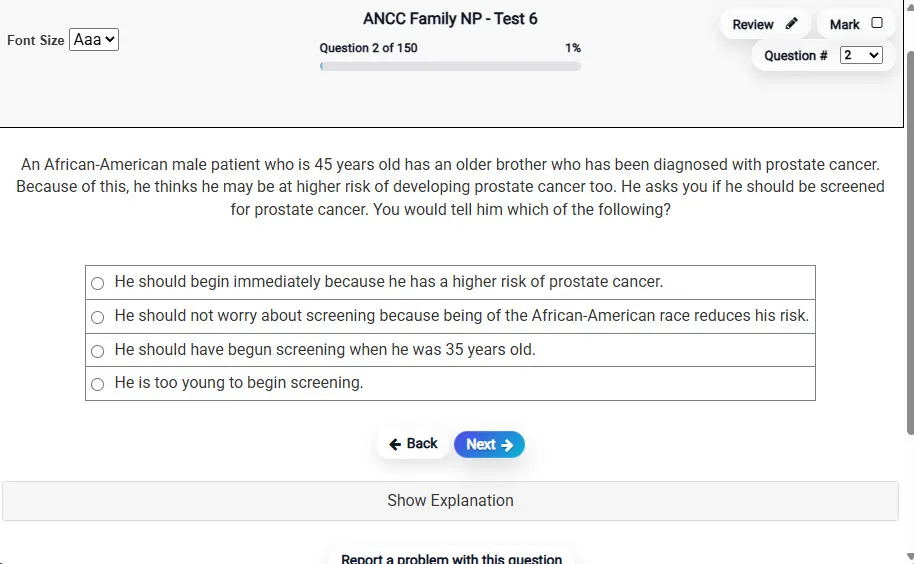
Answering a Question screen – Multiple-choice item view with navigation controls and progress tracker.
Answering a Question Multiple-choice item view with navigation controls and progress tracker.

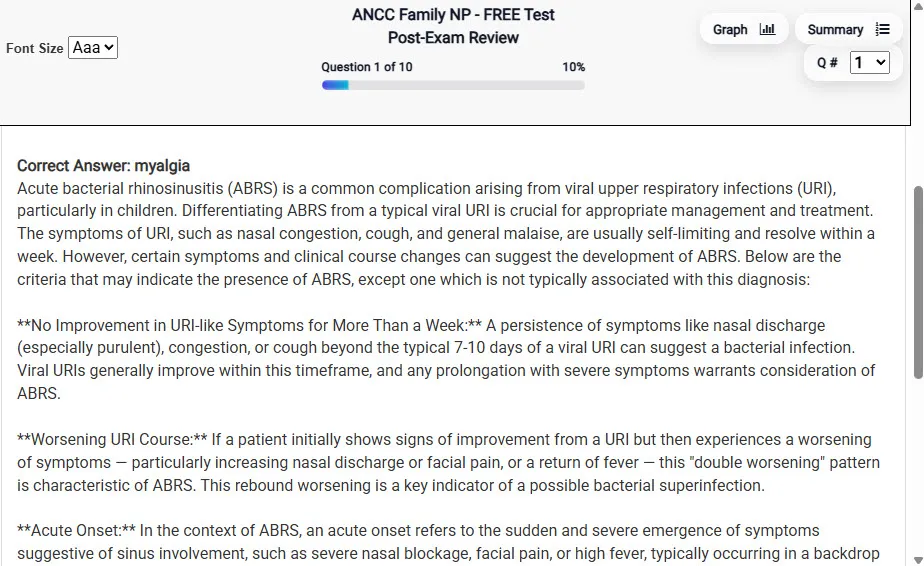
                           Detailed Explanation screen – 
                         Review mode showing chosen answer and rationale and references.
Detailed Explanation Review mode showing chosen answer and rationale and references.

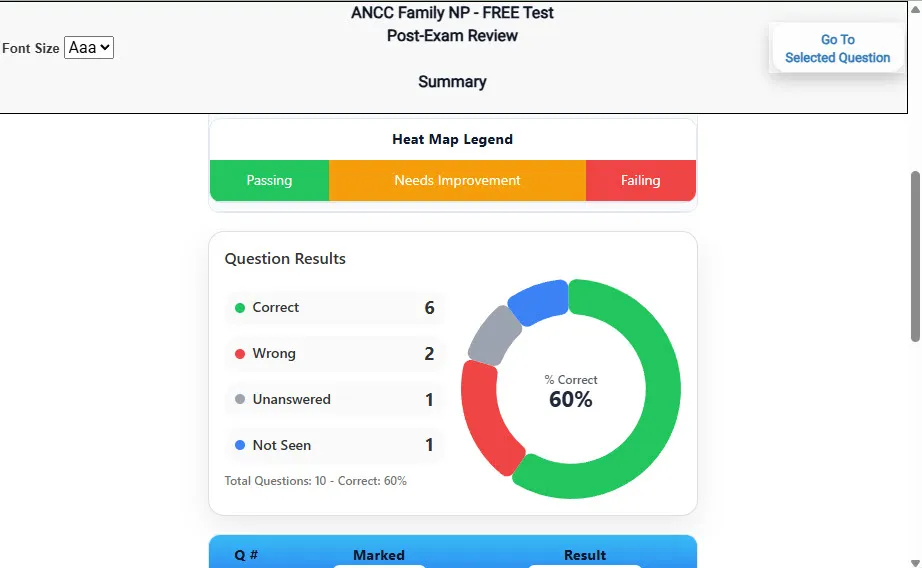
                           Review Summary 1 screen – 
                         Summary with counts for correct/wrong/unanswered and not seen items.
Review Summary 1 Summary with counts for correct/wrong/unanswered and not seen items.

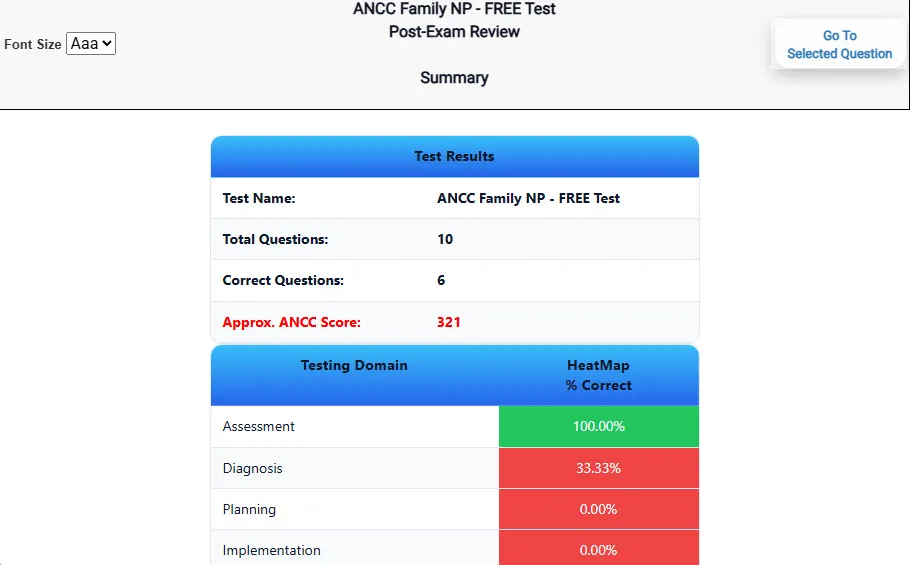
                           Review Summary 2 screen – 
                         Advanced summary with category/domain breakdown and performance insights.
Review Summary 2 Advanced summary with category/domain breakdown and performance insights.

What Each Screen Shows

Answer Question Screen

  • Clean multiple-choice interface with progress bar.
  • Mark for review feature.
  • Matches real test pacing.

Detailed Explanation

  • Correct answer plus rationale.
  • Key concepts and guidelines highlighted.
  • Move between questions to fill knowledge gaps.

Review Summary 1

  • Overall results with total questions and scaled score.
  • Domain heatmap shows strengths and weaknesses.
  • Quick visual feedback on study priorities.

Review Summary 2

  • Chart of correct, wrong, unanswered, not seen.
  • Color-coded results for easy review.
  • Links back to missed items.

Top 10 Reasons to Use Exam Edge for your AACN Adult-Gerontology Clinical Nurse Specialists Exam Prep

  1. Focused on the AACN Adult-Gerontology Clinical Nurse Specialists Exam

    Our practice tests are built specifically for the AACN ACCNS-AG exam — every question mirrors the real topics, format, and difficulty so you're studying exactly what matters.

  2. Real Exam Simulation

    We match the per-question time limits and pressure of the actual AACN exam, so test day feels familiar and stress-free.

  3. 30 Full Practice Tests & 3,000 Unique Questions

    You'll have more than enough material to master every AACN ACCNS-AG concept — no repeats, no fluff.

  4. Lower Cost Than a Retake

    Ordering 5 practice exams costs less than retaking the AACN Adult-Gerontology Clinical Nurse Specialists exam after a failure. One low fee could save you both time and money.

  5. Flexible Testing

    Need to step away mid-exam? Pick up right where you left off — with your remaining time intact.

  6. Instant Scoring & Feedback

    See your raw score and an estimated AACN Adult-Gerontology Clinical Nurse Specialists score immediately after finishing each practice test.

  7. Detailed Explanations for Every Question

    Review correct and incorrect answers with clear, step-by-step explanations so you truly understand each topic.

  8. Trusted & Accredited

    We're fully accredited by the Better Business Bureau and uphold the highest standards of trust and transparency.

  9. Web-Based & Always Available

    No software to install. Access your AACN ACCNS-AG practice exams 24/7 from any computer or mobile device.

  10. Expert Support When You Need It

    Need extra help? Our specialized tutors are highly qualified and ready to support your AACN exam prep.


Pass the AACN Adult-Gerontology Clinical Nurse Specialists Exam with Realistic Practice Tests from Exam Edge

Preparing for your upcoming AACN Adult-Gerontology Clinical Nurse Specialists (ACCNS-AG) Certification Exam can feel overwhelming — but the right practice makes all the difference. Exam Edge gives you the tools, structure, and confidence to pass on your first try. Our online practice exams are built to match the real AACN ACCNS-AG exam in content, format, and difficulty.

  • 📝 30 AACN Adult-Gerontology Clinical Nurse Specialists Practice Tests: Access 30 full-length exams with 100 questions each, covering every major AACN Adult-Gerontology Clinical Nurse Specialists topic in depth.
  • Instant Online Access: Start practicing right away — no software, no waiting.
  • 🧠 Step-by-Step Explanations: Understand the reasoning behind every correct answer so you can master AACN ACCNS-AG exam concepts.
  • 🔄 Retake Each Exam Up to 4 Times: Build knowledge through repetition and track your improvement over time.
  • 🌐 Web-Based & Available 24/7: Study anywhere, anytime, on any device.
  • 🧘 Boost Your Test-Day Confidence: Familiarity with the AACN format reduces anxiety and helps you perform under pressure.

These AACN Adult-Gerontology Clinical Nurse Specialists practice exams are designed to simulate the real testing experience by matching question types, timing, and difficulty level. This approach helps you get comfortable not just with the exam content, but also with the testing environment, so you walk into your exam day focused and confident.


Exam Edge AACN Reviews


Today, I sat for and passed the PCCN Exam! I purchased and completed all 20 of your practice tests, and I just want to say thank you for providing this resource to study, and for helping me to build the stamina and confidence to complete all those questions in a timely manner! Thanks again! Kristen

Kristen, NJ

Thank you very much for making this such great review test material. It boosted my confidence in passing the PCCN (been out of nursing school for 18 years). I just took the test today and I did it.

Vicky , Arizona

Checking in was so impersonal and harsh. The exam room was freezing cold, difficult to concentrate. The computer screen height was so high that I had to tilt my head way back to see it! I left there freezing cold, and with a horrible crook in my neck. I shall drive the distance next time to find a m ...
Read More
Darlene , North Chesterfield, Virginia


AACN Adult-Gerontology Clinical Nurse Specialists Aliases Test Name

Here is a list of alternative names used for this exam.

  • AACN Adult-Gerontology Clinical Nurse Specialists
  • AACN Adult-Gerontology Clinical Nurse Specialists test
  • AACN Adult-Gerontology Clinical Nurse Specialists Certification Test
  • AACN ACCNS-AG test
  • AACN
  • AACN ACCNS-AG
  • ACCNS-AG test
  • AACN Adult-Gerontology Clinical Nurse Specialists (ACCNS-AG)
  • Adult-Gerontology Clinical Nurse Specialists certification